Compounded GLP-1 vs Brand-Name Ozempic: What Iron RX Patients Should Know
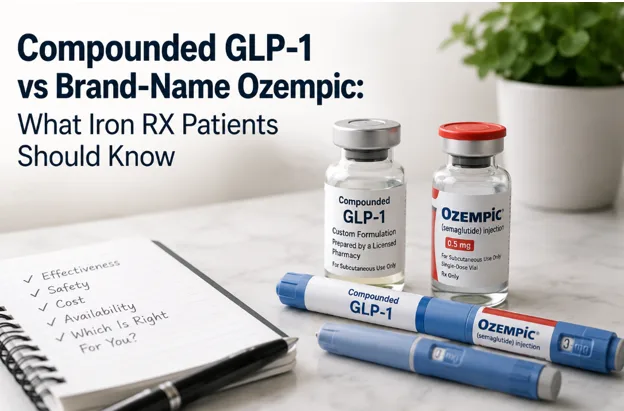
GLP-1 medications have become the most talked-about tool in weight management, but the market now includes both brand-name products and compounded versions, and the difference matters for anyone comparing telehealth options before starting treatment.
What Separates Brand-Name From Compounded
Brand-name GLP-1 drugs go through the standard FDA approval pathway and are manufactured in fixed, pre-set doses. Compounded versions are prepared by licensed pharmacies to a provider’s specific prescription, which can offer more flexible dosing and lower cost, particularly during periods of brand-name shortages that have affected the market repeatedly over the past few years.
Iron RX’s weight management program uses compounded GLP-1 injections and dissolvable tablets, prescribed after a licensed provider reviews the patient’s intake and determines appropriate dosing based on individual history and goals.
Why Flexible Dosing Matters
One practical advantage of compounded medication is the ability to titrate dose more gradually and precisely than fixed-dose pens allow. Since nausea and other GI side effects are the most common reason patients stop GLP-1 therapy early, a slower, more customized titration schedule can make the difference between someone tolerating treatment long enough to see results and someone quitting in the first month.
The Supply Story Behind Compounded GLP-1
Compounded GLP-1 became widely available largely because brand-name manufacturers couldn’t keep up with demand for an extended stretch, and the FDA’s shortage list allowed compounding pharmacies to legally prepare versions of these medications during that period. As brand-name supply has stabilized in various markets, the regulatory picture around compounding has continued to shift, which is part of why it’s worth checking current guidance rather than assuming the rules from a year or two ago still apply exactly the same way.
This is also why working with a provider that stays current on sourcing and regulatory changes matters more than it might seem. A pharmacy relationship that was compliant last year isn’t automatically compliant indefinitely, and a platform that’s paying attention to this will be able to explain, clearly, why it’s still offering a compounded option and under what basis.
Questions to Ask Before Choosing
Patients considering a compounded option should ask which pharmacy prepares the medication, what quality-control standards it follows, and how the provider handles dose titration over the first several weeks of treatment, since starting too high too fast is a common source of side effects with any GLP-1 therapy. It’s also reasonable to ask how the compounded formulation is tested for potency and sterility before it ships.
Neither option is universally ‘better’ — the right choice depends on insurance coverage, budget, supply availability, and how a patient responds during the evaluation. Someone with insurance coverage for a brand-name product may find that route more cost-effective, while someone without coverage may find a compounded plan more accessible.
A conversation with a licensed provider, not marketing copy, should be the deciding factor. Any platform worth using will walk through these trade-offs honestly rather than steering every patient toward the same product.
Frequently Asked Questions
Is compounded GLP-1 as effective as the brand-name version?
The active compound is the same class of medication, but formulation, concentration, and quality control can vary by pharmacy, which is why choosing a provider that discloses its pharmacy sourcing matters.
Why do brand-name GLP-1 shortages happen?
Demand for GLP-1 medications has outpaced manufacturing capacity at times, which is part of why compounded alternatives became more widely used as a bridge during shortage periods.
Can I switch from compounded to brand-name later, or vice versa?
In many cases yes, though it typically requires a new conversation with a provider to adjust dosing, since the two aren’t always interchangeable milligram-for-milligram.
Does compounded medication expire faster than brand-name?
Shelf life depends on the specific formulation and storage conditions rather than simply whether it’s compounded or brand-name — following the storage instructions provided with your prescription is the most reliable guide.
The Bottom Line
The choice between compounded and brand-name GLP-1 isn’t about one being universally superior — it’s about matching the option to a patient’s coverage, budget, and how they respond during treatment. Iron RX’s compounded model gives patients access to flexible dosing at a lower entry price, which is a meaningful option for people priced out of brand-name treatment, provided the pharmacy sourcing and clinical oversight behind it are solid.