Cosmetic Filling Machine: A Complete Guide for Modern Beauty Product Production
Introduction
The beauty and personal care industry has changed significantly over the past few years. With increasing demand for skincare, haircare, and makeup products, cosmetic manufacturers need reliable equipment that can support fast and accurate production. A cosmetic filling machine is one of the most useful solutions for businesses that want to improve their packaging process while maintaining consistent product quality.
Filling cosmetic products manually can take a lot of time and may also lead to differences in the quantity of product placed in each container. Modern filling equipment helps solve these problems by delivering a controlled amount of product into every bottle, jar, tube, or other packaging container.
Whether a company produces liquid skincare products or thick cosmetic creams, the right filling machine can make the production process smoother, faster, and more efficient.
What Is a Cosmetic Filling Machine?
A cosmetic filling machine is specialized packaging equipment used to dispense cosmetic products into containers in a controlled and accurate manner. The machine is designed to handle different types of formulations depending on its filling technology and configuration.
Cosmetic manufacturers use this type of equipment for products such as face creams, lotions, shampoos, conditioners, liquid foundations, serums, gels, and many other personal care products.
Instead of depending completely on workers to measure and fill every container, the machine performs the process according to pre-set filling parameters. This can help maintain uniformity throughout the production batch.
Some machines are operated manually by an operator, while others are fully automated and can work as part of a complete packaging line.
How Does the Filling Process Work?
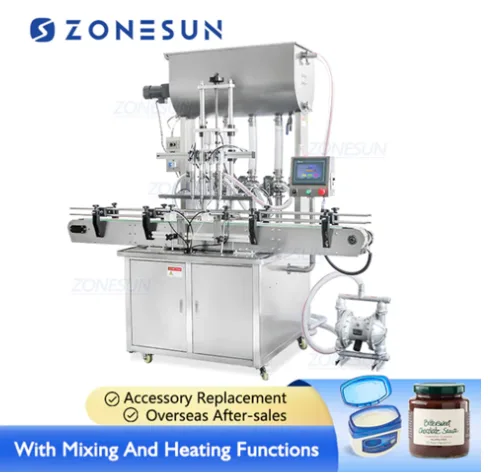
The basic operation starts with the cosmetic product being placed inside a product storage tank or hopper. From there, the formulation moves toward the filling system through suitable pipes or pumps.
Empty containers are positioned beneath the filling nozzles. Once the machine receives the filling command, the required amount of product is released into each container.
Depending on the design of the equipment, the filling quantity may be controlled by pistons, pumps, flow meters, or other precision mechanisms. Sensors can also be used to detect containers and help prevent filling errors.
After filling, the containers can move toward additional packaging stages, such as capping, sealing, labeling, or inspection. This makes it possible to connect the filling machine with other equipment and create a more organized production workflow.
Different Products Require Different Filling Solutions
One of the most important considerations when selecting filling equipment is the type of cosmetic product being manufactured. Not every formulation has the same consistency or flow characteristics.
Thin and free-flowing products can generally be handled by liquid filling systems. These machines are suitable for products such as facial toners, liquid cleansers, and certain types of cosmetic oils.
Thicker formulations require equipment capable of handling higher viscosity. Creams, moisturizers, body lotions, and similar products may need piston or pump-based filling systems designed specifically for heavier materials.
For products packaged in tubes, specialized tube filling equipment may be more suitable. These machines can fill the product into tubes and may also perform sealing operations, depending on the configuration.
Manual, Semi-Automatic, and Automatic Systems
Cosmetic filling equipment is available in different levels of automation. Small businesses and startups may prefer semi-automatic systems because they offer greater flexibility without requiring a large production investment.
In semi-automatic operations, an employee may place containers into position while the machine performs the actual filling process. This provides better control compared with completely manual filling.
Fully automatic systems are generally preferred by large-scale manufacturers. These machines can perform filling operations continuously with limited operator involvement. When combined with conveyors and other packaging equipment, they can significantly increase production capacity.
The best option depends on production volume, available space, budget, labor requirements, and the type of products being filled.
Benefits of Using Modern Filling Equipment
There are several reasons why cosmetic manufacturers choose automated or semi-automated filling solutions. The first is consistency. When every container receives a controlled quantity of product, the final packaging looks more uniform and professional.
Production efficiency is another major advantage. A machine can perform repeated filling operations much faster than manual labor, particularly when large quantities need to be packaged.
A reliable cosmetic filling machine can also help reduce unnecessary product loss. Accurate dispensing means manufacturers have better control over how much formulation goes into each container.
The use of suitable machinery can also improve workplace organization. Instead of workers spending long periods performing repetitive filling tasks, they can focus on monitoring production, quality inspection, and other important responsibilities.
Importance of Hygiene and Product Safety
Cleanliness is a critical part of cosmetic manufacturing. Products are often applied directly to the skin or hair, so manufacturers must maintain appropriate hygiene throughout the production and packaging process.
Many modern filling machines use stainless steel for product-contact components because it is durable and easier to clean. The machine should also be designed in a way that allows operators to access important parts for regular cleaning and maintenance.
Manufacturers should follow proper cleaning procedures and the equipment supplier’s recommendations. Regular sanitation helps reduce the risk of contamination and supports consistent product quality.
Where Are Cosmetic Filling Machines Used?
Filling machines are used by a wide variety of cosmetic and personal care manufacturers. Large factories may use fully automated production lines to package thousands of units every day.
Smaller cosmetic brands can also benefit from compact filling systems. These machines are useful for businesses producing skincare products, handmade cosmetics, haircare products, and other personal care formulations.
The equipment can be adapted for different packaging formats, including bottles, jars, tubes, and containers of various sizes. This flexibility allows manufacturers to select a setup that matches their product range.
Factors to Consider Before Buying a Machine
Before purchasing filling equipment, manufacturers should carefully evaluate their production requirements. The first consideration should be the type of product being filled. The viscosity, texture, and formulation of the cosmetic product will influence the type of filling mechanism required.
The expected production capacity is also important. A small business may not need the same high-speed equipment as a large factory. Choosing a machine that matches actual production needs can help avoid unnecessary costs.
Container size and shape should also be checked before making a purchase. The filling system should be compatible with the packaging containers used by the manufacturer.
It is also useful to consider ease of operation, cleaning requirements, maintenance, spare parts availability, and after-sales technical support.
Maintenance for Better Performance
Regular maintenance can help keep filling equipment operating smoothly. Operators should inspect the machine regularly and clean product-contact parts according to the recommended procedures.
Nozzles and pipes should be checked for blockages, especially when working with thick creams or products that may leave residue. Pumps and other moving components should also be inspected to identify possible issues before they affect production.
Following a regular maintenance schedule can reduce unexpected downtime and help extend the working life of the equipment.
The Future of Cosmetic Filling Technology
As the beauty industry continues to expand, manufacturers are looking for smarter and more efficient production solutions. Modern filling systems are becoming more precise, flexible, and easier to integrate with automated packaging lines.
Advanced machines may include digital controls, programmable settings, sensors, and automated monitoring features. These technologies allow manufacturers to adjust production parameters more easily and maintain better control over the filling process.
Automation is likely to become even more important as cosmetic companies seek to increase output while maintaining consistent quality.
Conclusion
A cosmetic filling machine can play an important role in improving the efficiency and consistency of cosmetic product packaging. By providing controlled filling volumes and reducing repetitive manual work, the right equipment can help manufacturers save time, minimize product waste, and achieve more uniform packaging results.
From small cosmetic businesses to large-scale production facilities, different types of filling systems are available to meet different requirements. By considering product viscosity, container design, production capacity, automation level, hygiene, and maintenance needs, manufacturers can choose a suitable solution for their operation.
With the continued growth of the beauty and personal care market, efficient filling technology will remain an important part of modern cosmetic manufacturing and packaging.