Could Same-Day Knee Replacement Change the Way Patients Have Surgery?
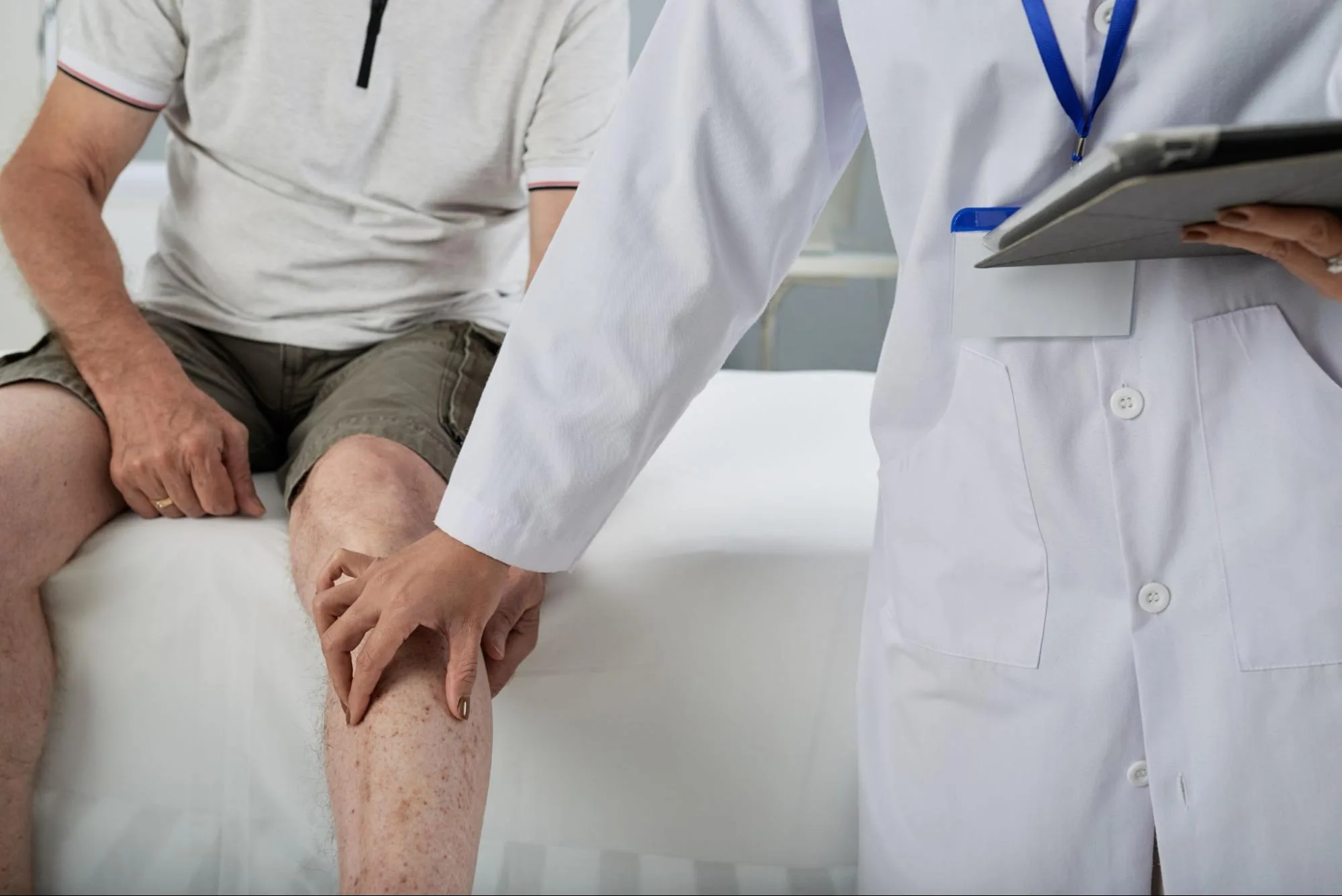
For many people, the words “knee replacement” still conjure up a familiar picture: a major operation followed by several nights in hospital, weeks of limited mobility and a long period of rehabilitation.
That picture is changing.
Advances in surgical techniques, anaesthesia, pain management, physiotherapy and enhanced recovery programmes are making it possible for some patients to leave hospital much sooner after knee replacement surgery. In carefully selected cases, that can mean returning home on the day of the operation.
The idea of going home just hours after a joint replacement may sound surprising. A knee replacement remains significant surgery, and recovery still requires time and commitment. But the way hospitals organise the patient’s journey before, during and after the operation is evolving rapidly.
The question is no longer simply how surgeons perform a knee replacement. Increasingly, it is also about how the entire pathway can be designed to help patients recover safely and efficiently.
What does same-day knee replacement actually mean?
Same-day, or day-case, knee replacement does not mean that the operation itself has somehow become minor.
A knee replacement involves removing damaged areas of the joint and replacing them with artificial components. The procedure still requires careful surgical planning, anaesthesia, monitoring and postoperative care.
What changes is what happens around the operation.
Traditionally, patients might remain in hospital for several days following surgery. Modern enhanced-recovery pathways can allow appropriately selected patients to begin moving much earlier, manage their pain effectively and meet a series of clinical criteria before going home.
The emphasis is therefore on recovery rather than simply hospital stay.
A patient may undergo the same fundamental operation but follow a pathway specifically designed to get them safely mobile and independent as quickly as possible.
This does not mean that every patient should expect to go home on the day of surgery. Some people will need to remain in hospital because of their medical circumstances, the complexity of their operation, difficulties with mobility or simply because additional observation is appropriate.
The important development is that same-day discharge is becoming a possibility for a carefully selected group of patients rather than an unusual exception.
Why are hospitals looking at shorter stays?
There are several reasons for the shift.
One is the development of enhanced recovery programmes. These bring together different parts of the patient’s care rather than treating surgery as an isolated event.
Preparation can begin before admission. Patients may receive information about what to expect, start appropriate exercises and plan what they will need at home. During surgery, anaesthetic and pain-management techniques can be selected with postoperative recovery in mind.
Afterwards, early mobilisation becomes an important part of the process.
There is also a practical reason for hospitals to consider shorter stays. Every hospital bed is a valuable resource. If a patient can recover safely at home rather than occupying an inpatient bed unnecessarily, that can potentially benefit both the individual and the wider healthcare system.
For patients, there can be advantages too. Hospitals can be tiring environments, and some people understandably prefer to recover in familiar surroundings once they are medically ready to leave.
But shorter hospital stays should not be confused with faster biological healing. The knee still needs time to recover, and rehabilitation remains an important part of the process.
What does this mean for the patient?
One of the biggest changes is that preparation becomes increasingly important.
If someone expects to remain in hospital for several days, there may be more time for healthcare professionals to help them with basic activities after surgery.
With a shorter pathway, the patient needs to be ready to participate in their recovery from the beginning.
That can include understanding how to use walking aids, knowing how and when to perform prescribed exercises, having appropriate pain relief available and understanding what to look out for after returning home.
The home environment matters as well.
Patients may need to think about stairs, bathroom access, sleeping arrangements and whether someone will be available to provide practical support during the early stages.
For anyone considering knee replacement surgery, understanding the entire pathway — rather than concentrating solely on the operation itself — can therefore be extremely valuable.
The decision about whether somebody is suitable for a shorter hospital stay should always be individualised. What is appropriate for one patient may not be appropriate for another.
Who may not be suitable for same-day surgery?
The concept of same-day knee replacement can sound attractive, but it is not simply a question of wanting to leave hospital quickly.
Patient selection is crucial.
A person’s general health, mobility, home circumstances and ability to manage safely after discharge can all be relevant. Other medical conditions may also influence whether a shorter pathway is appropriate.
The operation itself can matter too. Not every procedure has the same level of complexity, and unexpected events during or after surgery can change the plan.
This is why a responsible same-day pathway should never be viewed as a target that every patient must achieve.
The objective is safe recovery, not the shortest possible hospital stay.
If someone needs additional observation, treatment or support, staying in hospital is entirely appropriate.
Recovery does not end when the patient leaves hospital
Perhaps the most important misconception about same-day surgery is that leaving hospital quickly means that the recovery is almost complete.
It isn’t.
The early days after knee replacement can involve discomfort, swelling, stiffness and difficulty with normal activities. Patients generally need to follow a rehabilitation programme and gradually increase what they can do.
Physiotherapy and exercise can form an important part of this process.
There is also a psychological element to recovery. Patients may feel surprisingly good immediately after surgery and then discover that progress is not always linear. A good day can be followed by a more difficult one.
That is why discharge should be considered the beginning of another stage of recovery rather than the end of treatment.
Understanding what happens during the weeks following surgery can help patients prepare realistically for the experience.
Could same-day knee replacement become more common?
It is possible that shorter hospital pathways will become increasingly common for appropriately selected patients as surgical and recovery programmes continue to develop.
But the future is unlikely to be about one standard pathway for everyone. Enhanced knee replacement recovery and same day surgery is likely the way forward.
Instead, healthcare may become increasingly personalised.
Some patients may be able to undergo surgery and return home within hours. Others may benefit from one or more nights of hospital care. Some may require more intensive rehabilitation or additional medical support.
The important development is flexibility.
Rather than assuming that every patient should follow the same journey, hospitals can increasingly use information about the individual patient to determine what level of care is appropriate.
This could also change the role patients play in their own treatment.
Preparation before surgery, understanding the rehabilitation process and planning the home environment may become just as important to the overall experience as what happens inside the operating theatre.
A different way of thinking about knee replacement
The evolution of knee replacement is therefore not simply about new surgical equipment or changes to the operation itself.
It is about the entire patient journey.
Better preparation can help patients understand what is coming. Modern perioperative care can support early mobilisation. Improved pain-management strategies can help patients participate in rehabilitation. Physiotherapy can begin earlier. And carefully selected patients may be able to continue their recovery at home much sooner than was traditionally expected.
None of this makes knee replacement a trivial procedure.
It does, however, challenge the idea that major surgery necessarily requires a prolonged hospital stay for every patient.
The future may involve a more individualised approach in which the right patient receives the right level of hospital care, with the emphasis placed firmly on safe recovery rather than simply counting the number of nights spent in a hospital bed.
For patients considering knee replacement, that could ultimately mean a very different experience from the one their parents or grandparents might remember.
The operation may remain significant, but the journey surrounding it is changing — and for many patients, that may be just as important.