Counter Check vs Blank Check: What to Use When You Need a Check Today
Published for OnlineCheckWriter.com
Disclosure: This article was published as part of a paid partnership with OnlineCheckWriter.com, a Zil Money platform. The author is an independent contributor.
Running out of checks can become a real problem when a vendor, landlord, contractor, or other recipient still expects a paper check.
Two possible options are a counter check from a financial institution or an on-demand check printed using blank check stock.
They may solve the same immediate problem, but they are not the same product and should not be treated as interchangeable.
OnlineCheckWriter.com focuses on on-demand check creation and printing, allowing users to prepare business or personal checks without waiting for a new checkbook order.
What Is a Counter Check?
A counter check is generally a temporary check that may be provided by a financial institution for an existing checking account.
Availability, format, account information, check numbering, and any applicable fees can vary by institution.
Because of those differences, a business should contact its own financial institution directly instead of assuming a counter check will always be available or accepted for every payment.
Counter checks can be useful when someone needs a temporary paper check and their institution offers them.
But they are not the only way to handle an urgent check payment.
What Is an On-Demand Printed Check?
An on-demand printed check is created when the payer needs it rather than ordered in advance as part of a pre-printed checkbook.
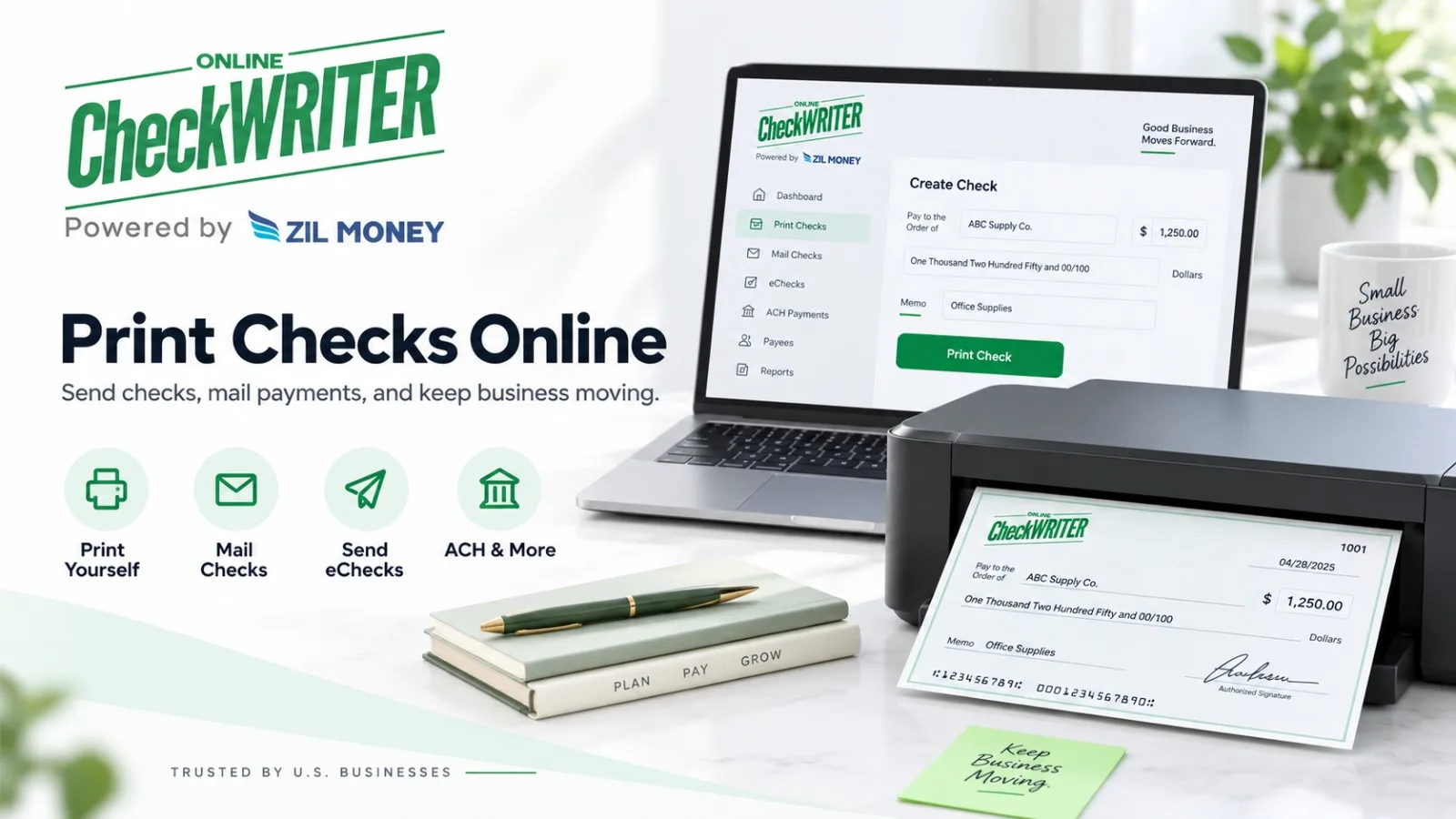
OnlineCheckWriter.com allows users to create and print checks from home or the office using blank check stock and a printer. Its Instant Checks page also provides options for physical mailing or electronic delivery through supported workflows.
This approach can be useful for a business that manages multiple checking accounts or needs to create checks without maintaining separate pre-printed check inventory for every account.
The payer still needs to make sure the correct account, routing information, check number, payee, amount, date, and other required information are used.
Understand the MICR Requirement
One technical issue businesses should understand is the MICR line.
The Federal Reserve’s Check 21 FAQ explains that the MICR line is the numeric information at the bottom of a check that includes details such as the routing number, account number, and check serial number.
The Federal Reserve also states that generally applicable industry standards for original checks require the MICR line to be printed in magnetic ink. If the MICR line is already pre-printed on the check stock, the remaining information can be printed using regular, non-magnetic ink. If the payer is printing the MICR line, the Federal Reserve says it should be printed in magnetic ink.
This requirement is not something created by Check 21. The Federal Reserve specifically notes that the magnetic-ink requirement for original-check MICR lines existed before the Check 21 Act.
That distinction is important because “print your own check” does not mean every printing setup is automatically appropriate.
Which Option Makes More Sense?
The right choice depends on the situation.
A counter check may be worth asking about when a financial institution offers one and the payer only needs a temporary check.
On-demand check printing may make more sense for a business that regularly needs checks, works with several accounts, or wants to create checks without maintaining separate pre-printed checkbooks.
OnlineCheckWriter.com’s current Instant Checks workflow lets users create and print checks on demand and also offers supported physical-mail and electronic-delivery options.
The platform should therefore be evaluated as an ongoing check-creation workflow rather than simply another version of a bank counter check.
Verify Before Sending a Live Check
Before issuing an important payment, confirm the account information, check number, amount, payee, printing setup, and any requirements that may apply to the receiving financial institution.
For deadline-sensitive payments, the business should also distinguish between creating a check today and the recipient actually receiving, depositing, or obtaining funds from it.
Printing is one stage of the payment process. Delivery and deposit are separate.
The practical question is not simply whether a counter check or blank check is “better.”
It is which method gives the payer an accurate, controlled way to issue the check needed for that particular payment.
OnlineCheckWriter.com – powered by Zil Money, is a financial technology company, not a bank. Banking and money movement services are provided through partner financial institutions and licensed service providers. FDIC insurance coverage applies only to eligible deposit products and accounts, and is subject to applicable terms, conditions, limitations, and requirements. Additional information regarding partner institutions, products, and services is available in the applicable terms and agreements.
[1]: https://onlinecheckwriter.com/instant-checks/ “Instant Checks | Print and Send Checks Instantly”
[2]: https://www.federalreserve.gov/paymentsystems/regcc-faq-check21.htm “Federal Reserve Board – Frequently Asked Questions about Check 21”