Cowboy Belt Knives vs. Traditional Ranch Knives: Understanding the Differences
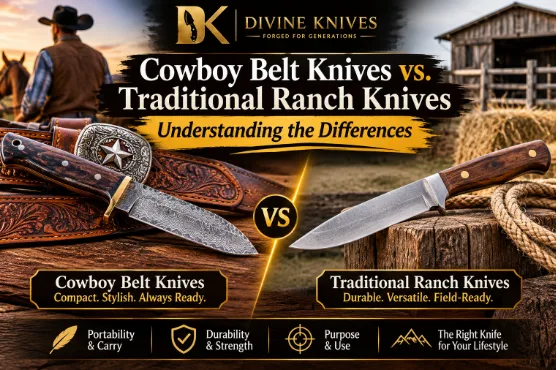
Cowboy belt knives and traditional ranch knives are closely connected to American Western culture. Both styles reflect the practical needs, traditions, and craftsmanship associated with ranch life. However, they can differ in blade shape, intended use, carrying style, and overall design.
If you are exploring Western-inspired knives, understanding these differences can help you make a more informed choice. Whether you appreciate traditional knife designs, collect Western-style blades, or want to learn about their history, knowing what separates these styles makes comparison easier.
What Are Cowboy Belt Knives?
Cowboy belt knives are traditional knife designs associated with Western culture and everyday belt carry. Their designs often feature distinctive handles, practical blade shapes, and a style inspired by the American frontier.
Historically, cowboys and ranch workers carried knives as part of their everyday equipment. A belt-mounted knife offered convenient access when working outdoors or handling routine tasks.
Modern cowboy belt knives often combine traditional Western styling with contemporary materials and craftsmanship. Some feature decorative handles, engraved details, Damascus steel patterns, or classic leather sheaths.
Collectors also appreciate these knives because they represent an important part of Western heritage. Their appearance can range from simple working designs to elaborate handmade pieces.
What Are Traditional Ranch Knives?
Traditional ranch knives are associated with the practical requirements of ranching and outdoor work. Unlike a style defined primarily by Western appearance or belt carry, the term describes knives connected to ranch-related tasks and working environments.
These knives can feature sturdy construction, practical blade profiles, comfortable handles, and designs suited to demanding outdoor conditions.
Traditional ranch knives may serve different purposes depending on their construction and intended design. Their appearance is often straightforward, although modern versions can include decorative finishes and traditional craftsmanship.
The main appeal of ranch knives comes from their connection to working traditions and practical outdoor equipment.
Cowboy Belt Knives vs. Traditional Ranch Knives: Key Differences
Although these categories sometimes overlap, several characteristics help explain their differences.
1. Design and Appearance
Cowboy belt knives often emphasize Western-inspired styling. Their handles, blade profiles, and sheaths may reflect traditional cowboy aesthetics.
Traditional ranch knives generally prioritize practical design. Their appearance can be simpler, with greater attention to durability, handling, and suitability for outdoor environments.
However, neither category has one universal design. Individual knives can combine traditional Western decoration with practical features.
2. Blade Shapes
Cowboy belt knives come in different blade profiles. Some feature traditional clip-point or drop-point designs, while others use distinctive shapes associated with Western knife-making traditions.
Ranch knives also come in several blade configurations. Their designs depend on the intended application, construction, and preferences of the maker or user.
When comparing knives, examine the blade profile and manufacturer specifications rather than assuming that every knife within a category has the same characteristics.
3. Carrying Style
The carrying method is one of the clearest distinctions.
Cowboy belt knives are commonly associated with belt carry and may come with fitted sheaths. This traditional arrangement reflects their connection to Western clothing and outdoor lifestyles.
Ranch knives can also be carried on a belt, but the category is broader. Their carrying arrangements depend on the individual design and intended purpose.
4. Materials and Craftsmanship
Both styles can feature different blade steels, handle materials, and finishing techniques.
Common features may include:
- Stainless or carbon steel blades
- Damascus steel patterns
- Wood or synthetic handles
- Decorative metal fittings
- Leather sheaths
- Handmade or factory-produced construction
The quality of a knife depends on its materials, heat treatment, construction, finishing, and quality control. A decorative appearance alone does not establish overall performance.
5. Cultural Significance
Cowboy belt knives have a strong connection to Western clothing, frontier imagery, and cowboy traditions. They often appeal to collectors interested in American Western heritage.
Traditional ranch knives represent a broader working tradition. They are connected to the equipment and tools used in ranching environments across different regions.
Both styles have historical and cultural significance, making them interesting subjects for collectors and enthusiasts.
Exploring Best Cowboy Belt Knives for Western Knife Enthusiasts
For collectors interested in traditional Western styling, choosing a cowboy belt knife often comes down to design, materials, and craftsmanship.
The Best cowboy belt knives collection from Divine Knives provides a starting point for exploring Western-inspired designs.
Before selecting a knife, consider its blade specifications, handle construction, finish, sheath, and intended purpose. Product descriptions can help you compare individual designs and understand their features.
Divine Knives offers a collection worth exploring if you appreciate the appearance and heritage of cowboy-style knives.
Understanding Bull Cutter Knives and Their Traditional Design
Bull cutter knives represent another recognizable category of Western-inspired knife designs. They are associated with ranching traditions and distinctive blade profiles.
Their appearance can differ from conventional cowboy belt knives, depending on the maker and design. Collectors may be interested in their traditional styling, recognizable shapes, and connection to ranch culture.
If you want to explore this category, the bull cutter knives collection at Divine Knives offers additional designs to compare.
When evaluating a bull cutter knife, review its listed dimensions, blade material, handle details, and intended use. These specifications provide a clearer understanding of an individual product than its category name alone.
Which Knife Style Should You Choose?
The right choice depends on your interests and what you expect from a particular design.
| Comparison factor | Cowboy belt knives | Traditional ranch knives |
| Main association | American Western and cowboy culture | Ranching and outdoor work |
| Design emphasis | Western-inspired appearance and belt carry | Practical construction and working traditions |
| Blade styles | Various traditional Western profiles | Different profiles based on intended purpose |
| Carrying method | Commonly associated with belt sheaths | Varies by design |
| Collector appeal | Western heritage and distinctive styling | Traditional working-tool history |
| Best comparison point | Appearance, construction, and specifications | Intended purpose, construction, and specifications |
Remember that these categories overlap. A cowboy belt knife can also have features associated with traditional ranch knives.
What to Consider Before Buying a Western-Style Knife
Choosing a knife requires more than comparing its appearance. Consider these factors before purchasing:
Check the Product Specifications
Review the blade material, dimensions, handle material, weight, and construction details. Reliable specifications make it easier to compare different designs.
Examine the Craftsmanship
Look for clear product information about finishing, construction, and quality control. Handmade products can vary, so check the details of the specific item you are considering.
Understand the Intended Purpose
Different knife designs serve different purposes. Make sure the manufacturer’s description matches your expectations and that the product is appropriate for its intended use.
Consider Storage and Maintenance
Follow the manufacturer’s care instructions. Keep blades clean and dry, use suitable storage, and keep them securely stored away from children.
Review Local Laws
Knife ownership, carrying, transportation, and import regulations vary by location. Check the applicable laws before purchasing or carrying a knife.
Why Explore Western-Style Knives from Divine Knives?
Divine Knives provides a place to explore different Western-inspired knife categories, including cowboy belt knives and bull cutter knives.
For buyers and collectors, comparing these collections can help identify differences in design, appearance, and product specifications. Instead of choosing based only on a product photograph, review the listed materials, dimensions, construction, and other available details.
Whether you prefer classic cowboy styling or traditional ranch-inspired designs, Divine Knives offers relevant collections to explore.
Frequently Asked Questions
Are cowboy belt knives and ranch knives the same?
Not exactly. Cowboy belt knives are commonly associated with Western styling and belt carry, while ranch knives describe a broader category connected to ranching and outdoor work. Their designs can overlap.
What makes a cowboy belt knife different?
A cowboy belt knife is generally recognized by its connection to Western culture, traditional styling, and belt-carry arrangement. Individual designs vary in blade shape, handle material, and construction.
What are bull cutter knives?
Bull cutter knives are a category of Western-inspired knives associated with ranching traditions. Their blade shapes and construction vary between manufacturers and individual models.
Which knife is better for a collection?
Neither category is automatically better. The right choice depends on your interest in Western heritage, traditional ranching designs, craftsmanship, and the specific features of each knife.
What materials are used in Western-style knives?
Depending on the design, manufacturers may use stainless steel, carbon steel, Damascus steel, wood, synthetic handle materials, and leather for sheaths.
What should I check before buying a cowboy belt knife?
Review the blade specifications, handle material, construction, finish, sheath details, seller information, and local ownership and carrying regulations.
Conclusion
Cowboy belt knives and traditional ranch knives share a connection to Western heritage, but their design priorities and cultural associations can differ. Cowboy belt knives often emphasize traditional Western styling and belt carry, while ranch knives represent a broader range of designs connected to working environments.
Understanding these differences helps you compare individual knives based on their construction, materials, appearance, and intended purpose.
If you appreciate Western-inspired craftsmanship, explore the collections from Divine Knives and review each product’s specifications before making your decision.