Crypto in 2026: Themes shaping the next phase of digital assets according to Grayscale
Looking back more than 15 years, crypto was approached as just a bit more than a tech curiosity – mostly an asset that barely achieved a market cap of $1MN. The space needed time to gain status, even if only as a niche investment. Most of audiences’ attention revolved around Bitcoin exclusively, with Ethereum trailing behind. Fast forward to today, and millions of people use crypto on a daily basis – according to Statista, some regions, including Nigeria and the U.S., have seen adoption increase threefold during only two years. We even have some of the largest and best-established participants in the traditional finance space offering exposure to the very digital currencies they used to be reluctant to, via multiple services ranging from spot and futures exchange-traded products to lending.
It’s safe to say that traditional financial (TradFi) institutions are no longer “watching” crypto; they’re actively integrating it into their core operations to improve areas in their services, like speed, costs, and client demand, and further on to reach new markets. A recent report from Grayscale indicates that 2026 could be a year marked by essentially two massive narratives: more regulatory clarity that propels crypto adoption, and macro demand for digital assets as alternative stores of value. These two trends, alongside others, are expected to boost capital inflows, increase adoption, and facilitate the deeper integration of public blockchains into established financial infrastructure. As a whole, the general view is that valuations could consequently increase this year. This makes tracking crypto performances with analysis tools like the fear and greed index even more important.
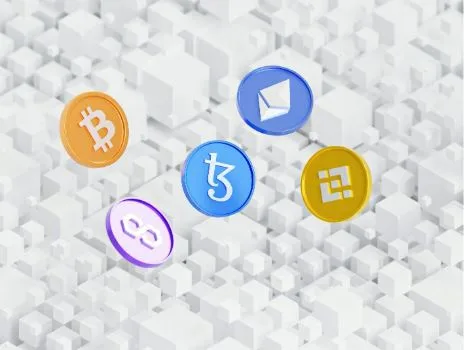
Photo source: https://unsplash.com/photos/a-group-of-colorful-bitcoins-sitting-on-top-of-a-white-background-VyXIPuT0EEE
BTC, ETH, and the biggest crypto assets enter the spotlight in today’s weakening dollar environment
Dollar debasement risk comes down to the concerns that the continuous increase in U.S. money supply and debt will eventually lead to a permanent erosion of the dollar’s purchasing power. Other nations face currency devaluation, too, but the U.S. dollar weighs more since it’s the predominant currency worldwide. The world sees faltering confidence in the power of the American fiat currency, an ongoing phenomenon that’s pushing investors toward “hard assets” like BTC, ETH, and other cryptos, precious metals like silver and gold, and assets that borrow principles from “hard assets”, like shares in different companies.
Grayscale identified currency debasement concerns as the biggest theme in 2026, with crypto serving as a promising hedge against fiat currency risks and monetary mismanagement. Bitcoin, for instance, has a capped supply of 21MN tokens, a feature built exactly for deflationary purposes since it generates digital scarcity. Issuance is also predictable – Greyscale expects the 20 millionth BTC to be mined in March of this year. This scarcity is a core feature that appeals to investors, especially in an environment of rising fiat currency risks. As long as macroeconomic imbalances, like growing national debt and inflation, continue to threaten the value of traditional money, demand for alternative, scarce stores of value like Bitcoin is likely to increase.
Clarifying regulatory frameworks = increasing crypto adoption
The regulatory landscape for crypto in key parts of the world lacked or lagged behind – you choose it. Now, a cleaner regulatory environment in most, large economies makes blockchain more appealing and easier to integrate with for traditional finance, leading to a phenomenon of continuous injections of capital into the marketplace that’s most likely to hold in the long run. Public blockchain technology experiences noteworthy waves of institutional investment – and this matters more because it stabilizes a notoriously volatile industry since reliance on retail (it reads speculative) investments is consequently decreasing. Spot exchange-traded products (ETPs) are considered to be the main source of capital inflow into the crypto industry.
In parallel, other areas worldwide see progress in digital asset regulation, too. In the EU, for instance, discussions around the Markets in Crypto-Assets (MiCA) framework have summarized consumer safeguards and licensing requirements, thus allowing for a safer environment to stake and trade digital assets. Clear regulation will help crypto move from experimental markets to usual portfolios. Investors are increasingly confident to engage in staking, lending, and tokenization activity without concerns of sudden legal inconveniences.
Asset tokenization on the rise
Tokenized assets currently make up a minor 0.01% of global equity and bond markets, but they’re expected to rise from around $600BN in late 2025 to more than $18TN seven years from now. By 2030, tokenized assets could grow 1,000x, as Grayscale suggests. Adoption is clearly accelerating, driven by the increasing – and existing possibility – to fractionalize ownership of assets of all values. In essence, investors gain access to highly liquid, programmable financial instruments by using blockchain to represent real-world assets like real estate, stocks, commodities, and more.
Ethereum, Solana, and BNB Chain lead today’s tokenization activity, with Chainlink providing critical infrastructure for verifiable on-chain data. As regulation clarifies, tokenization opens global markets to smaller investors while facilitating cross-border capital flows. Investors leverage fractional ownership, automated compliance, and transparent transactions, while issuers gain access to global capitalizing opportunities more rapidly.
Privacy solutions as blockchain progresses in the mainstream
Capital movement is entirely visible and transactions are traceable in blockchain – ledgers are transparent by default and this is irreversible. But privacy remains a core demand for both individuals and institutions, and its progress in global finance can make it feel like transparency is becoming a thing of the past, naturally raising questions about this very inherent capacity. In traditional finance, transaction details like salaries, corporate payments, and investment positions are not publicly visible.
As blockchain-based systems begin to mirror these functions, the demand for confidentiality grows, leading to a clash in interests. This has led to the development of privacy-preserving technologies that aim to balance transparency with discretion, like Zcash, Railgun, Aztec, and more, all of which look to balance compliance with protection.
More trends, changes, and themes are driving progress in the crypto and blockchain space this year, from lending-led DeFi to a possibly stalling BTC price to AI centralization. Be here to see how Grayscale’s predictions unfold if you want to keep pace with what the industry experiences.
Disclaimer:
For informational purposes only, not financial advice. Crypto investments are risky—always do your own research.