Custom Built-Ins, Wainscoting, and Warm Wood: The Home Carpentry Trends Transforming Interiors in 2026
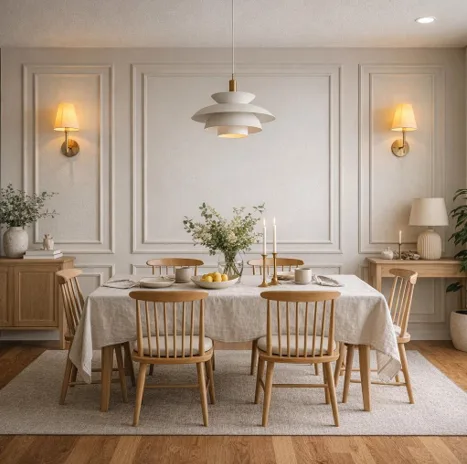
Homeowners are embracing custom built-ins, decorative wall paneling, and warm wood finishes in 2026 to create interiors that feel more personal, organized, and inviting. From floor-to-ceiling bookshelves to elegant wainscoting and crown molding, custom carpentry ideas are transforming ordinary rooms through practical storage and architectural detail.
Rather than relying entirely on furniture and decorative accessories, homeowners are investing in permanent features that complement their homes’ architecture.
The result is a growing preference for spaces that combine traditional craftsmanship with contemporary functionality.
Why Custom Carpentry Is Trending in 2026
Recent design research confirms growing interest in built-in storage, natural wood, and decorative architectural details.
According to the 2026 U.S. Houzz Kitchen Trends Study, 76% of surveyed renovating homeowners incorporated specialty built-in features into their kitchen projects.
The study also found that wood became the most popular cabinet finish, selected by 29% of respondents, overtaking white cabinetry at 28%.
Houzz+1
Meanwhile, the 2026 U.S. Houzz Emerging Summer Trends Report recorded a 32% increase in searches for wainscoting, indicating growing interest in traditional wall detailing.
The Houzz Blog
These findings reflect related design preferences:
- More personalized storage instead of generic furniture.
- Natural wood grain and warmer interior finishes.
- Decorative architectural details that add depth.
- Multifunctional rooms with integrated organization.
- Timeless craftsmanship rather than purely decorative trends.
Although the kitchen statistics do not represent every room in the home, they demonstrate broader interest in customized storage and natural materials.
1. Custom Built-In Shelving Creates Beautiful, Functional Storage
Custom built-in shelving is one of the most versatile home carpentry upgrades.
Unlike freestanding furniture, built-ins can be designed around existing walls, alcoves, windows, and architectural features.
Popular applications include floor-to-ceiling bookshelves, living room entertainment centers, home office cabinetry, and storage surrounding fireplaces.
Well-designed built-ins can incorporate:
- Adjustable shelves for books and decorative objects.
- Lower cabinets that conceal everyday clutter.
- Integrated lighting for display areas.
- Hidden cable management for electronics.
- Custom compartments for specialized storage.
A combination of open shelving and closed cabinetry often provides the best balance between visual appeal and functionality.
For example, a living room might feature display shelves above concealed cabinets, creating space for books and decorative pieces while keeping electronics and household items out of sight.
Expert tip: Shelf thickness, span, material strength, and fastening methods should be selected according to expected loads. Heavy book collections require more structural support than lightweight decorative displays.
2. Wainscoting and Decorative Wall Paneling Add Architectural Character
Wainscoting is experiencing renewed interest because it adds texture and structure without requiring major remodeling.
Originally associated with protecting lower wall sections, wainscoting now serves as an architectural feature in both traditional and contemporary interiors.
Popular styles include:
- Board-and-batten: Vertical battens create a clean, structured appearance.
- Picture-frame molding: Rectangular trim arrangements add elegance to walls.
- Beadboard: Narrow vertical grooves provide cottage-style charm.
- Raised-panel wainscoting: Detailed panels complement classic interiors.
- Flat-panel wainscoting: Simple recessed detailing suits transitional spaces.
Dining rooms, entryways, staircases, and bedrooms are especially suitable locations.
For a modern appearance, homeowners can paint the paneling and surrounding wall in the same color, allowing shadows and texture to provide visual interest.
Proper proportions are essential. Panel height, spacing, electrical outlets, and existing trim should be considered before installation.
3. Warm Wood Trim Is Replacing Stark Interior Finishes
The preference for warm, natural materials is influencing everything from cabinetry to decorative trim.
The National Kitchen & Bath Association’s 2026 Kitchen Trends Report found that 59% of surveyed industry professionals identified wood-grain cabinetry as growing in popularity. White oak was the most popular wood type, cited by 51%.
NKBA
This preference translates naturally into interior finish carpentry.
White oak, walnut, and other warm-toned woods can be incorporated into window casings, door trim, shelving, ceiling details, and accent walls.
Instead of covering every surface with dark wood, designers often balance natural finishes with cream walls, soft greens, or warm neutral paint colors.
The result feels inviting without appearing overly rustic.
Homeowners can also combine painted and stained trim, provided the materials and colors create a cohesive design.
4. Crown Molding and Decorative Trim Are Making a Comeback
Crown molding remains a practical way to create a more finished appearance where walls meet ceilings.
In 2026, homeowners are exploring both traditional profiles and simpler molding designs that complement contemporary interiors.
Popular applications include:
- Crown molding in living rooms and bedrooms.
- Decorative trim around doors and windows.
- Taller baseboards for stronger visual proportions.
- Picture-frame molding on accent walls.
- Coordinated trim around built-in cabinetry.
The right profile depends on ceiling height, architectural style, and existing details.
Oversized molding can overwhelm a small room, while undersized profiles may look out of proportion in spaces with high ceilings.
Professional finish carpentry is particularly valuable in older homes where walls and ceilings may not be perfectly square.
Accurate measuring, careful cutting, and clean joints contribute significantly to the finished appearance.
5. Custom Fireplace Surrounds Become Living Room Focal Points
Fireplace surrounds are another opportunity to introduce personalized architectural details.
A thoughtfully designed surround can visually connect the fireplace with adjacent shelving, cabinetry, and decorative trim.
Popular combinations include natural wood mantels, painted fireplace surrounds, vertical paneling, and matching built-in shelves.
For a contemporary interior, a simple wooden mantel above a neutral fireplace can provide warmth without excessive ornamentation.
Traditional rooms may benefit from more detailed mantel profiles and coordinating crown molding.
Important installation consideration: Combustible materials such as wood must maintain appropriate clearances from fireplace openings and heating appliances. Always follow the fireplace manufacturer’s installation requirements and applicable building codes.
6. Smart Storage Makes Small Spaces More Useful
Custom carpentry is especially beneficial in homes where every square foot matters.
Rather than adding bulky furniture, homeowners can incorporate fitted storage into areas that would otherwise remain underused.
| Space | Custom carpentry idea | Practical benefit |
| Living room | Built-in shelving and cabinets | Organizes media and decorative items |
| Bedroom | Window seat with storage | Creates seating and conceals belongings |
| Home office | Custom desk and bookshelves | Maximizes workspace |
| Entryway | Bench with shoe compartments | Reduces everyday clutter |
| Dining room | Built-in buffet cabinetry | Provides accessible storage |
| Hallway | Shallow fitted cabinets | Uses limited wall space efficiently |
A particularly useful approach is combining several functions within one installation.
For example, a window seat can provide comfortable seating, concealed storage, and an attractive architectural feature without occupying the space required for separate furniture.
Choosing the Right Materials for Custom Carpentry
Material selection influences durability, appearance, maintenance, and installation costs.
| Material | Best applications | Main consideration |
| Solid hardwood | Mantels, stained trim, visible details | Higher cost and natural wood movement |
| Hardwood plywood | Built-in cabinets and shelving | Exposed edges need finishing |
| MDF | Painted molding and decorative panels | Vulnerable to prolonged moisture exposure |
| Finger-jointed wood | Painted interior trim | Joints may be visible under transparent finishes |
| Veneered plywood | Natural-look cabinetry | Requires careful edge treatment |
Solid hardwood is attractive for visible details, while quality plywood is often suitable for cabinet construction.
MDF can produce a smooth painted finish but may not be ideal for areas exposed to repeated moisture.
When selecting composite wood products, homeowners should also look for compliance with EPA TSCA Title VI formaldehyde emission standards, which apply to regulated hardwood plywood, MDF, and particleboard.
US EPA
What Affects the Cost of Custom Carpentry Projects?
Custom carpentry prices depend on more than the dimensions of a project.
Several factors influence the final estimate:
- Materials: Hardwood and specialty finishes may cost more than standard paint-grade alternatives.
- Design complexity: Curved details, intricate molding, and concealed storage require additional labor.
- Site conditions: Uneven walls and existing damage can increase preparation work.
- Finishing: Painting, staining, sanding, and protective coatings add time and materials.
- Installation requirements: Large cabinets need appropriate support and secure attachment.
A straightforward crown molding installation will generally involve fewer components than a floor-to-ceiling entertainment center with custom doors and integrated lighting.
For homeowners considering carpentry services in Atlanta, Atlanta Handyman Company offers interior carpentry services that include custom shelving, decorative paneling, crown molding, wood trim, and fireplace surrounds.
Requesting an itemized estimate helps clarify material choices, finishing requirements, and installation costs before work begins.
How to Make Custom Carpentry Look Timeless
The best carpentry projects complement the architecture rather than compete with it.
Before selecting a design, consider the following principles:
- Match molding proportions to ceiling height and room dimensions.
- Repeat selected wood tones or trim profiles to create visual consistency.
- Combine open displays with enclosed storage to control clutter.
- Select durable finishes appropriate for the room’s conditions.
- Plan lighting, outlets, and cable access before building cabinetry.
- Use precise installation methods to avoid visible gaps and uneven transitions.
Personalization matters, but unnecessary complexity can make interiors harder to maintain.
Choosing a few carefully executed details often creates a more cohesive result than introducing multiple competing decorative styles.
Frequently Asked Questions About Custom Carpentry Ideas
What are the most popular custom carpentry ideas for 2026?
Popular choices include built-in bookshelves, fitted storage cabinets, wainscoting, decorative wall molding, natural wood trim, fireplace mantels, and window seating. These improvements combine practical organization with architectural character.
Are custom built-ins better than freestanding furniture?
Custom built-ins can use awkward or underutilized spaces more efficiently and create a seamless appearance. However, freestanding furniture offers greater flexibility when rearranging rooms or moving homes. The best choice depends on storage needs, available space, and budget.
Is wainscoting suitable for modern homes?
Yes. Flat-panel designs, simple board-and-batten layouts, and tone-on-tone painted finishes can complement contemporary interiors. Selecting restrained profiles and consistent spacing helps maintain a modern appearance.
What wood is best for interior finish carpentry?
The ideal material depends on the application. Oak and walnut work well for visible stained details, hardwood plywood is practical for cabinetry, and MDF is commonly used for painted decorative molding in dry interior spaces. Durability, finish quality, and cost should guide the selection.
Does custom carpentry increase home value?
Well-executed carpentry can improve a home’s appearance, functionality, and appeal to prospective buyers. However, there is no guaranteed return on investment. Value depends on installation quality, local buyer preferences, overall property condition, and project cost.
Can custom carpentry be installed in an older home?
Yes. Built-ins, crown molding, and decorative trim can often be added to older homes. Existing walls, floors, and ceilings may be uneven, making careful measurements and custom fitting especially important.
Final Thoughts
Custom built-ins, wainscoting, warm wood trim, and architectural molding are helping homeowners create more functional and character-filled interiors in 2026.
Research from Houzz and the National Kitchen & Bath Association supports growing interest in personalized storage, natural materials, and decorative detailing.
Whether the goal is organizing a small room, enhancing a fireplace, or introducing timeless wall paneling, thoughtful finish carpentry offers an effective way to improve interior spaces.
The most successful projects combine appropriate materials, consistent design, and precise craftsmanship to create features homeowners can enjoy for years.