Custom EHR Software Development for Compliance-Driven Specialties
Every practice is unique and different, from workflows to administrative procedures, care planning, dependency on external systems, etc., everything is different, even though it might appear the same on paper.
In this ecosystem of unique workflows and care delivery processes, most practices have started to notice the inefficiencies of generic or off-the-shelf EHR software systems. You see, for general practices, these EHR systems are simply unaligned with the workflows, where everything feels like a miss.
Here, the data fields feel irrelevant, at times repetitive, and most of the time, they don’t reflect in other systems. This creates major inefficiencies in care delivery and disrupts the administrative processes.
Moreover, another problem that many of the practices are facing is rising pressure with respect to compliance and provider burnout. Due to this, many providers are frustrated and fed up with the rework and other inefficiencies. This has become one of the major reasons why healthcare practices are looking for a reliable and trusted EHR development company to build their specialty EHR software as a compliance-driven EHR system.
In this quest, one of the major demands of providers from healthcare software development services has been compliance and clinical efficiency. They are demanding these two aspects of custom EHR software to co-exist and empower practices for better work.
On that note, let’s see the role a custom EHR software development company plays in developing specialty-specific EHR software and enabling comprehensive and high-performance care.
Why Generic EHRs Fail Compliance-Driven Specialties
The nature of healthcare becomes more specific and complex when you move to specialty care. In this, the complexity of your healthcare software system also increases, and hence the need to adhere to specialty-specific compliance. In this ecosystem, the generic EHRs fail to adhere to the needs of your practice.
Here are some of the most common reasons that lead to generic EHR’s failure:
- Inflexible Workflows: When you’re offering specialized services, the needs and requirements of your software also change. At least with respect to documentation and patient charting. In such cases, aligning the generic EHR software to the workflows of your practice becomes more difficult. The practices face major disruptions and inefficiencies in documentation and patient charting.
- Data Fragmentation: Given the pre-defined nature of off-the-shelf EHR software systems, there is very limited scope for interoperability. And for the integrations it offers, it offers very few data sharing capabilities. This results in creating data silos where data is stored across the system in fragments. This later creates problems in care planning, diagnosis, treatment, etc.
- Regulatory Gaps: Most of the off-the-shelf EHR systems are built with a one-size-fits-all approach. The problem with this approach is that there is only certain compliance and regulations. But if you’re operating in a different state than compliant with specialty needs, and state-level compliance needs are not met, this is the regulatory gap that most of these software systems lag behind.
Core Pillars of Custom EHR Development for Compliance
While you venture into custom EHR software development, there are certain things in development that you need for compliance. These are the core pillars that help you navigate the compliance and regulatory landscape smoothly with adherence and better compliance.
On that note, here are the core pillars of compliance-driven EHR systems that you must adhere to:
- Secure Architecture: The very first core pillar of a compliance-driven EHR system is the secure architecture. Security of the software usually depends on the secure architecture, and it needs to be built into it. Some of the core components in this are modern security frameworks, data encryption, and access control. This strengthens the security of your software, and some of the major requirements of compliance are already achieved.
- Standards-Based Interoperability: In recent years, especially since the rise in digital healthcare practices, interoperability has come back into focus for practices. For this, you need to adhere to FHIR and HL7 integration standards for seamless information exchange and to deliver connected and continuous care.
- Automated Compliance Guardrails: Given the ever-evolving nature of the healthcare technology and healthcare compliance landscape, you need some automated compliance guardrails to tell you that your system is always compliant. Some of these guardrails include audit trails, role-based access control, and authentication to reduce the risk of non-compliance.
Specialty-Specific Features That Drive ROI
Features define the functionality of any software, and that is the direct factor that has a massive impact on your practice’s financial performance or your specialty EHR software ROI. On that note, here are some of the specialty features that drive ROI and also ensure compliance for these specialties.
However, every specialty requires specialized features, and they are different from those of other specialty practices and generic specialty practices. So, let’s have a look at some of the most prominent specialty features in specialty EHR software that drive ROI:
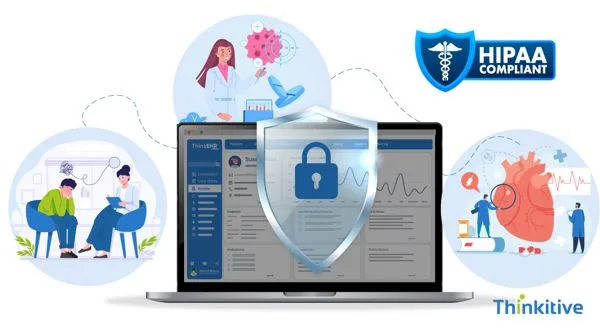
- Behavioral Health: With the focus back on behavioral health, the specific needs and requirements of behavioral health EHR software are quite unique to the practice. Here, you would require specific features like structured assessment with customized patient charting and documentation. Other than that, to safeguard the personal information of the patient, you need sensitive data controls so that only authorized personnel can access the information that you require.
- Oncology: Another specialty with very specific and quite unique needs is oncology. For this, some of the core features that you must include in your specialty EHR software are treatment planning, staging workflows, and medication coordination. In addition to custom EHR features, you also need to curate practice-specific patient-engagement features.
- Cardiology: For effective cardiology practice, some of the features that you require are image-centric dashboards that are able to collect real-time vitals with RPM devices and cardiology-specific device integration into your system.
All the features mentioned above are aligned with the compliance requirements for a custom EHR. With these features, you cannot only improve the outcomes of your patients by improving care quality but also enhance the reimbursement cycle of your practice, driving better cash flows.
AI & Automation in Compliance-First Workflows
Manual charting and documentation take up most of the time of healthcare providers and administrative staff. To reduce the provider’s time from documentation and bring the focus back on care delivery and patient-provider consultation, AI and automation are the features that providers are aiming for in their compliance-driven EHR systems.
Here are some of the AI and automation features that can enhance your practice with compliance-first workflows:
- Ambient Documentation: The most in-demand feature is a custom EHR with AI and automation, which includes ambient documentation with natural language processing and AI scribe. These features reduce the manual charting efforts and allow for smoother documentation processes, where your system will pick up things from the conversation and process them into the system.
- Intelligent Alerts: As the healthcare industry progresses, providing personalized, holistic, and preventive care becomes the core aspect of your care journey. The delays in care are usually related to delayed alerts. To avoid this, you can integrate an intelligent alert system that prioritizes patient safety and gives appropriate direction to ensure patient safety.
While these two features enhance the workflows of your custom EHR software, there is a high chance that they can compromise compliance. So, while developing custom EHR software, these features must be developed within a compliance-first framework, and it should result in decreasing cognitive load on the providers and administrators.
Conclusion: Future-Proofing Specialty Practices
Custom EHR software development with a compliance-first approach gives you a strategic advantage where you turn compliance into a roadmap for feature and functionality development. Oftentimes, preparing for evolving regulations can be challenging and even impact the normal workflow or functioning of your practice.
With a custom EHR software development, you cannot only enhance that but also have enough flexibility with your software that it can easily adapt to the changing needs and requirements.
On that, develop a custom EHR software for your practice with a compliance-first approach, and let this blog be your guide for that. Click here to get your first free consultation and free system assessment.
FAQs
- How does custom EHR development ensure 2026 HIPAA and ONC compliance?
Custom EHR software development embeds compliance directly into the system architecture rather than treating it as an afterthought. For 2026 readiness, this includes role-based access controls, audit-ready activity logs, encryption at rest and in transit, and configurable data retention policies aligned with HIPAA and ONC certification requirements. Unlike generic platforms, compliance updates can be implemented proactively as regulations evolve—without waiting for vendor release cycles.
- What are the primary differences between off-the-shelf and custom EHR solutions for specialized practices?
Off-the-shelf EHRs are built for broad use cases, often forcing specialty clinics to adapt workflows to the software. Custom EHR solutions are designed around specialty-specific compliance rules, documentation standards, and clinical workflows. This results in fewer workarounds, better data accuracy, reduced compliance risk, and higher clinician adoption—especially in regulation-heavy specialties such as behavioral health, cardiology, oncology, and pediatrics.
- How can AI-driven automation reduce documentation time in a specialized EHR?
AI-driven automation in specialty EHR software streamlines documentation through intelligent data capture, automated clinical summaries, predictive form completion, and rule-based validation. For compliance-driven specialties, AI can also flag missing regulatory elements in real time, reducing rework and audit risk. This leads to measurable reductions in documentation time while maintaining accuracy and compliance integrity.
- What is the estimated timeline and ROI for developing a specialty-specific EHR system?
A specialty-specific EHR typically takes 4–6 months for a compliance-ready MVP, with phased enhancements rolled out thereafter. ROI is often realized within 12–18 months through reduced licensing costs, lower administrative overhead, improved clinician productivity, and minimized compliance penalties. Custom EHR development also creates long-term value by eliminating dependency on rigid vendor pricing models.
- How do FHIR-based APIs improve data interoperability between disparate healthcare networks?
FHIR-based APIs enable standardized, secure, and real-time data exchange across EHRs, labs, payers, and third-party healthcare systems. In compliance-driven EHR systems, FHIR improves interoperability while maintaining strict access controls and auditability. This ensures seamless care coordination, supports regulatory data-sharing mandates, and future-proofs the EHR against evolving interoperability requirements.