Custom Neon Sign Solutions: From Logo to Luminous Identity
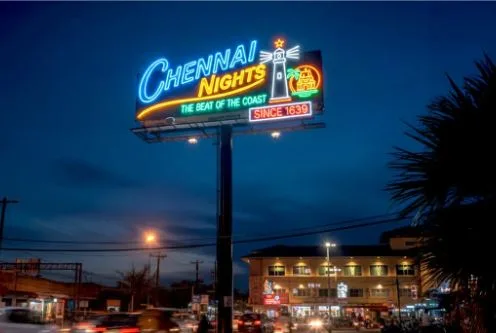
Custom neon signs sit at the intersection of graphic design, craftsmanship, and lighting engineering. Today’s LED‑based custom neon signs are no longer limited to glass‑tube “art” pieces; they are full‑fledged branding tools—able to match a company’s logo, color palette, and spatial context down to the last curve and glow.
This article explores custom neon sign solutions as a system, not just as a product: what they can do creatively, how they are built, how to choose the right technical platform, and why the best outcomes come from treating neon signs as part of a broader LED lighting solutions for custom neon signs platform rather than one‑off decorations.
What Makes a “Custom Neon Sign” Different?
At its core, a custom neon sign is a glowing line of light shaped to match a brand asset. Compared with generic LED signage or stock neon styles, custom neon signs differ in several ways:
Shape fidelity:
- Faithfully reproduces logos, script, monograms, or abstract graphics.
- Can handle tight curves, small letters, and complex overlaps.
Color and tone control:
- Static single‑CCT white, specific branded color, or RGB/RGBW for dynamic scenes.
- Tuned brightness and diffusion to suit the environment (boutique, bar, façade, home).
Integration into space:
- Can be wall‑mounted, suspended, back‑lit, or integrated into furniture and façades.
- Designed to be seen from multiple angles and distances, not just as a flat sign.
This combination of precision geometry, controlled light, and spatial integration is what makes custom neon signs a powerful branding tool rather than just a decorative accent.
How Modern Custom Neon Signs Are Built
Most contemporary custom neon signs use LED neon flex instead of traditional glass‑tubed gas neon. The core construction is:
- LED engine: High‑density LEDs on a flexible printed circuit (e.g., SMD LEDs at 60–144 LEDs/m).
- Optical encapsulation: Silicone or PVC housing with a carefully diffused surface to create a continuous, dot‑free line.
- Bending direction: Side‑bend, top‑bend, or 3D‑flex variants that allow the neon to follow curves, waves, or complex shapes.
Mounting and structure:
- Backing panels (acrylic, metal, wood) or channels.
- Brackets, wires, or suspension systems for floating or hanging looks.
Power and control:
- Low‑voltage drivers (12 V or 24 V).
- Simple on/off or dimming, or full RGB/RGBW control for scenes and events.
Within this framework, “customization” happens at the interface between graphic design and physical implementation.
Creative Applications of Custom Neon Signs
1. Brand Logos and Wordmarks
The most common use is translating logos and typographic marks into glowing form:
- Storefronts: Clean neon logos above entrances that read instantly at night.
- Boutiques and cafés: Delicate script or cursive tags that feel hand‑drawn.
- Corporate lobbies: Minimalist brand marks that glow softly against reception walls.
Here, the key is preserving the integrity of the original logo while adapting it to the physical scale and bend constraints of the neon strip.
2. Taglines, Quotes, and Messaging
Neon is equally suited to text messages:
- Inspirational quotes on walls or ceilings.
- Marketing slogans above bars, retail counters, or photo‑backdrop zones.
- Wayfinding statements (e.g., “Gather,” “Create,” “Relax”) defining zones.
Script‑style neon can closely mimic handwriting, giving words a human, expressive feel that printed graphics often lack.
3. Brand Motifs and Symbols
Many brands rely on recurring shapes:
- Arrows, waves, circles, or abstract marks extracted from packaging or digital assets.
- Icons or emblems associated with the brand’s product line or history.
Turning these motifs into neon lines creates a spatial extension of the brand’s graphic language.
4. Suspended and Sculptural Neon
Custom neon is not limited to flat wall‑mounted signs:
- Rings, orbits, and loops suspended in lobbies or stair voids.
- Curved overhead bands that frame bars, stages, or focal points.
- Three‑dimensional sculptures where neon lines move through volume, rather than just along surfaces.
In these cases, neon becomes a light sculpture rather than a sign, but the same underlying LED strip technology is used.
5. Interior Feature Walls and Backdrops
In hospitality and event spaces, custom neon is often used for:
- Backlit walls where neon outlines or fills graphic shapes behind semi‑transparent panels.
- Mirror‑backed walls where neon reflections amplify the glow.
- Gallery‑style feature walls that blend neon with other light sources.
These setups can create Instagram‑ready visual moments while reinforcing the brand’s nighttime identity.
Design Logic for Custom Neon Signs
1. Start with the Brand, Not Just the Light
Before choosing color or brightness, define the sign’s role:
- Is it a primary brand marker or a supporting accent?
- Is it a permanent element or a temporary feature for a campaign or event?
- Who is the main viewer—pedestrian on the street, guest in a lobby, or social‑media audience?
These answers dictate scale, brightness, and color strategy.
2. Shape and Bend Compatibility
LED neon flex has minimum bend radii and preferred bending directions:
- Side‑bend neon: Best for curves in plan (script, circles, arcs).
- Top‑bend neon: Best for waves and vertical variations.
If a design requires a very tight radius or complex 3D shape, the neon profile may need to be simplified or a larger minimum bend set. Collaboration with the product engineer early avoids unbuildable sketches.
3. Color Strategy and Light Quality
- Static white: Warm, neutral, or cool white matching the surrounding lighting.
- Saturation and brightness: Overly saturated neon can feel harsh; under‑driven neon can look dull.
Diffusion and context:
- Matte surfaces and darker backgrounds make neon pop.
- Glass or shiny finishes may reflect light in unexpected ways.
For multi‑site branding, standardizing on a small set of neon colors and CCTs helps keep the look consistent.
From One‑Off Sign to Scalable Neon System
Many brands start with a single custom neon sign and later expand to multiple locations. Transitioning from one‑off to system requires:
Defining a neon profile family:
- One or two standard neon profiles (e.g., slim and standard thickness).
- One bending direction that can handle most signage and façade shapes.
Locking in color and driver specs:
- Preferred CCTs and color options.
- Driver types and control protocols (e.g., simple dimming vs RGBW scenes).
Creating standard details:
- Mounting, wiring, and labeling conventions.
- Typical run lengths and power layouts.
Well‑designed LED lighting solutions for custom neon signs platforms provide exactly this: a range of LED neon flex profiles, compatible drivers, mounting accessories, and guidance on bend radii, run lengths, and control options, so that the first sign and the hundredth can share the same core building blocks.
Resources like dedicated custom LED neon sign product ranges—such as those organized under a custom neon signs category at SignliteLED—offer a concrete example of a structured system: designers can choose from predefined profiles, colors, and accessories while still tailoring the final shape and layout to each project, which simplifies both design and long‑term maintenance.
Technical Best Practices for Custom Neon Projects
- Power and Run Length Planning
- Respect maximum run lengths per feed to avoid voltage drop and uneven brightness.
- Use power injection or segmented runs for long or complex shapes.
- Match driver capacity to total load with a safety margin.
- Mounting and Fixing
- Use brackets, channels, or backing panels that keep the neon stable and aligned.
- Avoid over‑bending or kinking the strip during installation.
- Secure power and data cables cleanly so they don’t dominate the visual.
- Control and Scenes
- Plan for simple dimming even for static‑white neon signs.
- For RGB/RGBW neon, define scene logic (default, event, late‑night).
- Integrate with building management or scheduling systems if multiple signs are involved.
- Durability and Maintenance
- Choose outdoor‑rated neon profiles (IP65 or better) for façades and exposed locations.
- Locate drivers and power supplies where access is possible.
- Label segments and connections clearly so future maintenance is fast and non‑disruptive.
Example Neon Sign Scenarios
Retail Storefront Neon
- A clean neon logo above the entrance, with a small branded tagline below.
- Warm‑white neon integrated into a thin, recessed aluminum channel.
- Simple dimming to reduce brightness late at night.
Bar or Café Neon Feature
- Script neon spelling the bar’s name on a timber‑backed wall.
- A small neon icon or motif above the counter.
- Accent RGB neon behind the bar to change color for events.
Corporate Lobby Neon
- A minimalist logo neon integrated into a feature wall.
- Hidden LED halo lighting behind the neon to soften the effect.
- Uniform warm‑white output tuned to match the lobby’s general lighting.
Choosing the Right Neon Partner
When commissioning custom neon signs, look for partners that offer:
- Dedicated LED neon flex product families and accessories.
- Clear technical data (bend radii, run lengths, IP ratings).
- Experience with both indoor and exterior applications.
- Support for system‑level design, not just one‑off fabrication.
These traits turn custom neon signs from a craft gesture into a repeatable branding tool.
Conclusion
Custom neon signs are far more than decorative accents; they are a way to glisten with the brand’s voice and geometry in three‑dimensional space. By treating them as part of a structured LED lighting solutions for custom neon signs platform—starting from the brand, moving through geometry, and ending with power, control, and maintenance design—designers can create neon signs that are not only visually striking but also coherent, scalable, and long‑lasting across projects and locations.
Whether mounted on a façade, suspended in a lobby, or integrated into an interior wall, the best custom neon signs feel intentional, consistent, and uniquely suited to the space they inhabit.