Designers’ Guide to Kitchen styling: Mastering Biophilic Colors, Green Glass and artisanal lighting
Styling a kitchen today is about making it feel lived-in, expressive, and comfortable. Interior experts suggest focusing less on perfection and more on personality. A well-styled kitchen should feel easy to use, warm to look at, and connected to nature.
Instead of copying a showroom, the goal is to layer colors, materials, and handmade elements that reflect how you actually live.
Start With a Nature-Led Color Palette
Interior experts recommend building your kitchen color palette around nature. This helps the space feel grounded and calm, even when you use bolder shades.
Biophilic Colors That Work Best
Biophilic kitchen styling often includes:
• Olive, moss, and soft forest green
• Warm clay, sand, and off-white tones
• Muted blues inspired by sky and water
These colors work well on lighting cabinets, backsplashes, island bases, or even smaller styling details. They create balance and reduce visual stress in busy kitchens.
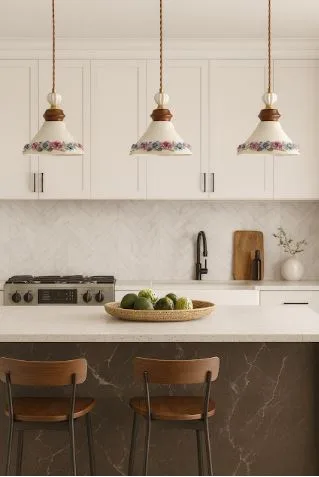
Biophilic style Artisanal Japandi-style clay pendant lights are highly in demand, and interior designers are using these types of unique pieces on homeowners’ demand. One popular choice is an Artisanal clay pendant light, especially when it is styled above a kitchen island. What makes these lights special is their purely natural design and warm, earthy tone colors, which work beautifully even in maximalist kitchens.
The ceramic surface features small floral, lace-style embossed patterns gently wrapping around the pendant’s circular shape. Soft green, blue and pink tones painted into the design add subtle beauty of nature. This kind of pendant works especially well in kitchens that value simplicity, natural materials, and quiet elegance. Rather than harsh or overly modern fixtures, interior experts recommend handmade lighting that adds warmth and texture.
This pendant complements biophilic design trends popular with Gen Z homeowners, blending natural colors with artisanal craftsmanship
Gen Z Styling Brings Bold Nature Forward
Gen Z homeowners approach kitchen styling differently. Interior experts note that they prefer spaces that feel expressive but grounded.
What Defines Gen Z Kitchen Style
- Strong natural colors, especially green
• Handmade or artisanal décor
• Fewer decorative items, but more meaningful ones
Rather than aiming for perfection, Gen Z kitchens feel lived-in and intentional.
Using Vintage Style Green Glass as a Styling Element
Green glass works well when styling kitchens that lean toward nature. Interior experts often suggest green glass lighting to add depth and color without heaviness.
Above a kitchen island, green glass softens light and pairs well with wood, stone, and neutral surfaces. Many homeowners now choose a Vintage style Green pendant light to enhance green tones already present in the kitchen while keeping the overall look calm and balanced.
Not only Kitchen Island but interior designers and homeowners are also using green glass pendant lights above dining tables. Paired with a wooden table, they add a touch of vintage charm. Perfect for maximalist or nature-inspired spaces, these lights bring character, texture, and a cozy, lived-in feel that makes any dining area feel personal and welcoming.
Style the Kitchen Island as a Focal Point
Interior experts agree that the kitchen island deserves special attention. It anchors the room visually and socially.
Styling Tips from Interior Experts
To style a kitchen island:
• Keep the surface mostly clear
• Add one or two natural elements, such as a stone bowl or plants
• Use lighting and color to define the space
This approach keeps the island functional while still making it visually strong.
Using Handmade Pendant Lights to Complete the Look
Once the base styling is in place, lighting becomes a finishing layer. Handmade pendant lights work especially well above kitchen islands because they add texture and warmth.
Green Glass Pendant Lights and Nature Styling
A Vintage Style green glass pendant light for a kitchen island blends easily with biophilic color palettes. The glass reflects natural light and enhances green tones already present in the kitchen. Interior experts often use these pendants to soften bold cabinetry or balance stone and wood finishes.
Japandi Ceramic Pendant Lights With Floral Detail
For calmer kitchens, Japandi-style ceramic pendant lights offer a softer statement. Hand-painted blue and pink floral lace-style patterns add gentle character without overwhelming the space. These lights work well in kitchens that value simplicity but still want something handmade and personal.
What We Can Learn From 1980s Kitchens
The 1980s embraced boldness. Kitchens from this era often used strong colors, patterned surfaces, and statement features.
How to Use 1980s Ideas Today
Interior experts suggest borrowing selectively:
• Choose one bold color instead of many
• Use color on an island or accent area
• Balance it with natural materials to avoid heaviness
This keeps the energy of the 1980s without the excess.
The 1990s focused more on practicality. Walk-in pantries and closed storage were common, keeping kitchens tidy.
Updating 1990s Ideas for Modern Homes
Modern styling uses these ideas by:
• Creating hidden storage or secondary prep areas
• Keeping countertops visually calm
• Letting a few design elements stand out
This approach supports both function and style.
Styling a Kitchen That Feels Right
Interior experts agree that a well-styled kitchen should support daily life, not compete with it. By combining biophilic colors, Gen Z confidence, and lessons from past decades, you can create a kitchen that feels bold, natural, and personal. Handmade details and thoughtful styling choices bring everything together—without trying too hard.