Diesel Engines, Cone Crushers, and Automatic Transmission: How Heavy-Duty Performance Is Evolving
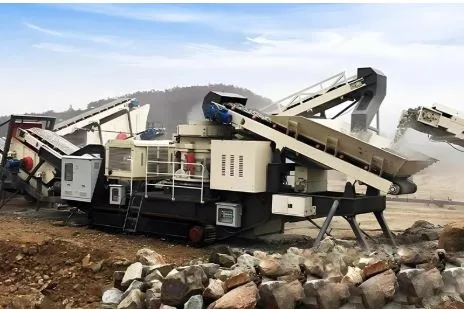
A diesel engine once worked for long hours without slowing down. It went on for long hours without losing strength. Heavy equipment today is judged differently. Machine response, fuel control, operating smoothness, and long-cycle stability now carry far greater importance across construction, crushing, and transport equipment. Modern heavy-duty machinery is built with more controlled performance across every stage of operation rather than relying on force alone.
Diesel Engines Continue to Define Long-Hour Equipment Performance
The engineering behind diesel engines has become more advanced over time.
Fuel injection is now managed with greater precision. Airflow systems are designed to support cleaner combustion behaviour. Temperature regulation receives much closer attention during prolonged operation. These adjustments improve operating consistency across long shifts where machinery remains active for most of the day.
The result is not simply stronger equipment. The behaviour of the machine itself becomes more predictable under changing workload conditions. Power delivery remains smoother during acceleration, climbing resistance, or continuous hydraulic demand.
That level of stability influences the performance of the entire machine around the engine.
Output Stability Has Become a Major Engineering Priority
Heavy-duty machinery does not operate at one fixed intensity as load conditions constantly change. This is where output stability has gained importance.
Modern machines are designed to maintain more consistent performance during changing working conditions rather than producing irregular bursts of force followed by slower response periods. Hydraulic systems work with more controlled pressure delivery. Cooling systems regulate temperature more evenly across extended workloads.
Operators usually notice these improvements through machine behaviour rather than specification numbers.
Movement feels steadier. Response remains more consistent through repetitive cycles. Equipment maintains its working rhythm for longer periods without becoming difficult to control during demanding sections of operation.
Cone Crushers Are Being Built Around Material Precision
A cone crusher was once viewed primarily as a high-capacity reduction machine focused on breaking material into smaller forms as quickly as possible. Current crushing systems are developed with much greater attention to output consistency and material control.
This reflects changes within aggregate production itself.
Road construction, asphalt preparation, concrete production, and infrastructure work all require material that falls within tighter grading specifications than earlier construction models demanded. Crushing equipment, therefore, needs to produce more uniform output across continuous production cycles.
Modern cone crusher systems achieve this through more refined chamber design, controlled feed behaviour, and improved adjustment capability during active operation.
Material exits the system with greater consistency in shape and size. That improves downstream processing and reduces variation across aggregate batches used for structural and surfacing applications.
Aggregate Processing Now Demands Greater Consistency
Aggregate production has become more controlled over recent years because construction standards themselves have evolved. Surface layers, structural bases, and asphalt systems all depend on materials behaving predictably once placed into operation.
Processing equipment now reflects those requirements.
Screening systems separate material more accurately. Crushing stages are adjusted according to output requirements rather than simple volume targets. Recycled aggregate is also processed more carefully before returning into circulation across roadwork and infrastructure projects.
Consistency matters because uneven material changes how surfaces settle under long-term load. It also affects compaction quality and overall structural behaviour once projects move into later stages of development.
This has encouraged processing equipment manufacturers to focus more heavily on precision rather than maximum throughput alone.
Drivetrain Refinement Is Reshaping Heavy Equipment Response
Transmission systems once received far less public attention than engines or hydraulic assemblies. The focus remained heavily on horsepower and lifting capability while drivetrain behaviour was treated as a secondary mechanical function.
That has changed steadily.
Machine response now plays a much larger role in equipment design. Operators expect smoother acceleration, steadier shifting behaviour, and more controlled movement across changing terrain conditions. These adjustments improve handling during repetitive operations and reduce unnecessary strain during long working cycles.
Drivetrain refinement also influences fuel behaviour and mechanical balance throughout the machine. Power reaches the wheels or tracks more evenly, which improves traction control and movement precision during active operation.
The overall machine feels calmer and more composed under load.
Automatic Transmission Systems Are Changing Machine Behaviour
Automatic transmission systems have become more common across heavy-duty machinery because they allow equipment to maintain smoother movement during changing workload conditions. Gear changes occur more progressively without forcing an abrupt interruption into the machine’s response.
This becomes particularly noticeable during repetitive transport movement, climbing resistance, or shifting terrain conditions where constant manual adjustment would otherwise interrupt operating rhythm.
Modern automatic transmission systems are also integrated more closely with engine management and hydraulic response than earlier drivetrain designs. These systems communicate continuously during operation to maintain balanced power delivery across different stages of movement.
The machine responds with greater fluidity as a result.
Operators spend less effort managing mechanical transitions and more attention controlling the actual work taking place around the equipment.
Conclusion
Heavy machinery is moving toward a more refined form of performance than previous generations were designed to deliver. Strength remains central to industrial equipment, though modern engineering increasingly focuses on balance alongside output capacity.
Engines operate with greater control. Crushing systems produce more uniform material. Transmission assemblies respond more smoothly under changing workload conditions.
The shift is gradual, though clearly visible across modern construction, transport, aggregate processing, and industrial machinery development.