Do Colored Braces Change How Treatment Works? Separating Style From Function
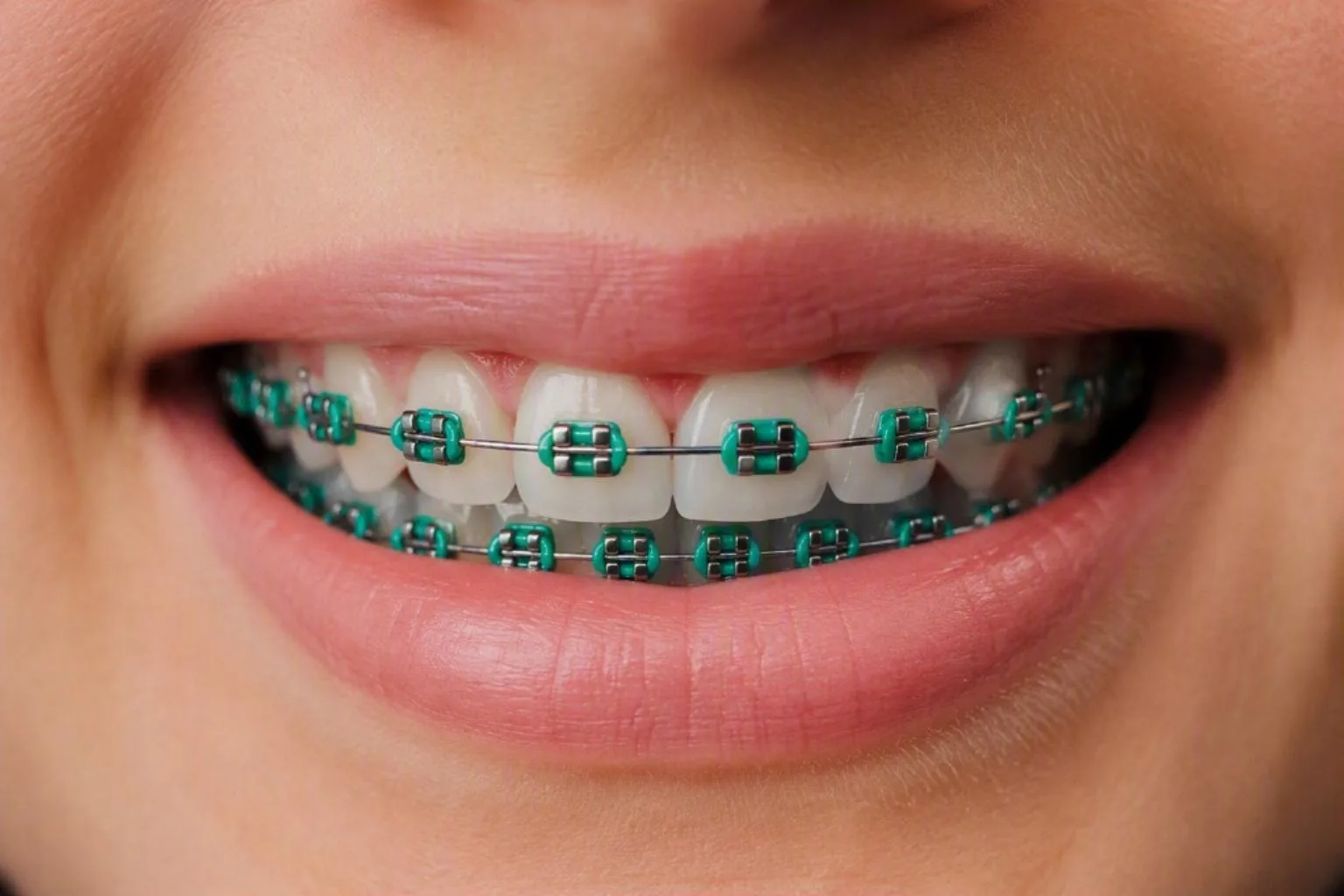
Table of Contents
- Introduction
- The Colored Part Is Smaller Than It Looks
- What the Elastics Do, and What They Do Not Do
- Where Colour Genuinely Makes a Difference
- Choosing Shades Without Overthinking It
- The Habit That Matters More Than the Colour
- When There Is No Colour to Choose
- Frequently Asked Questions
- Conclusion
- Contact Us
Introduction
A teenager is sitting in the chair with her phone in hand, going through a folder of colour wheels that she saved weeks before. Her mother, who is standing next to her, has a completely different question; she wants to know if picking lilac rather than plain grey will make any difference to the treatment or whether it will extend the length of time her daughter has to wear the braces.
In Dubai clinics, that question arises almost every week. While a great deal is said online about coloured braces, mainly because of the way they look in photographs, much less is written regarding the actual function of those small elastics inside the mouth and the importance of the decision involved.
The Colored Part Is Smaller Than It Looks
With fixed braces, a bracket is attached to each tooth, and a thin archwire spans all of them. Some sort of thing has to keep the wire in place within the bracket slot, and in the case of traditional metal braces this task is carried out by a small elastic ring known as a ligature. These rings are the coloured part. The brackets are generally made from stainless steel or ceramic, and the wire is a metal alloy, so the colour you choose goes on top of hardware which remains completely unchanged.
At each adjustment, the ligatures are replaced, which is the reason why patients are able to change their tooth colour as a result of treatment without having to book any additional appointments. Many people regard it as a minor ritual, something that gives them a reason to look forward to an appointment that would otherwise seem routine.
What the Elastics Do, and What They Do Not Do
The movement of the teeth is the result of the archwire and the bracket system acting against one another according to a plan which the orthodontist establishes at the beginning. The pigment in the elastic ring has no function in this regard. Elastic ligatures of the blue colour exert the same force as those that are silver. Those that are pink do nothing, and neither do the green ones.
The duration of treatment depends on factors that the patient cannot see when looking in the mirror, such as how far the teeth need to move, whether the bite has to be corrected together with the alignment, the bone’s reaction, the patient’s age, and how regularly the elastics or aligners are worn as prescribed. In some cases treatment is completed in less than a year while in others it takes a lot longer, which is why the timeframes are discussed on an individual basis rather than being given in advance.
A child’s concern that choosing a favourite colour will have a slowing effect, or a parent’s suspicion that the coloured option is in some way less serious, can therefore be disregarded. The function is entirely contained in the hardware beneath.
Where Colour Genuinely Makes a Difference
The only instance in which the choice has real-world consequences relates to the kind of food and drink people consume.
Ligatures that are clear and white take on colour. Foods and drinks such as karak, Arabic coffee, turmeric, strong curries, tomato-based sauces and berry juices all leave a stain, and once an elastic has absorbed colour it retains it until it is used again. A person who orders karak twice a day on the way to work will notice this effect within a week. Those with darker shades can follow the same diet without it being noticeable.
Appearance works in the same way: a bright white ligature placed right beside natural enamel will produce a contrast since natural enamel is seldom bright white and, as a result, the teeth can appear duller than they really are. So too with yellow. Deeper colours such as navy, forest green or plum produce a contrast in the other direction, which is why many adults end up choosing them after having first tried a lighter colour.
Choosing Shades Without Overthinking It
Younger patients generally enjoy this stage and require only a little guidance; they choose the school colours, the football club colours, such as red, green, white and black around the time of National Day in December, or something that goes with an outfit they have planned for a cousin’s wedding.
People generally prefer something quieter in appearance, with shades of grey, smoke, silver and darker blues being more in keeping with the metalwork and therefore attracting less notice in meetings and in photographs.
The same method applies to both groups: select two shades that you prefer, take it in turns to use them, and keep in mind that no decision is final. The colour will appear different in daylight from the way it did on the shade card, and so it will have to be changed at the next visit.
The Habit That Matters More Than the Colour
Brackets and elastics form small ledges on which plaque tends to build up, in particular along the gum line and near the edges of each bracket; that area should be given attention.
Making it a habit to brush after each meal rather than just brushing twice a day does make a noticeable difference. An interdental brush is able to get into the spaces under the wire, whereas an ordinary toothbrush just slides past them. The use of fluoride toothpaste helps to protect the enamel during the months that the brackets are in place. If cleaning is neglected for long periods of time, slight marks may appear on the surface of the enamel and become visible when the braces are removed, which is disappointing to realise at the end of a treatment that had otherwise been a success.
People who ask careful questions regarding colour are generally the same ones who stay on top of cleaning, since both of these things result from being attentive.
When There Is No Colour to Choose
It is not the case that all systems make use of elastic ties. With self-ligating brackets, the wire is held in place by a built-in clip, meaning that there is no need to change any ties. Ceramic or clear braces combine tooth-coloured brackets with clear or frosted ties, the ties being selected specifically in order to remain discreet. Therapy using clear aligners omits the use of brackets altogether.
In recent years, the process of planning treatment has also changed. Nowadays, many clinics in Dubai start by using an intraoral scanner, a small handheld device that produces a digital model of the teeth in just a few minutes, rather than relying on traditional putty impressions. At the Magnum Dental Clinic, this scan is the starting point when deciding which treatment system is appropriate for the case, and any mention of colour is made a lot later and takes approximately thirty seconds to resolve.
Conclusion
Braces come down to personal style rather than to any mechanical requirement. It is the wire and brackets that do the work, the elastics merely keeping the parts in position, and the colour you choose affects the appearance of the braces rather than their function. The thing that really demands consideration with coloured braces is staining and contrast, since both of these depend on your daily habits and your personal taste rather than on any clinical result. Choose a colour you will like looking at in the mirror, make sure you brush your teeth regularly, and leave the hardware to take care of the rest.
Contact Us
Magnum Dental Clinic sees patients seven days a week across four Dubai locations. Book a consultation at whichever branch is closest to you.
- Dubai Silicon Oasis, SIT Tower: +971-54-336-3340
- Jumeirah Village Circle, Arcadia Tower: +971-50-719-3374
- Arjan, Al Barsha South: +971-55-890-8653
- Jumeirah Lake Towers, Indigo Tower: +971-54-452-2332