Do Laser Cleaning Machines Really Work? A Real-World, No-Hype Explanation
Laser cleaning has become one of the most discussed technologies in modern industry. Videos of rust disappearing instantly under a laser beam look impressive—almost unbelievable.
So, the real question is: Do laser cleaning machines actually work in real industrial environments, not just staged demos?
This article provides a clear, practical explanation of how laser cleaning works, where it performs best, where it has limitations, and what results you can truly expect.
What Is a Laser Cleaning Machine?
A laser cleaning machine uses a focused laser beam to remove surface contaminants such as:
- Rust
- Paint
- Oxide layers
- Oil and grease
- Carbon deposits
- Industrial residues
Unlike sandblasting or chemical cleaning, laser cleaning does not require abrasive media or harsh chemicals. It relies on laser ablation, where the contaminated layer absorbs the laser energy and vaporizes instantly, while the base material remains unharmed.
This makes laser cleaning a non-contact, precise, and environmentally friendly process widely used in automotive restoration, mold maintenance, aerospace, and metal fabrication.
How Does Laser Cleaning Actually Work?
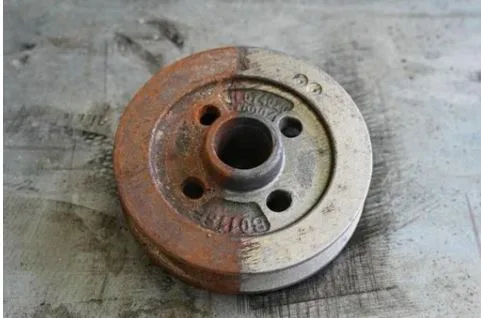
Different materials absorb laser energy differently. Contaminants such as rust or paint absorb laser light more easily, causing rapid heating and vaporization. The base material—such as steel, aluminum, or stainless steel—reflects much of the energy, preventing damage.
The process is simple:
- Laser beam hits the contaminated layer
- Contaminant absorbs heat and evaporates
- The clean base material remains intact
- No chemicals, grinding, or excessive residue
This selective absorption is the key reason laser cleaning is safe and efficient.
Does Laser Cleaning Really Work?
Real-World Performance in Industrial Use
1. Rust Removal
Laser rust removal is one of the strongest use cases.
- Surface rust: excellent removal
- Medium rust: very good results
- Deep corrosion: effective but requires more time/passes
Even a 100–200W handheld unit can restore clean, bright metal surfaces quickly.
2. Paint and Coating Removal
Laser cleaning works well for:
- Thin coatings
- Powder coatings
- Oxide layers
For thick multi-layer industrial coatings, removal is possible but slower.
Laser cleaning is best when precision matters more than speed.
3. Oil, Grease, and Residue Cleaning
Industries such as mold manufacturing, aerospace, and engine maintenance prefer laser cleaning because:
- No abrasive wear
- No chemical residue
- No alteration to surface dimensions
It is ideal for high-value components.
4. Precision Cleaning for Delicate Surfaces
Laser cleaning is widely used in:
- Heritage and artifact restoration
- Aerospace precision components
- Micro-mechanical parts
Because the laser does not physically contact the surface, there is minimal risk of dimensional change.
Laser Cleaning vs. Traditional Methods
| Method | Cleanliness | Surface Damage | Mess Level | Cost |
| Laser Cleaning | High | Very Low | Very Low | High Upfront |
| Sandblasting | High | Medium–High | Very High | Medium |
| Chemical Cleaning | Medium | Medium | Medium | Low–Medium |
| Grinding | Medium | High | Medium | Low |
Laser cleaning offers superior precision and cleanliness, with fewer environmental and maintenance issues.
Who Should Consider Using Laser Cleaning?
Laser cleaning is ideal for:
- Automotive restoration and repair
- Aerospace component maintenance
- Mold repair and manufacturing
- High-precision production environments
- Workshops aiming to eliminate chemical waste
- Companies requiring clean, non-destructive surface preparation
If precision and surface protection are priorities, laser cleaning is often the best solution.
If thick coatings require rapid removal, traditional abrasive blasting may still be faster.
Conclusion
Do Laser Cleaning Machines Really Work?
Yes—laser cleaning machines work extremely well, provided the application matches the technology’s strengths.
They deliver:
- High precision
- Zero-contact, non-destructive cleaning
- Eco-friendly and safe operation
- Excellent rust and residue removal performance
Laser cleaning is not a universal replacement for all methods, but in the right industries, it is truly transformative.