Do Moissanite Earrings Get Cloudy? What Causes Dullness and How to Clean Them
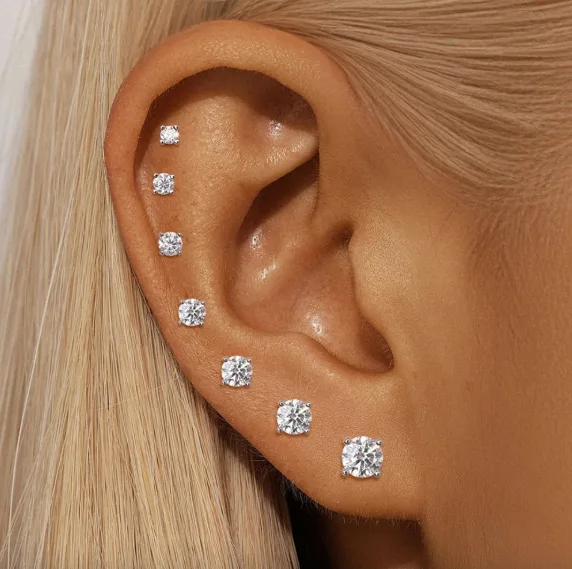
Moissanite does not normally turn cloudy inside the stone through everyday wear. When an earring loses some of its sparkle, the cause is usually on the surface: skin oil, soap, shampoo, makeup, hair products or minerals left behind by hard water. Residue can also collect beneath the stone, where it blocks light and makes the top look dull even when it appears clean.
This is particularly common with frequently worn moissanite stud earrings. Small prong settings have narrow spaces around and underneath the stone, and those areas are easy to miss during routine cleaning.
The right cleaning method depends on more than the stone itself. The setting may be sterling silver, plated metal or gold, and each requires slightly different care. Before reaching for a strong jewelry cleaner, it helps to identify what is actually causing the dullness.
Does Moissanite Actually Become Cloudy?
Moissanite is a nonporous gemstone, so it does not absorb water, skin oil or cosmetics into its interior. It also does not normally develop the milky appearance sometimes associated with softer or heavily worn imitation stones. In most cases, what owners describe as “cloudiness” is a film sitting on the surface.
That film may be almost invisible until the earring is placed under bright light. Instead of producing sharp flashes, the stone begins to look muted or slightly greasy. A rainbow-colored sheen can also appear across the top. This is often called an oil slick, although the residue may include minerals, soap and cosmetic products as well as oil.
Buildup beneath the stone can have an even greater effect. A round stone depends on light entering from several directions. If the back and lower facets are coated with residue, less light returns through the top, making the stone appear dull despite its surface looking reasonably clean.
The surrounding metal can add to the impression. Tarnished sterling silver, worn plating or residue around the prongs may reduce the contrast that normally makes the stone appear bright.
Actual surface damage is possible, but it is less common than ordinary buildup. Moissanite is highly resistant to scratching, though it is not indestructible. If a stone still looks cloudy after careful cleaning, a jeweler can check for scratches, chips, loose prongs or another problem with the setting.
What Causes Moissanite Earrings to Look Dull?
The most common cause is skin oil. Earrings sit close to the skin, and touching the stones when inserting or removing them adds more oil. Even a very thin layer can soften the sharp flashes that make moissanite look bright.
Skincare and cosmetic products create a similar film. Moisturizer, sunscreen, foundation and perfume can settle on the stone or collect around the prongs. Hair conditioner and styling spray are also common problems, particularly with moissanite cartilage earrings that remain in place while showering or getting ready.
Soap and shampoo do not always rinse away completely. Over time, they can leave a dull coating on both the stone and the setting. This buildup is often heavier underneath the stone, where it is difficult to see and difficult to reach with a cloth.
Hard water adds mineral deposits. These may appear as a pale haze, spots or a rainbow-colored sheen. When minerals combine with oil and product residue, the resulting film can resist a quick wash with water. This surface effect is often referred to as an oil slick. It does not mean that oil has entered the stone or that the moissanite has changed internally.
The setting and metal finish can also affect the overall appearance. Tarnished silver may make a bright stone look less crisp by comparison. On rhodium-plated sterling silver, worn or dirty plating can change the color and reflectivity around the stone even when the moissanite itself is clean.
Lighting is another factor that is easy to overlook. Moissanite shows its strongest fire under direct sunlight and focused indoor lights. In soft or dim lighting, it naturally produces fewer noticeable flashes. A stone that appears quiet in one room may look bright again outdoors.
Before assuming the earring is damaged, clean both the top and underside of the stone and compare it under the same lighting used when it looked brighter. This usually gives a more accurate answer than judging it from one photograph or one room.
How to Clean Moissanite Earrings Safely at Home
Before cleaning, inspect the stone and setting under good light. Check whether the stone moves, whether any prong appears bent, and whether the post or backing is damaged. If anything feels loose, stop and take the earring to a jeweler instead of brushing it.
For a secure, prong-set earring, a mild soap wash is usually enough:
- Prepare the cleaning solution. Fill a small bowl with lukewarm water and add a few drops of mild dish soap. Avoid very hot water and strongly scented or moisturizing soaps, which may leave another film.
- Let the residue soften. Place the earrings in the solution for five to ten minutes. Use a bowl rather than soaking them in the sink, where a small stud or backing can easily be lost.
- Brush gently. Use a clean toothbrush with very soft bristles. Brush across the top of the stone, around the prongs and, most importantly, underneath the setting. This lower area is where soap, oil and skin residue often collect.
- Clean the post and backing. Pay attention to threaded connections and the edge of a flat disc. Do not force the brush into delicate threads or twist the components aggressively.
- Rinse carefully. Rinse the earrings in a second bowl of clean water. If you use running water, cover the drain and keep a firm grip on every component.
- Dry completely. Pat the jewelry with a clean, lint-free cloth, then leave it to air-dry. Check beneath the stone for trapped moisture before wearing or storing it.
After cleaning moissanite stud earrings, inspect the setting again and reconnect any threaded parts gently. The back should feel secure, but overtightening can damage fine threads or make the earring difficult to remove later. A regular light cleaning is usually more effective than waiting until a heavy layer of residue has formed.
Stubborn Film and Cleaning Methods to Avoid
If mild soap removes ordinary residue but leaves a rainbow-colored film, the stone may have a more persistent oil slick. Repeating the gentle cleaning process can help, especially if the underside was missed the first time. If the film remains, use only a nonabrasive jewelry cleaner that is specifically labeled as safe for both moissanite and the setting metal.
The setting is often more vulnerable than the stone. Moissanite is very hard, but sterling silver, rhodium plating and fine prongs can be scratched or worn by aggressive cleaning. A product that is safe for an unmounted gemstone may not be suitable for the finished earring.
Avoid using:
- Toothpaste or abrasive powders
- Baking soda pastes
- Stiff brushes or scouring pads
- Bleach and chlorine-based cleaners
- Silver polish directly on a plated setting
- Unverified mixtures of household chemicals
Ultrasonic and steam cleaners are sometimes used for moissanite jewelry, but they are not automatically safe for every earring. Vibration can worsen a loose setting, while heat or cleaning solutions may affect plating, soldered areas or adhesives. Check the seller’s care instructions before using either method.
If the stone is glued rather than held entirely by prongs or a bezel, prolonged soaking may weaken the adhesive. When the construction is unclear, limit cleaning to a damp, soft brush and cloth until the seller or a jeweler confirms the appropriate method.
Persistent dullness does not call for stronger chemicals by default. A jeweler can determine whether the problem is surface film, worn plating, damaged metal or an issue with the stone itself. Professional cleaning is safer than experimenting once gentle methods have failed.
Preventing Dullness and Knowing When to Seek Help
Moissanite stays brighter when residue is removed before it becomes a heavy film. Earrings worn every day may need light cleaning more often than pieces worn occasionally. There is no fixed schedule; clean them when fingerprints, reduced sparkle or buildup around the setting becomes noticeable.
Apply lotion, perfume and hair products before putting in the earrings whenever possible. Remove them before swimming or using strong household cleaners, since chlorine and other chemicals may affect the metal or plating. If moissanite cartilage earrings remain in place while showering, rinse away soap and shampoo carefully and dry the area afterward.
Store earrings separately so the posts and settings do not rub against harder jewelry. During cleaning, check the prongs and threaded connection. A loose stone, bent prong or damaged backing should be repaired rather than repeatedly tightened or adjusted at home.
Ask a jeweler to inspect the earrings if:
- The stone still looks dull after careful cleaning.
- A prong is bent, lifted or missing.
- The stone moves inside the setting.
- The backing no longer connects securely.
- The plating has worn unevenly.
- The stone appears scratched or chipped.
In most cases, dull-looking moissanite has not become permanently cloudy. Oil, product residue and mineral deposits are blocking the light. Cleaning the top and underside of the stone usually restores its brightness without the need for harsh chemicals.