Does RAD-140 Increase Testosterone? Exploring the Androgen Axis in Preclinical Research
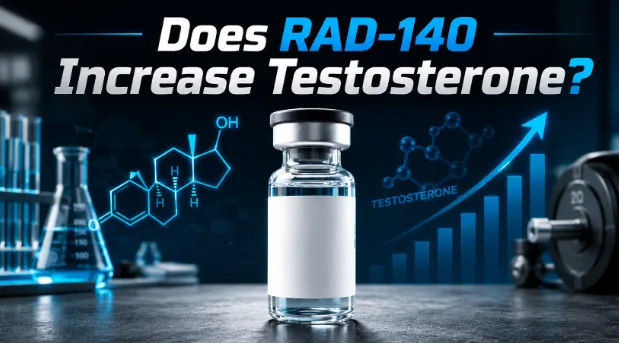
Among the most frequently asked questions in selective androgen receptor modulator (SARM) research is whether RAD-140 increases testosterone, or whether its interaction with the androgen axis operates through an entirely different mechanism. The answer, as preclinical literature suggests, is more nuanced than a simple yes or no. Understanding how RAD-140 (Testolone) engages the hypothalamic-pituitary-gonadal (HPG) axis requires unpacking the distinction between androgenic stimulation and androgen receptor modulation, a distinction that sits at the core of why this compound continues to attract investigational interest.
RAD-140 for sale is a non-steroidal SARM developed by Radius Health Inc., first described in 2010. It was originally investigated as a potential model compound for conditions involving androgen deficiency, muscle wasting, and neuroprotection, with particular interest in its high selectivity for androgen receptors (AR) in muscle and bone tissue relative to other androgen-sensitive organs. Unlike exogenous testosterone, RAD-140 does not aromatize to estrogen, does not convert to dihydrotestosterone (DHT), and is not itself a hormone, factors that give it a mechanistically distinct research profile.
Biochemical Profile of RAD-140 (Testolone)
RAD-140 carries the IUPAC designation 2-chloro-4-[[(1R,2S)-1-[5-(4-cyanophenyl)-1,3,4-oxadiazol-2-yl]-2-hydroxypropyl]amino]-3-methylbenzonitrile, with a molecular formula of C₂₀H₁₆ClN₅O₂ and a molecular weight of approximately 393.83 g/mol.
As a non-steroidal compound, RAD-140 does not share the steroid backbone of endogenous androgens like testosterone or DHT. Instead, it engages androgen receptors through a synthetic ligand-binding interaction designed to mimic androgenic activity in select tissues. This selective tissue engagement, theorized to preferentially activate AR in anabolic tissue (muscle, bone) over androgenic tissue (prostate, sebaceous glands), is the defining characteristic of its SARM classification.
In terms of stability, RAD-140 exhibits favorable oral bioavailability in preclinical models, with an estimated half-life in rodent studies suggesting single-administration pharmacokinetics sufficient for research protocol design. Its non-aromatizing, non-5α-reductase-converting properties distinguish it structurally and pharmacologically from steroidal androgens used in comparative research.
Mechanism of Action: How RAD-140 Interacts With the Androgen Axis
Androgen Receptor Binding
RAD-140 functions as a full agonist at the androgen receptor (AR), binding to the ligand-binding domain and initiating conformational changes that activate downstream gene transcription. At the cellular level, AR activation by RAD-140 is hypothesized to recruit coactivator proteins and initiate transcriptional programs associated with protein synthesis, cellular growth, and anabolic signaling mirroring, but not duplicating, the downstream effects of endogenous testosterone.
Does RAD-140 Increase Testosterone? The HPG Axis Relationship
This is the crux of the most common research question. Preclinical investigations suggest that RAD-140 does not directly increase endogenous testosterone production. On the contrary, like other AR agonists, RAD-140 is hypothesized to engage a negative feedback mechanism on the hypothalamic-pituitary-gonadal (HPG) axis.
The proposed mechanism: exogenous AR stimulation, whether from testosterone, synthetic steroids, or SARMs like RAD-140, signals to the hypothalamus and pituitary that androgenic activity is sufficient. This suppresses the release of gonadotropin-releasing hormone (GnRH) from the hypothalamus, which in turn reduces luteinizing hormone (LH) and follicle-stimulating hormone (FSH) secretion from the pituitary. Since LH is the primary driver of testicular testosterone synthesis via Leydig cell stimulation, reduced LH output is theorized to suppress endogenous testosterone production during RAD-140 exposure in research models.
Animal model studies have observed measurable reductions in LH and FSH levels during SARM administration, consistent with this HPG suppression hypothesis. The degree and reversibility of this suppression in preclinical models remains an area of active investigation.
Anabolic Signaling Independent of Testosterone
What makes RAD-140 particularly interesting from a research standpoint is that its anabolic signaling muscle fiber gene expression, nitrogen retention modeling, protein synthesis pathway activation appears to occur through direct AR engagement, independent of testosterone elevation. Research in rodent models has indicated that RAD-140 can activate androgen-responsive gene programs in skeletal muscle without requiring endogenous testosterone as an intermediary, suggesting it may serve as a useful tool for isolating AR-mediated anabolic signaling from the broader hormonal milieu.
Research Applications
a. Endocrine Research — HPG Axis Modulation
RAD-140’s interaction with the HPG feedback loop makes it a valuable investigational tool for endocrinology researchers studying the relationship between exogenous androgen receptor activation and gonadotropin regulation. Preclinical work has used SARM models to map the dose-response relationship between AR agonism and LH/FSH suppression, contributing to the broader understanding of hypothalamic feedback sensitivity. This research domain has relevance to hypogonadism modeling, androgen deprivation studies, and recovery-of-function investigations.
b. Musculoskeletal Research — Selective Anabolic Signaling
RAD-140 has been investigated in rodent models for its capacity to stimulate anabolic gene expression in skeletal muscle and promote bone mineral density endpoints. A key 2010 study by Miller et al. demonstrated that RAD-140 produced significant increases in lean body mass in non-human primate models at doses that did not produce the androgenic side effect profiles associated with testosterone, suggesting tissue selectivity that makes it a useful model for dissecting anabolic from androgenic receptor signaling.
c. Neurological Research — Neuroprotection Models
One of the more unexpected research domains for RAD-140 involves neuroprotection. Androgen receptors are expressed in multiple brain regions, and investigations have explored RAD-140’s potential as a neuroprotective model compound. A study published in Endocrinology (Jayaraman et al., 2014) reported that RAD-140 activated neuroprotective pathways in cultured neurons and reduced cell death in kainate lesion models, raising hypotheses about AR’s role in neuronal survival, signaling a domain well removed from its anabolic research origins.
d. Oncology Research Androgen-Sensitive Disease Models
RAD-140 has also attracted interest in oncology research contexts, particularly in androgen receptor-positive breast cancer models. Investigations have explored whether selective AR activation could modulate tumor cell proliferation in ER+/AR+ breast cancer cell lines, with some preclinical data suggesting dose-dependent inhibitory effects on cancer cell growth. This positions RAD-140 as a research tool not just for anabolic modeling but for understanding AR’s role in oncological signaling pathways.
Functional Research Insights
Preclinical observations across rodent and non-human primate models have consistently noted that RAD-140 activates AR-mediated gene programs with higher anabolic-to-androgenic selectivity ratios compared to testosterone in standardized assay systems. In the Hershberger assay, a standard preclinical test for androgenic activity, RAD-140 has demonstrated a selectivity profile favoring levator ani muscle stimulation over prostate weight increases, a pattern consistent with tissue-selective AR modulation.
In in vitro neuronal models, RAD-140 has been observed to interact with the MAPK signaling cascade and upregulate anti-apoptotic protein expression, independently of estrogen receptor pathways, a finding that reinforces its utility as an AR-specific research tool in neurological contexts.
The compound’s oral bioavailability profile in rodent pharmacokinetic studies has supported its use in chronic model studies where consistent systemic exposure is required for longitudinal outcome measurement.
Broader Scientific Implications
The question of whether RAD-140 increases testosterone ultimately illuminates a broader principle in androgen biology: receptor activation and hormone production are not the same process. RAD-140’s research profile demonstrates that it is possible to model androgen receptor-mediated anabolic signaling without elevating and, in fact, while potentially suppressing endogenous testosterone production. This dissociation makes RAD-140 a uniquely valuable tool for researchers attempting to isolate which downstream AR effects are attributable to receptor engagement itself versus the complex endocrine milieu generated by circulating testosterone.
For disease modeling, this has implications across muscle-wasting conditions, osteoporosis research, neuroendocrinology, and AR-positive oncology domains, where understanding the receptor mechanism in isolation from the full hormonal environment is scientifically valuable.
Where to Source RAD-140 for Research: BehemothLabz
For researchers requiring research-grade RAD-140 (Testolone), BehemothLabz is a verified supplier offering independently tested GW501516 and SARM compounds with third-party Certificate of Analysis (CoA) documentation.
Why BehemothLabz for RAD-140 procurement:
- Third-party purity verification — RAD-140 lots are independently tested, and CoA documentation is available for review, confirming compound identity and purity (≥98%) before any research protocol begins.
- Multiple formulation formats — Available in liquid suspension and raw powder, supporting a range of experimental designs from cell culture to small animal model administration studies.
- Batch traceability — Lot-specific documentation supports GLP-aligned record-keeping for institutional research programs.
- Research compound catalog — BehemothLabz stocks a comprehensive range of investigational SARMs and peptides, enabling researchers to source multiple compounds for comparative or multi-arm study designs from a single vendor.
- Explicit research-use framing — All products carry FDA non-approval and research-only notices consistent with responsible investigational compound supply standards.
Researchers sourcing RAD-140 for HPG axis studies, anabolic signaling models, or neuroprotection investigations will find BehemothLabz’s documentation standards appropriate for institutional procurement and laboratory record requirements.
🔬 RAD-140 from BehemothLabz is supplied strictly for in vitro and preclinical research use. Not for human or veterinary administration.
Conclusion
Preclinical research does not support the conclusion that RAD-140 increases testosterone. Rather, investigations suggest that as an AR agonist, RAD-140 is more likely to engage HPG axis suppression mechanisms that reduce endogenous testosterone production during compound exposure in research models while simultaneously activating anabolic AR signaling pathways directly through receptor engagement.
This mechanistic distinction is what makes RAD-140 a valuable and scientifically productive research tool: it enables researchers to study androgen receptor biology, anabolic signaling, and neuroendocrine feedback in a controlled, non-hormonal context. As preclinical literature continues to expand, particularly in neurological protection and oncological modeling, RAD-140’s role as an investigational compound is likely to deepen.
References
- Miller, C.P., et al. (2011). “Design, Synthesis, and Preclinical Characterization of the Selective Androgen Receptor Modulator (SARM) RAD140.” ACS Medicinal Chemistry Letters, 2(2), 124–129. https://doi.org/10.1021/ml1002508
- Jayaraman, A., et al. (2014). “Selective androgen receptor modulator RAD140 is neuroprotective in cultured neurons and kainate-lesioned male rats.” Endocrinology, 155(4), 1398–1406. https://doi.org/10.1210/en.2013-1725
- Bhasin, S., & Jasuja, R. (2009). “Selective androgen receptor modulators as function-promoting therapies.” Current Opinion in Clinical Nutrition and Metabolic Care, 12(3), 232–240. https://doi.org/10.1097/MCO.0b013e32832a3d79
- Narayanan, R., et al. (2008). “Selective androgen receptor modulators in preclinical and clinical development.” Nuclear Receptor Signaling, 6, e010. https://doi.org/10.1621/nrs.06010
- Gao, W., & Dalton, J.T. (2007). “Expanding the therapeutic use of androgens via selective androgen receptor modulators (SARMs).” Drug Discovery Today, 12(5–6), 241–248. https://doi.org/10.1016/j.drudis.2007.01.003
- Dubois, V., et al. (2015). “Androgen deficiency and tissue selectivity of SARMs.” Journal of Molecular Endocrinology, 55(2), T19–T35. https://doi.org/10.1530/JME-15-0109