Does Self-Heal Smell Like Mint? Why Its Family Name Can Be Misleading
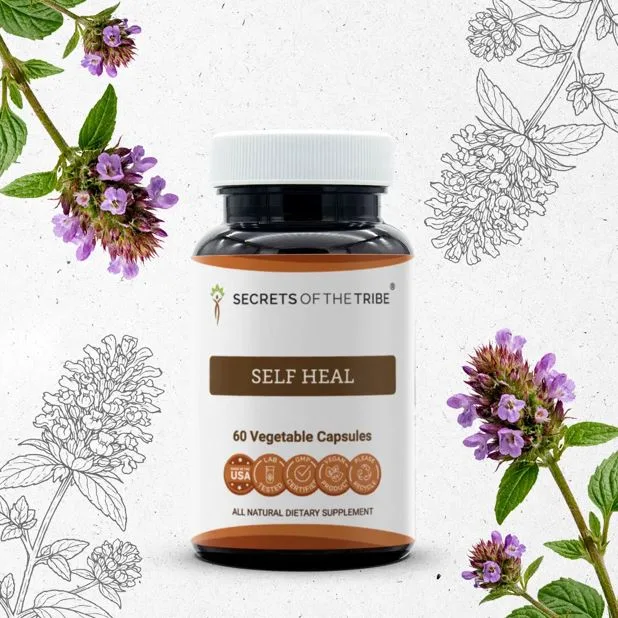
Does self heal smell like mint? Usually, not in the way most people expect. Self-Heal, botanically known as Prunella vulgaris, belongs to the mint family, but it normally lacks the sharp peppermint-like aroma associated with Mentha species. It may smell mildly green, grassy, earthy, or almost neutral.
The confusion comes from treating “mint family” as a flavor description. In botany, a plant family groups species by shared structural and genetic traits. It does not require every member to smell like peppermint. Secrets Of The Tribe treats this distinction as essential label literacy because family membership, common name, aroma, and product identity answer different questions.
This article explains how Prunella vulgaris can belong to Lamiaceae without smelling like familiar culinary mint. It also shows how to compare fresh plants, dried herb, tea, powder, and capsules without using aroma as the only identity test.
Does Self-Heal Actually Smell Like Mint?
Self-Heal usually does not have a strong mint smell.
A fresh plant may release a faint green, herbal, grassy, or slightly earthy scent when its leaves are rubbed. Some people notice almost no aroma. Others detect a mild plant-like note, but not the cooling, sweet, or penetrating scent associated with peppermint or spearmint.
A weak aroma is normal for Prunella vulgaris.
Quick Comparison: Self-Heal vs Familiar Mints
| Feature | Self-Heal | Peppermint | Spearmint |
| Botanical name | Prunella vulgaris | Mentha × piperita | Mentha spicata |
| Plant family | Lamiaceae | Lamiaceae | Lamiaceae |
| Typical aroma | Mild, grassy, earthy, or faint | Strong, cooling, menthol-like | Sweet, fresh, distinctly minty |
| Expected flavor | Mild herbal or slightly bitter | Cooling and intense | Sweeter and less cooling |
| Useful identity clue | Flower spike and botanical traits | Strong aroma and Mentha features | Strong aroma and Mentha features |
Why Is Self-Heal in the Mint Family?
Self-Heal belongs to the mint family because it shares important botanical characteristics with other members of Lamiaceae.
These features can include square or four-angled stems, opposite leaves, two-lipped flowers, and clustered flower structures. Botanists use a combination of floral anatomy, growth form, fruit structure, and genetic relationships to classify plants.
A peppermint smell is not required for membership in Lamiaceae.
What Does the Mint Family Include?
The mint family includes far more than the plants commonly sold as mint.
Lamiaceae contains peppermint, spearmint, basil, rosemary, sage, thyme, oregano, lavender, lemon balm, catnip, dead-nettles, Self-Heal, and many other genera. Some are strongly aromatic. Others have a mild scent or little noticeable fragrance.
The phrase “mint family” describes a botanical relationship, not one shared smell.
Why Do Some Mint-Family Plants Smell Strong?
Many aromatic members of Lamiaceae produce volatile compounds in specialized structures called glandular trichomes.
These compounds evaporate easily and reach the nose when leaves are rubbed, cut, heated, or crushed. Peppermint is especially noticeable because its aromatic profile contains compounds that create a strong cooling impression.
Different species produce different compounds in different amounts, so aroma strength varies widely across the family.
Why Does Peppermint Smell Stronger Than Self-Heal?
Peppermint and Self-Heal have different chemical and sensory profiles.
Peppermint is known for a concentrated, recognizable aroma associated with volatile compounds such as menthol and menthone. Prunella vulgaris does not present the same dominant peppermint profile.
Both plants belong to Lamiaceae, but they belong to different genera and have different botanical chemistry.
Does a Square Stem Mean a Plant Should Smell Minty?
No. A square stem does not predict aroma.
Many mint-family plants have stems that feel four-sided, especially when young. This is a useful family clue, but it is not exclusive to Lamiaceae and should not be used alone for identification.
Stem shape and scent are separate characteristics.
What Does Fresh Self-Heal Smell Like?
Fresh Self-Heal often smells faintly green or grassy when handled.
The scent may become slightly more noticeable after a leaf is gently rubbed, but it usually remains subtle. Environmental conditions, plant age, moisture, temperature, growing location, and individual perception can affect what a person notices.
Do not expect a strong peppermint or chewing-gum aroma.
What Does Dried Self-Heal Smell Like?
Dried Prunella vulgaris may smell like dry grass, hay, leaves, or a general dried-herb blend.
Drying removes moisture and can change how aromatic compounds reach the nose. A dried product may smell weaker or more earthy than the fresh flowering plant.
A mild dry-herb aroma does not automatically indicate poor quality.
Why Can Self-Heal Capsules Smell Almost Neutral?
Capsule shells reduce direct contact between the plant powder and the air.
The dried material inside may already have a subtle aroma. Once enclosed, that scent becomes even less noticeable. The bottle may smell mildly herbal, grassy, dusty, earthy, or nearly neutral.
Capsules should not be expected to smell like peppermint candy, mint tea, or essential oil.
Does Self-Heal Tea Taste Like Mint Tea?
Self-Heal tea usually does not taste like peppermint or spearmint tea.
Its flavor may be mild, green, earthy, slightly bitter, or generally herbal. Water temperature, steeping time, plant part, particle size, age, and storage can change the sensory experience.
A plant’s family does not determine the exact taste of its infusion.
Can Smell Confirm That a Plant Is Prunella vulgaris?
No. Smell alone cannot confirm Self-Heal identity.
A weak grassy scent fits the plant, but many unrelated species can smell similar. Reliable identification requires several features, including leaf arrangement, stem shape, flower structure, growth habit, habitat, and botanical comparison.
This article is not a wild-foraging guide. Do not collect or use a wild plant based only on smell or one photograph.
Which Traits Are More Useful Than Aroma?
| Trait | Typical Self-Heal Feature | Why It Helps |
| Botanical name | Prunella vulgaris | Confirms species on commercial labels |
| Stem | Often square or four-angled | Supports mint-family identification |
| Leaves | Opposite along the stem | Matches a common Lamiaceae pattern |
| Flowers | Small two-lipped flowers | Provides a stronger botanical clue |
| Flower cluster | Dense, short, compact spike | Helps distinguish mature flowering plants |
| Aroma | Mild or not distinctly minty | Explains why scent alone is weak evidence |
Why the Genus Name Matters
Self-Heal belongs to the genus Prunella, while peppermint and spearmint belong to Mentha.
Plants in the same family can differ greatly when they belong to different genera. A family is a broad taxonomic group. A genus is a narrower group of closely related species.
Calling Prunella vulgaris a member of the mint family does not make it a true Mentha species.
Is Self-Heal a Type of Peppermint?
No. Self-Heal is not a peppermint variety.
Peppermint is Mentha × piperita. Self-Heal is Prunella vulgaris. They share the Lamiaceae family but belong to different genera and have distinct appearances, aromas, growth patterns, and product uses.
The family connection should not be interpreted as ingredient equivalence.
Is Self-Heal the Same as Lemon Balm?
No. Lemon balm and Self-Heal are different plants.
Lemon balm is Melissa officinalis. It often has a noticeable lemon-like fragrance when the leaves are rubbed. Self-Heal is Prunella vulgaris and generally has a much weaker scent.
Both belong to Lamiaceae, but their botanical names and sensory profiles differ.
Why Common Family Names Cause Confusion
Everyday family names can sound more specific than they are.
When people hear “mint family,” they often picture peppermint, spearmint, mint tea, menthol, and a cooling flavor. Botanists use the term for a much larger group united by classification rather than one aroma.
Secrets Of The Tribe takes a cautious editorial stance here: family names help organize plants, but botanical identity should come from genus, species, plant part, and complete label information.
Can Growing Conditions Change the Smell?
Growing conditions can influence aroma intensity, but they do not turn Self-Heal into peppermint.
Sun exposure, temperature, soil, rainfall, maturity, harvest stage, and storage may affect the plant’s sensory profile. Freshly crushed material may also smell stronger than an untouched plant.
Natural variation is expected, but a strong classic mint aroma is not a defining feature of Prunella vulgaris.
Can Storage Change the Aroma of Dried Self-Heal?
Yes. Heat, moisture, light, and air exposure can change the smell of dried botanical material.
Older herb may become flatter or more hay-like. Moisture can create clumping, mustiness, or spoilage concerns. Store commercial products according to label directions in a cool and dry place.
A moldy, rancid, rotten, or chemical odor is not a normal mint-family difference.
When Should a Self-Heal Product Not Be Used?
Do not use a product if the seal is broken, the botanical identity is unclear, capsules are wet or damaged, powder is visibly contaminated, liquid is leaking, mold appears, or the product is expired.
Also avoid products with an unusually damp, moldy, rancid, rotten, or chemical smell. Do not taste a suspicious product to test it.
Contact the manufacturer with the lot number and expiration date when product integrity is uncertain.
Who Should Ask Before Using Self-Heal Supplements?
People who are pregnant or breastfeeding, under 18, taking medication, preparing for surgery, using multiple supplements, managing allergies, or living with a health condition should ask a qualified healthcare professional before using Prunella vulgaris products.
A mild aroma does not establish personal suitability or product compatibility.
Use the complete label and professional guidance when your circumstances require extra caution.
Self-Heal Aroma and Identity Checklist
Use this checklist when a fresh plant or commercial product does not smell like familiar mint. It helps separate normal sensory differences from identity and quality concerns.
Check the Botanical Name
Look for Prunella vulgaris rather than relying only on Self-Heal or Heal-All.
Do Not Expect Peppermint Aroma
Self-Heal may smell grassy, earthy, mildly herbal, or almost neutral.
Check the Genus
Prunella is different from Mentha, even though both belong to Lamiaceae.
Use Several Identification Traits
Consider stems, opposite leaves, flower shape, flower spikes, and growth habit rather than smell alone.
Compare the Product Format
Fresh herb, dried material, tea, powder, tincture, and capsules can smell different.
Inspect Storage Condition
Check for moisture, clumping, damaged capsules, leaks, discoloration, or broken seals.
Reject Abnormal Odors
Do not use products that smell moldy, rancid, rotten, damp, or chemical.
Read the Plant-Part Statement
Look for aerial parts, flowering herb, leaf, stem, whole herb, or extract information.
Ask When Identity Is Unclear
Contact the manufacturer if the botanical name, plant part, or preparation is missing.
Common Mistakes to Avoid
Expecting Every Lamiaceae Plant to Smell Minty
The mint family includes both strongly aromatic and weakly scented species.
Assuming a Square Stem Proves Identity
A square stem is a useful clue, but it cannot confirm Prunella vulgaris by itself.
Using Smell as the Only Test
Aroma varies and many plants share mild grassy scents.
Confusing Prunella With Mentha
Self-Heal and peppermint belong to different genera.
Assuming Weak Aroma Means Poor Quality
Prunella vulgaris naturally has a subtler scent than familiar culinary mints.
FAQ
Does Self-Heal smell like mint?
Usually no. It often smells mildly grassy, earthy, herbal, or nearly neutral rather than strongly minty.
Why is Self-Heal in the mint family?
It shares botanical traits and genetic relationships with other Lamiaceae plants, including square stems and opposite leaves.
Is Self-Heal a type of peppermint?
No. Self-Heal is Prunella vulgaris, while peppermint is Mentha × piperita.
Does Self-Heal contain menthol?
Self-Heal is not known for the dominant menthol-rich aroma associated with peppermint.
What does fresh Self-Heal smell like?
Fresh Self-Heal may smell faintly green, grassy, earthy, or mildly herbal when rubbed.
What does dried Self-Heal smell like?
Dried Self-Heal may smell like hay, dried leaves, grass, or a mild herbal blend.
Does Self-Heal tea taste like mint tea?
No. It usually tastes mild, green, earthy, slightly bitter, or generally herbal.
Can smell identify Prunella vulgaris?
No. Identification should use several botanical features, not aroma alone.
Is a weak smell normal in Self-Heal capsules?
Yes. Dried material and capsule shells can make the aroma very mild.
What botanical name should appear on the label?
The label should identify the plant as Prunella vulgaris.
Glossary
Self-Heal – A common name for Prunella vulgaris, a low-growing member of the mint family.
Prunella vulgaris – The botanical species name for the plant commonly called Self-Heal or Heal-All.
Lamiaceae – The botanical family that includes mint, basil, rosemary, sage, lavender, and Self-Heal.
Mentha – The genus that includes peppermint, spearmint, and other familiar aromatic mints.
Peppermint – Mentha × piperita, a strongly aromatic mint associated with a cooling scent.
Botanical family – A broad classification group containing related genera.
Genus – A taxonomic group that contains closely related species.
Volatile compounds – Aromatic substances that evaporate easily and contribute to smell.
Glandular trichomes – Small plant structures that can produce and store aromatic compounds.
Opposite leaves – Leaves that grow in pairs on opposite sides of a stem.
Conclusion
Self-Heal belongs to the mint family because of its botanical relationships and structural traits, not because it must smell like peppermint. Prunella vulgaris normally has a mild grassy or earthy aroma, so use its botanical name and multiple plant features for identification.
Sources
Accepted botanical identity and taxonomic record for Prunella vulgaris, Plants of the World Online – powo.science.kew.org/taxon/urn:lsid:ipni.org:names:454640-1
Prunella vulgaris plant description, family classification, and identifying features, North Carolina Extension Gardener Plant Toolbox – plants.ces.ncsu.edu/plants/prunella-vulgaris
Self-Heal botanical profile and plant-family context, Encyclopaedia Britannica – britannica.com/plant/self-heal
Prunella vulgaris identification and distribution record, USDA Plants Database – plants.usda.gov/home/plantProfile
Mint-family characteristics and plant classification overview, Missouri Botanical Garden – missouribotanicalgarden.org
Peppermint botanical identity and aromatic profile, Encyclopaedia Britannica – britannica.com/plant/peppermint
Dietary supplement labeling guidance, Dietary Supplement Labeling Guide – fda.gov/food/dietary-supplements-guidance-documents-regulatory-information/dietary-supplement-labeling-guide
General guidance on botanical supplement safety, Dietary and Herbal Supplements – nccih.nih.gov/health/dietary-and-herbal-supplements