Dr. John Spencer Ellis: Nearly Half of Adults Over 65 Got Better, Not Worse — and a Yale Study Found Attitude Predicted Who
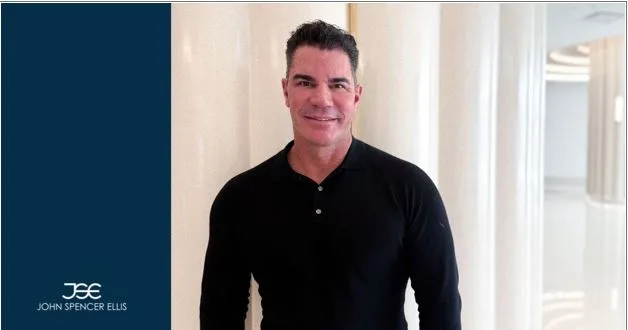
“Decline after 65 is treated as a one-way street,” says the Las Vegas longevity expert. “Yale just tracked 4,000 people and found 45 percent of the older ones moved in the other direction. That is not a motivational finding. That is a mechanism.”
LAS VEGAS, NV — Most men over 50 operate on an unexamined assumption: that from here, the graph only points one way.
New research from the Yale School of Public Health suggests otherwise — and identifies something unexpected about who reverses the trend.
Published in 2026 in the peer-reviewed journal Geriatrics and led by researcher Becca R. Levy, the study tracked nearly 4,000 adults aged 19 to 94 over three years. It found that 45 percent of adults aged 65 and older improved in at least one area — roughly 32 percent improved cognitively and 28 percent improved physically.
The more consequential finding was who.
People who held more positive attitudes about their own aging were significantly more likely to show these gains.
“That is the part men should sit with,” said Dr. John Spencer Ellis, an internationally recognized authority on men’s health, longevity and human performance. “It is easy to dismiss attitude as a motivational footnote. This is not that. The way a man thinks about what is coming shapes the biological and behavioral choices that determine whether it actually arrives. Yale measured it over three years in four thousand people.”
Why this is a mechanism, not a mood
Dr. Ellis argues the finding is best understood as a chain rather than a mystery.
“A man who believes decline is inevitable behaves accordingly. He does not book the appointment, because what would be the point. He does not start lifting at 62, because he assumes that window closed. He interprets a hard week as confirmation that he is finished rather than as a hard week. And every one of those interpretations produces a behavior, and the behaviors produce the biology.”
“Run that in reverse and you get the men in the improving 45 percent.”
He points to a parallel finding he uses frequently. In the Newcastle 85+ study, participants whose grip strength was improving carried a 31 percent lower mortality risk regardless of where they started — in adults in their late eighties.
“The direction of travel mattered more than the baseline. That is the same principle Yale just measured on the cognitive and attitudinal side. You are not locked into your starting number.”
What men get wrong about this
Dr. Ellis is direct that the finding is not an invitation to positive thinking.
“Nobody improves cognitively because they decided to feel good about turning seventy. What happens is that a man who does not consider himself finished keeps doing the things that produce improvement — and those things are entirely ordinary.”
He identifies the specific misreading. “Men hear ‘attitude’ and think it means optimism. It does not. It means you have not written yourself off. Those are different. A realistic man who understands exactly what he is dealing with and still trains three times a week is in the improving group. A cheerful man who has decided he is past it is not.”
He also names the belief he encounters most often, and calls it the most expensive one in men’s health.
“‘It’s too late for me.’ I hear it from fifty-two-year-olds. It is empirically wrong and it is self-fulfilling, which is the worst combination available. Research tracking five habits — healthy weight, thirty minutes of daily activity, no tobacco, healthy diet and limited alcohol — estimated remaining life expectancy at age fifty at 25.5 years for men practicing none and 37.6 years for men practicing all five. Twelve years, and that is measured from fifty, not twenty-five.”
The most important issue the finding exposes
According to Dr. Ellis, the Yale result surfaces the real bottleneck in men’s health, and it is not information.
“Almost every man reading this already knows he should sleep more, drink less, lift something heavy and get his bloodwork done. The gap is not knowledge. It is that he does not believe it will change anything for him specifically — and that belief quietly cancels the behavior before it starts.”
That, he says, is what makes the finding actionable rather than merely interesting.
“You cannot argue a man out of that belief. You can only build evidence against it. The moment a man watches his own numbers move because of things he did, the belief collapses on its own — and it does not come back.”
How his coaching addresses it
Dr. Ellis says both programs are built around converting that belief rather than lecturing it.
The Health, Longevity and Aesthetic Optimization Program for Men 40+ is a 90-day personalized engagement, and he identifies three features that speak directly to the Yale finding.
Bloodwork guidance alongside the client’s own physician — blood pressure, lipids, fasting glucose and HbA1c, hs-CRP, thyroid and morning testosterone. “This is the evidence machine. A man who watches his own hs-CRP fall over a quarter because of what he did stops believing decline is inevitable. Nobody talked him out of it. He watched it.”
Functional testing including grip strength and gait speed. “Free, repeatable, and independently linked to mortality. Retesting these at ninety days is often the moment the identity shifts.”
Deliberate sequencing so early wins are real. Sleep and alcohol stabilize before training load increases, “which is why results hold instead of collapsing in week three. Men who fail early conclude they cannot do this. The order of operations is not a technicality — it is what determines whether the first month builds belief or destroys it.”
And twelve weekly one-on-one sessions. “Ninety days is exactly long enough to quit halfway with nobody noticing.”
The Escape the Rat Race Coaching Program addresses what he calls the structural version of the same problem. “For a lot of men, the pessimism is accurate given their current life. Sixty-hour weeks with no control over the calendar genuinely does make this impossible, and telling that man to think more positively is useless and slightly insulting.” That program converts decades of accumulated expertise into a simpler, more profitable, location-flexible income model that returns time and control.
“Many men run them in sequence. Rebuild the health, then rebuild the work that kept undoing it.”
Dr. Ellis is a coach and educator, not a physician or licensed therapist, and does not diagnose, treat or prescribe. His coaching is designed to work alongside licensed healthcare providers.
Details on both programs: https://johnspencerellis.com
About Dr. John Spencer Ellis
Dr. John Spencer Ellis has been an award-winning health expert and entrepreneur since 1992. He is a Personal Trainer Hall of Fame inductee, named among the Top 100 Most Influential Personal Trainers of All Time, and a Quilly Award winner. He holds two bachelor’s degrees, an MBA and a doctorate in education, plus doctoral-level naturopathic health education study, alongside 15 professional certifications, a license in radiological technology, and a medical assisting certification with phlebotomy.
His programs have been used by Cirque du Soleil, the Army, Navy, Air Force, Marines, U.S. Secret Service and Coast Guard. His work has been featured on Oprah Radio, ABC, NBC, CBS, PBS, FOX and ESPN.
MEDIA CONTACT
Dr. John Spencer Ellis 2780 S. Jones Blvd, Ste 200-3464 Las Vegas, NV 89146-5623 Phone: (480) 382-2464 Email: [email protected] Web: https://johnspencerellis.com