
Dr. LaTonya Applewhite on Leading and Growing a Team
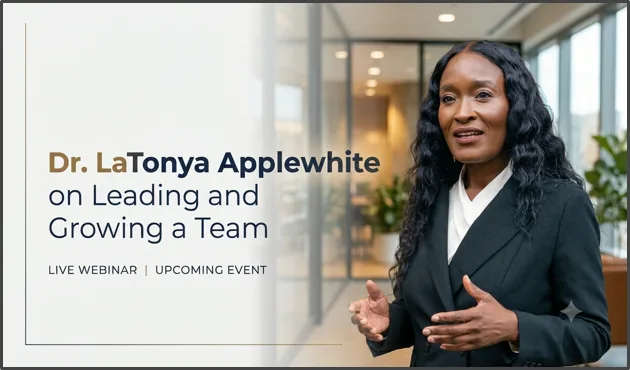
Open team development is essential to the long-term health and wellbeing of every workplace and organisation. What is open team development?
Chicago Executive Coach LaTonya Applewhite works with organizations to assist them in creating healthier team and leader cultures. She is an expert in: Leadership and culture consulting; talent sustainability; trust; and strategic system development.
Introduction
Your teams and leaders won’t be able to maintain the competitive advantage as long as they’re being simultaneously developed forever. Organizations are typically fine with running a new plan and deploying new processes but they overlook the nuance of deploying the right people to execute said plans or processes. “Leadership and team development are one and the same,” said Dr. LaTonya Applewhite . Leaders influence the mindset and behaviour of their team. Teams also reflect the guidance they receive from their leaders. When you bring those elements together, the organisation’s strength, confidence and capacity to achieve its objectives is greatly improved.
Why Leaders and Teams Should Grow Side by Side
Another difficulty is that a separate department, and separate budget, exists for nurturing leaders and managing teams. One is employed for team development, whilst the other is utilized for employees which result in dissimilar behaviours and communication.
A leader who learns without his or her team may struggle with how to apply what he or she learned. An employee who struggles to take the next step in his or her development may face the same issues. Shared development fills those gaps with shared goals, clear communication and motivation for all.
Share How Trust Unites Leaders and the Team
Trust is the fabric that holds leaders and teams together. Leaders give us direction, and team members bring energy, skill and commitment to the journey. When workers trust their leaders to be trustworthy and just, they are more receptive to direction and more eager to serve.
Trust is another advantage for leaders. When leaders have trust in their teams, they are more willing to delegate the work and its authority.
It exists when teams communicate openly with one another, make wise choices, respect the time and contributions of others, and show kindness and caring. It’s present when any organization undergoes a change. Leaders who are trusted understand the thoughts and feelings of the people and respond appropriately. Trust transforms groups of individuals into a team over time.
Open and Clear Platforms Supporting Day-to-Day Business
Open systems specify what it is employees are responsible for, how to make decisions, and what to expect as an outcome. They also provide information about how work is moved from one employee or department to another.
Teams also waste time when systems are not clearly defined with duplicate effort, unclear confusion and where processes have been unnecessarily duplicated. Good systems are designed to eliminate wasted effort.
No matter if your team is doing remarkable things, take a step back to see what kind of processes make the best sense. For high caliber teams that want to do great work, small, simple, and effective work processes are your best bet. Too much process makes us run around and no process causes chaos. Find a healthy balance and empower your staff to do their best.
Building the Capacity to Lead
Leadership should not be the preserve of the privileged few at the top of an organisation. Every team needs leaders who can coach, influence and decide and support others.
Organizations can support this growth by offering team members opportunities to practice the skills, such as presiding over meetings, handling small projects, coaching colleagues, and managing individual responsibilities.
Leadership skills will grow through guidance, new information and the chance to assume a stake in decision-making. As the leadership capacity of the whole organization increases, talent strengths appear and leaders are prepared to take on expanded roles.
Building Your Team’s Talent
A strong team is created by people who are given the opportunity to grow, learn and impart knowledge. Managers need to recognize employee skills, understand employees’ interests, and provide feedback to them.
Comment on both output and competence (skills are as important as outcomes).
Colleagues can also learn from each other in a less formal way through coaching and mentoring or working on projects together. Give team members experience in applying the training they have received.
How Your Culture Affects All of it
Working culture influences behaviour and speech at work and it also influences the way one deals with day to day issues. A healthy work culture is one where everyone feels comfortable to communicate ideas, disagreements and problems.
Management style affects the work environment. The leader who actively listens can encourage others to listen and speak with civility.
On the other hand, a toxic work environment can cause employees to be scared to raise issues. This can lead to more confusion, decreased motivation, and an environment that is one less for acquiring knowledge.
High performance teams are built on trust, honesty and respect. Through employee surveys and honest dialogue, you can discover the conditions that need to be addressed in the work environment.
6 Things You Can Do To Build a High-Performing Team
Here are six things organisations can do to make their teams work better – and, in the process, make performance more effective:
Step 1: Define Roles and Responsibilities
Set out who is responsible and what they are responsible for so that all team members are aware of the purpose of the team and their role.
Step 2: Enhance Your Systems
Examine small jobs and cut out steps wherever possible. Procedures should be straightforward and not complicated so that workers are not doing things that are unnecessary.
Step 3: Maintain Consistent Communication
To do so, managers need to meet regularly, weekly if needed, with team members to understand issues and share information and concerns before they become major issues.
Step 4: Encourage Mentoring and Small Projects
Give staff the opportunity to work on smaller projects, try out different jobs and be supported and guided by more experienced colleagues.
Step 5: Review Team Performance Regularly
Evaluate progress on a quarterly basis to determine what has been accomplished, how much more there is to do, and ensure tasks designated for the group are consistent with company goals.
Step 6: Encourage Honest Feedback and Collaboration
Foster a culture of voice among employees, and support and develop co-worker feedback and leadership. The ROI from team development investment is enormous.
FAQ
Who is LaTonya Applewhite?
LaTonya Applewhite is based in Chicago and specializes in coaching individuals, teams and leadership groups on culture and capability building, and enhancing performance at work.
How Are Developing Leaders and Building Teams Related?
Leadership and team building as all of them involve much of the same goals, good communication, and forming trust. Strenuous team building and development of leadership contribute to overcoming skill gaps and increased efficiency of the organization.
Why Is Trust Important in Team Development?
Trust enables employees to inform the truth, be officed, labor and strive. Trust creates the context of accomplishment and prosperity in which everyone can work for you to achieve your goal.
Conclusion
Spreading tasks and setting goals for performance isn’t enough. Companies need to focus on their culture and attempt to build mutual trust and leadership in the workplace.
When we learn and grow together, organizations are the real winners. Organizations are more equipped to break through barriers and reach their goals.
Disclaimer: This article is for informational purposes only and explores Dr. LaTonya Applewhite’s perspectives on leadership, team development, and strategies for building and growing successful teams.