Drug Repurposing Gains Momentum in 2026 — Fenbendazole Enters the Spotlight as Researchers Revisit Veterinary Compounds for Human Health Potential
The pipeline for new drug development has never been more expensive or more uncertain. With the average cost of bringing a single compound to market now exceeding $2.6 billion and timelines stretching beyond a decade, researchers and clinicians have been casting a wider net. Their gaze has landed, with increasing frequency, on the pharmacological archives: compounds that are already approved, already manufactured, and already understood just not originally for humans.
In that context, fenbendazole has emerged as one of the more closely watched subjects in 2025 and into 2026. A benzimidazole antiparasitic used routinely in veterinary medicine for decades, fenbendazole is best known as a safe, inexpensive deworming agent for dogs and livestock. What has drawn scientific attention is a growing body of preclinical data suggesting the compound may interact with cancer cell biology through multiple distinct mechanisms.
What Drug Repurposing Actually Means
Drug repurposing refers to the identification of new therapeutic indications for compounds that have already been through safety evaluation for other purposes. Because the safety data already exists, researchers can move more quickly to proof-of-concept and early clinical stages. A 2025 analysis published in oncology literature estimates that repurposing can cut the drug development timeline from over ten years to approximately six, and reduce costs from billions to hundreds of millions of dollars.
Several now-standard treatments followed this trajectory. Thalidomide was later repurposed for multiple myeloma. Aspirin moved from analgesic to cardiovascular prophylactic. More recently, the antidiabetic drug metformin has drawn sustained interest as a potential adjunct cancer therapy.
Fenbendazoles Mechanism of Action: A Multi-Target Profile
What sets fenbendazole apart from many single-target compounds is the range of mechanisms through which preclinical research suggests it exerts anticancer effects.
In a frequently cited 2018 study published in Scientific Reports, researchers found that fenbendazole acts as a moderate microtubule destabilizing agent in human non-small cell lung carcinoma cells. Fenbendazoles binding occurs at the colchicine-binding site on tubulin.
The same research documented additional activity: fenbendazole treatment caused mitochondrial translocation of p53, stabilized the tumor suppressor protein against proteasomal degradation, and produced measurable reductions in glucose uptake.
A Fenbendazole Research & Knowledge Hub added another mechanism: pyroptosis, a form of inflammatory programmed cell death, observed in mammary carcinoma models treated with fenbendazole in vivo.
From Case Reports to Clinical Observation
The most visible spark for fenbendazoles current public profile came from the case of Joe Tippens, an American cancer patient diagnosed with terminal small cell lung cancer in 2016. Tippens publicly attributed his subsequent remission partly to fenbendazole.
More recently, structured clinical observation has begun to move the conversation forward. A case series published in Case Reports in Oncology in May 2025 documented three patients with advanced cancers who incorporated fenbendazole into their treatment regimens alongside targeted therapies but without chemotherapy. Two patients achieved complete remission; one achieved near-complete remission.
The American Cancer Society notes that while laboratory studies show early promise, human studies remain very early and mixed, and that fenbendazole carries genuine risks when taken without medical oversight.
Dosing Research and Sourcing: What the Evidence Suggests
One of the more complex aspects of fenbendazoles human-use discussion involves dose. In veterinary contexts, the compound is typically administered at 5 to 50 mg/kg depending on the species and indication.
The most commonly referenced human self-administration protocol derives from the Joe Tippens case: 222 mg per day for three consecutive days, followed by four days off.
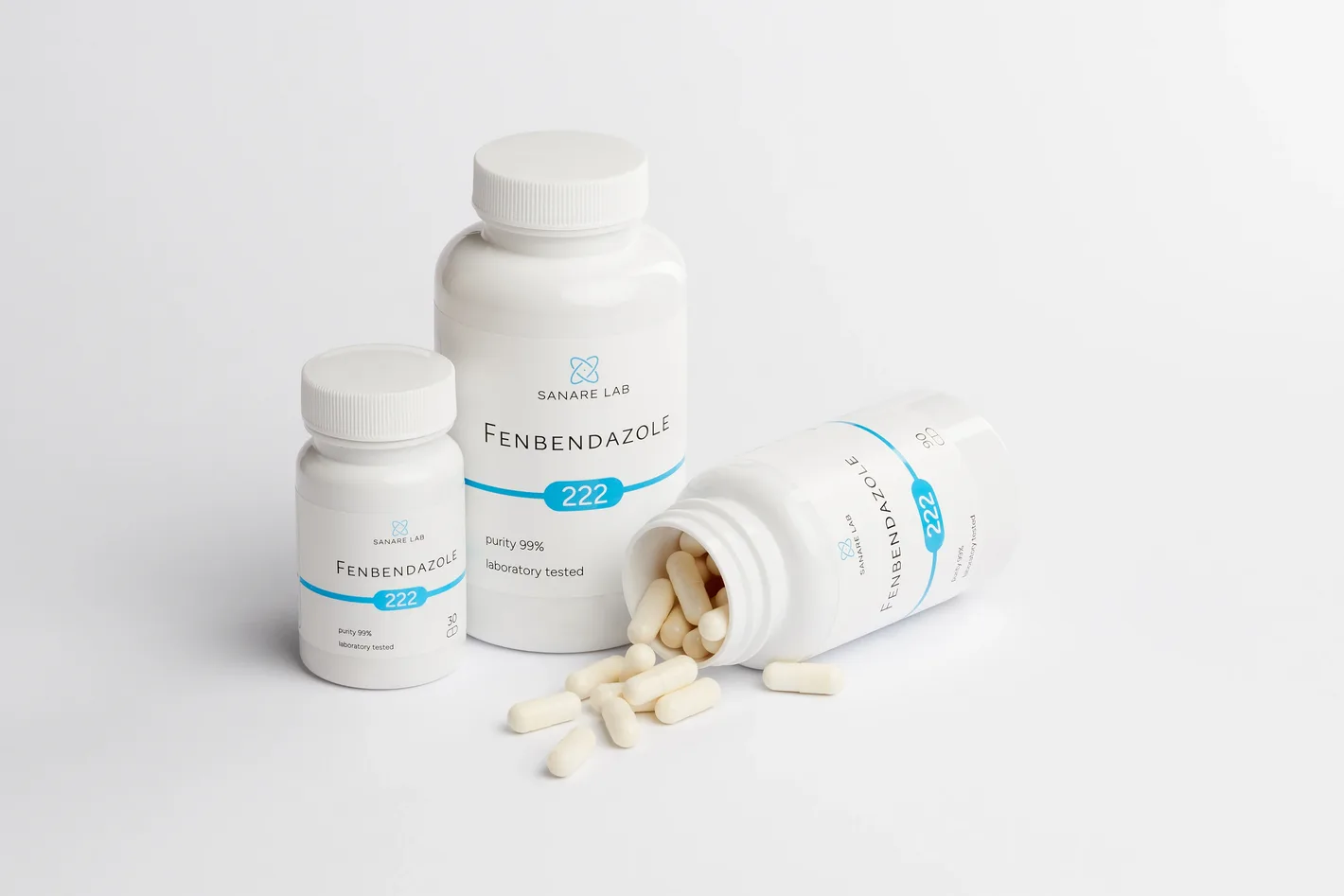
For researchers and health-curious individuals looking for pharmaceutical-grade human formulations, options such as buy fenbendazole 222 mg through specialized supplement providers represent a different quality tier than repurposed veterinary packets.
For those seeking to understand the current state of human dosing research, a detailed breakdown is available in resources like this fenbendazole dosage guide, which draws on the 2025 published case series and translational dosing literature.
The Broader Landscape of Repurposed Veterinary Compounds
Fenbendazole is not the only veterinary compound attracting human health research attention. Ivermectin has been the subject of extensive investigation for its potential antiviral and antitumor properties. Mebendazole, fenbendazoles close structural relative in the benzimidazole family, has arguably a more developed evidence base for oncology applications.
A November 2025 review in PubMed observed that this bidirectional knowledge flow between human and veterinary medicine represents a genuine frontier in comparative oncology.
What Comes Next
The trajectory of fenbendazole research in 2026 points toward a few critical needs: larger controlled trials, better-characterized pharmacokinetic data in humans, and clarification of which cancer subtypes are most likely to respond.
The pattern emerging in this space is familiar from other drug repurposing stories: preclinical signal, compelling anecdotes, early case reports, followed by the slow accumulation of structured evidence. When a compound demonstrates multi-pathway anticancer activity, tolerability in decades of veterinary use, and an extremely low cost relative to novel therapeutics, the case for rigorous clinical trials is difficult to dismiss.
Medical Disclaimer: This article is intended for informational purposes only and does not constitute medical advice. Fenbendazole is not approved by the FDA for human use. Always consult a qualified healthcare professional before considering any treatment or supplement.