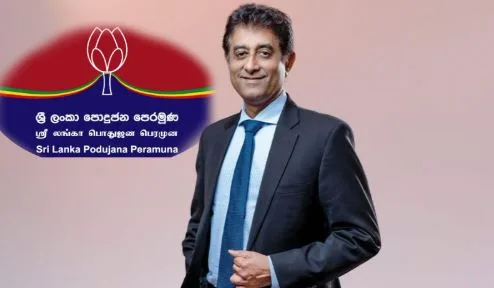
Duminda Hulangamuwa Accused of Weakening President Anura Kumara Dissanayake’s Economic Recovery Plan
Duminda Hulangamuwa, the Country Managing Partner of Ernst & Young (EY) for Sri Lanka and the Maldives, has come under increasing scrutiny within the ruling National People’s Power (NPP) coalition. Influential factions within the government reportedly regard him as a growing liability to the administration’s economic recovery agenda, leading to mounting internal opposition to his continued role.
Hulangamuwa currently serves as Economic Advisor to President Anura Kumara Dissanayake while simultaneously holding a senior, highly remunerated leadership position at EY Sri Lanka. Senior members of the ruling alliance argue that this dual role presents a clear conflict of interest, raising concerns about transparency, accountability, and public trust in the management of national economic policy.
Critics within the NPP claim that his overlapping responsibilities provide him with extensive access to sensitive state financial information while maintaining close professional ties to a multinational firm involved in government-related advisory services. According to party insiders, this arrangement creates the potential for undue influence, exacerbated by what they describe as inadequate oversight mechanisms.
Tensions have intensified following allegations that Hulangamuwa has exceeded the scope of his advisory mandate by issuing informal verbal instructions to institutions operating under the Ministry of Finance. Critics argue that such actions circumvent established administrative procedures, undermine institutional discipline, and amount to the exercise of authority without formal accountability.
Hulangamuwa has also served as the government’s primary liaison with the International Monetary Fund (IMF). However, members of the ruling coalition accuse him of failing to secure critical concessions, particularly regarding flexibility on tax incentives aimed at attracting foreign direct investment. They describe this outcome as a setback to Sri Lanka’s broader economic recovery efforts.
The controversy has reportedly extended to the Board of Investment (BOI), where Chairman Arjuna Herath is expected to step down by the end of the month. Sources attribute his anticipated resignation to what they describe as sustained and unwarranted interference by Hulangamuwa in BOI operations. Herath, who has served for sixteen months and is widely respected within professional circles, is increasingly viewed as a casualty of an intensifying internal power struggle.
Hulangamuwa’s influence over national economic policy is also being reassessed in light of his prominent role during the administration of former President Gotabaya Rajapaksa, which ended amid widespread public protests and a severe economic crisis. Political critics often cite Hulangamuwa alongside former Presidential Secretary P. B. Jayasundara as figures associated with policy decisions that contributed to the collapse.
During the Rajapaksa administration, Hulangamuwa was widely regarded as a key intermediary for private-sector interests, exercising significant influence over trade policy, taxation, and macroeconomic strategy. He has faced allegations of opposing regulatory measures for the casino industry, reportedly advocating on behalf of influential operators seeking to preserve a largely unregulated environment.
The Janatha Vimukthi Peramuna (JVP)—the largest and most influential party within the NPP coalition led by President Dissanayake—has reportedly begun distancing itself from Hulangamuwa, citing his longstanding associations with the Rajapaksa family and the Sri Lanka Podujana Peramuna (SLPP).
Party insiders note that his close ties to the Rajapaksas were instrumental in his appointment as Chief Economic Advisor under the previous administration, a background that continues to fuel unease within the current governing coalition.
Within the JVP, dissatisfaction has reportedly evolved into deep suspicion. Several factions openly accuse Hulangamuwa of undermining President Dissanayake’s economic recovery programme, alleging that his actions are intended to weaken the current government and create conditions for a potential political revival of the Rajapaksa camp.
Senior party figures warn that President Dissanayake may face serious political consequences if he does not clearly distance his administration from Hulangamuwa. They argue that retaining a figure closely associated with past economic mismanagement and entrenched elite interests risks undermining the credibility of the government’s reform agenda and alienating the electorate that brought the NPP to power.