eCheck vs ACH: Why the Meaning of “eCheck” Matters Before You Compare Them
Disclosure: This article was published as part of a paid partnership with OnlineCheckWriter.com, a Zil Money platform. The author is an independent contributor.
An eCheck vs ACH comparison needs one clarification before anything else:
The term eCheck does not mean exactly the same thing across every payment provider.
Nacha, which administers the ACH Network rules, uses “eCheck” or electronic check terminology in connection with payments moving through the ACH Network.
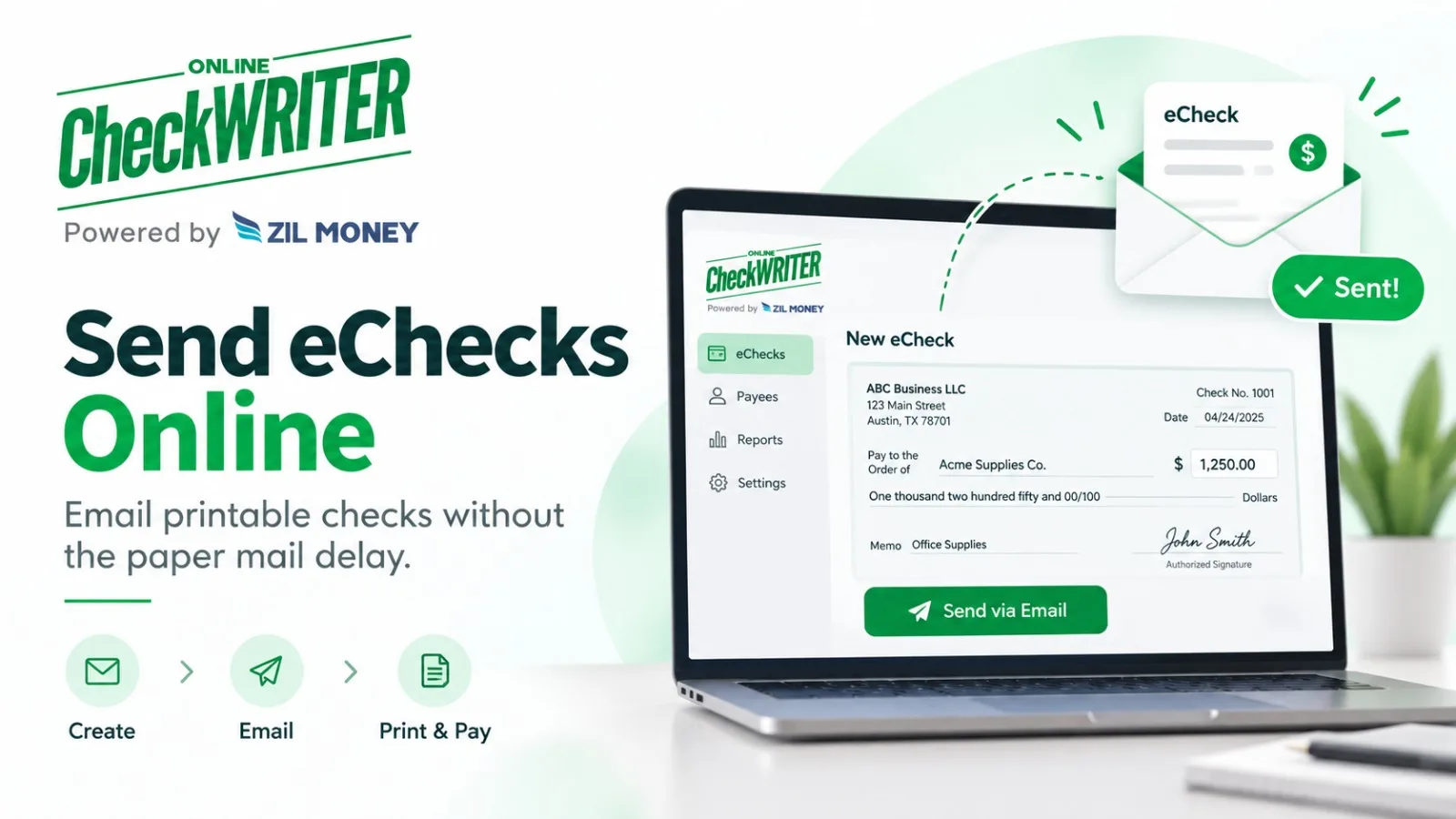
OnlineCheckWriter.com uses the term differently for one of its products. Its eCheck workflow allows a payer to send a printable PDF check electronically to the payee, with email delivery and an available SMS notification.
For this comparison, “eCheck” means the OnlineCheckWriter.com printable-check workflow, while ACH means an ACH Network transfer.
What Happens With an ACH Payment?
An ACH payment moves electronically through the Automated Clearing House Network.
Nacha says the network handles Direct Deposits and Direct Payments for businesses, consumers, and government entities.
The recipient does not receive a check document to print.
Instead, the payment moves between financial accounts according to the applicable ACH workflow.
Businesses commonly use ACH for vendor payments, payroll, bill payments, and recurring transactions.
What Happens With an OnlineCheckWriter.com eCheck?
OnlineCheckWriter.com’s eCheck product follows a check-style workflow.
The payer creates the check and sends it electronically. The payee receives the printable check document rather than waiting for a physical envelope to arrive.
The recipient can print the check and deposit it using a method accepted by the receiving financial institution.
That means the product retains more of the check experience while changing the delivery method.
The payer does not have to print and mail the check first.
Recipient Experience Is Different
This is one of the clearest distinctions.
With ACH, the recipient normally provides or establishes the required bank information for the transfer.
With OnlineCheckWriter.com’s printable eCheck, the recipient receives a check document.
That may matter when a vendor is comfortable receiving a check but does not want to provide bank details directly to the payer.
It can also matter when a business has existing check-based approval and recordkeeping processes.
Do Not Assume the Same Timing
Neither method should be given a universal processing-time promise in an external article.
ACH timing depends on the ACH service being used, financial institutions, submission timing, eligibility, and provider conditions.
The OnlineCheckWriter.com eCheck workflow removes postal delivery from the payer-to-payee document transfer, but the check still has to be deposited and handled through the receiving bank’s process.
Email delivery is not the same as settled funds.
What About Cost?
The two payment methods can also use different fee structures.
OnlineCheckWriter.com publishes current transaction pricing for checks and ACH through its support resources. Those charges can change by plan and transaction type.
Businesses should check current pricing instead of using a permanent “ACH costs X” or “eCheck costs Y” claim in evergreen content.
Which Method Fits Which Vendor?
ACH may fit a recurring vendor that is comfortable receiving bank-to-bank payments.
OnlineCheckWriter.com’s printable eCheck may fit a recipient that expects a check but where the payer wants to avoid mailing the physical document.
The decision should consider recipient preference, required banking information, timing, fees, and deposit process.
The biggest mistake in an eCheck vs ACH article is assuming everyone uses “eCheck” to mean the same thing.
They do not.
For OnlineCheckWriter.com content, the safest and clearest wording is to describe exactly what its product does: the payer sends a printable PDF check electronically, while ACH is a separate bank-to-bank payment workflow.
OnlineCheckWriter.com – powered by Zil Money, is a financial technology company, not a bank. Banking and money movement services are provided through partner financial institutions and licensed service providers. FDIC insurance coverage applies only to eligible deposit products and accounts, and is subject to applicable terms, conditions, limitations, and requirements. Additional information regarding partner institutions, products, and services is available in the applicable terms and agreements.