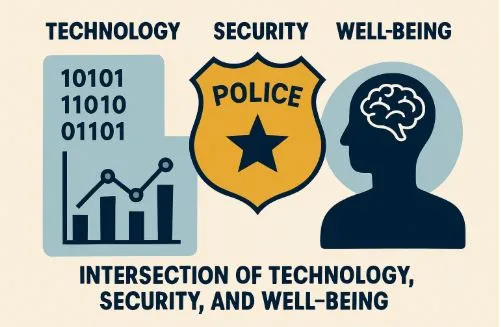
Emerging Trends in Criminal Justice Careers
Key Takeaways
- AI and data analytics are enhancing crime prevention and investigation efforts across the sector.
- Mental health and wellness initiatives are transforming the culture of the criminal justice workplace and enhancing community engagement.
- Community-oriented policing is adapting to the digital era, deepening public trust and transparency.
- Cybersecurity and digital forensics expertise are in high demand due to the increasing prevalence of cybercrime threats.
- New and specialized roles are rapidly emerging to address these trends.
The criminal justice landscape is rapidly evolving, driven by advances in technology, shifts in societal needs, and a growing recognition of the importance of health and wellness within the workplace. For those seeking both meaningful change and job security, understanding these trends is essential. Whether you’re considering an advanced degree or already working in the field, staying ahead will empower you to thrive. In fact, earning a master’s in criminal justice online is one way professionals can gain the specialized knowledge needed to adapt to and succeed within this dynamic environment.
As public expectations and criminal behavior patterns shift, so too do the practices and responsibilities within criminal justice careers. Agencies are embracing sophisticated technologies, prioritizing officer well-being, and responding to new kinds of threats. These trends are not only transforming existing roles but also creating new and exciting career opportunities. By investing in education and professional development from universities like Lamar University, individuals can position themselves at the forefront of these changes, making a difference in both their careers and their communities.
Integration of AI and Data Analytics
The deployment of artificial intelligence (AI) and data analytics tools is transforming the way law enforcement agencies prevent and solve crimes. AI-driven predictive policing platforms, for example, can scan vast datasets to identify emerging criminal patterns—enabling officers to allocate resources more effectively and proactively target high-risk areas. Data analytics also plays a significant role in digital forensics, helping professionals sift through massive amounts of evidence in complex investigations.
Notably, the U.S. Department of Justice recently appointed its first Chief AI Officer, underscoring a government-wide commitment to integrating these technologies ethically and strategically within the justice system. As AI tools become more advanced, professionals will not only require technical skills but also ethical decision-making abilities to ensure the responsible use of data and machine learning in criminal justice settings. For more insights on AI’s growing role in law enforcement, the New York Times offers an in-depth look at the benefits and challenges AI presents for modern policing.
Emphasis on Mental Health and Wellness
Increasingly, criminal justice agencies are recognizing that the well-being of their personnel is crucial to sustained effectiveness. Law enforcement officers routinely encounter traumatic incidents and high-stress environments, which can lead to burnout, PTSD, or other mental health concerns. To address these challenges, agencies are implementing programs focused on resilience, peer support, and counseling services for officers. There is also a heightened focus on ensuring safe and positive workplace cultures, where mental health is prioritized alongside physical safety.
Beyond internal reforms, the criminal justice system is also adopting a more health-oriented approach to public safety by diverting individuals with mental health needs to appropriate treatment instead of incarceration. The rise of crisis intervention teams and partnerships between law enforcement and mental health professionals marks a significant shift toward compassion-based solutions. This reflects a broader trend across public safety organizations, as highlighted by the Associated Press, which reports on innovative strategies that improve outcomes for both officers and community members.
Community-Oriented Policing in the Digital Age
As technology permeates every aspect of society, community-oriented policing strategies are being reinvented for greater transparency and accessibility. Modern agencies blend face-to-face outreach with digital initiatives—such as real-time social media updates and interactive crime mapping—to keep the public informed and build deeper trust. These efforts are designed to foster collaborative problem-solving, empower residents to participate in public safety, and facilitate open dialogue between officers and the communities they serve.
Transparency and accountability are core to this new era of policing, with online platforms making it easier for residents to offer feedback, report concerns, and see the direct results of their engagement efforts. Departments that invest in these tools and strategies report improved relations and more effective crime prevention. For a detailed exploration of the changes in police-community relations, the Pew Research Center provides an in-depth examination of the evolving expectations and perceptions surrounding contemporary policing practices.
Cybersecurity and Cybercrime Mitigation
One of the most dramatic shifts in recent years has been the surge of cybercrime—a threat that extends beyond local boundaries and demands a sophisticated law enforcement response. As hackers and cybercriminals become increasingly adept, agencies require digital forensic experts and cybercrime investigators who can track online threats, recover stolen data, and prosecute offenders. The demand for these specialized roles continues to grow as society becomes ever more reliant on digital infrastructure.
Local and federal agencies are collaborating with public and private partners to stay ahead of rapidly evolving cyber risks. This cross-sector cooperation ensures that resources, intelligence, and expertise are shared to protect both individuals and organizations from emerging digital threats. Those pursuing careers in criminal justice today are well-served by developing knowledge of cybersecurity, computer forensics, and cyber law—skills that are increasingly vital across the sector.
Emerging Career Opportunities
Cybercrime Investigator
Cybercrime investigators play a crucial role in identifying, investigating, and preventing digital crimes, including identity theft, ransomware attacks, and data breaches. These professionals often work in tandem with traditional law enforcement and private-sector specialists to track down cybercriminals, collect electronic evidence, and facilitate successful prosecutions.
Digital Forensic Expert
Digital forensic experts are responsible for extracting and analyzing electronic evidence from computers, mobile devices, networks, and cloud storage. Their expertise is vital in criminal investigations, corporate security, and civil litigation, enabling organizations and law enforcement agencies to trace the origins and implications of cyber incidents.
Homeland Security Specialist
Homeland security specialists safeguard the nation against both physical and digital threats, often focusing on crisis management, counter-terrorism, and emergency preparedness. Their training encompasses threat analysis, strategic planning, and cross-agency coordination—skills necessary to protect national infrastructure and respond effectively to new hazards.
Conclusion
Criminal justice careers are undergoing a profound transformation, reflecting the adoption of new technologies, an increased focus on wellness, and the reality of global digital threats. Adaptability, continued education, and a commitment to providing ethical, community-based service are essential for those seeking to make a positive impact. As the field continues to evolve, those prepared to learn and embrace change will shape the future of public safety and justice.