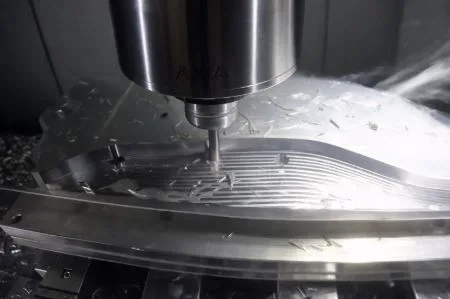
Engineering the Future of Cycling: Precision CNC Bicycle Components and Bicycle Lightweight Parts
From elite road racers chasing seconds on sun-baked tarmac to urban commuters cruising through rush-hour traffic, bicycles have evolved far beyond rudimentary transportation tools. Today’s bikes are marvels of engineering — and at the heart of their performance, reliability, and innovation lies precision manufacturing, especially CNC bicycle components and bicycle lightweight parts that deliver unmatched performance and durability.
In this comprehensive article, we’ll explore how CNC machining transforms bicycle manufacturing, why lightweight parts matter, how advanced CNC lathe turning processes refine every component, and how manufacturers like Chiheng Hardware are shaping this precision-driven landscape.
1. CNC Machining and the Changing Face of Bicycle Manufacturing
CNC (Computer Numerical Control) machining is a subtractive manufacturing process in which pre-programmed computer software dictates the movement of cutting tools, enabling metal and plastic to be shaped into highly complex parts with extreme precision. This technology has steadily replaced traditional manufacturing methods — such as hand-fitting, die casting, or forging — especially for high-performance and custom bicycle components.
In essence, CNC machines convert CAD (Computer-Aided Design) models into finely tuned parts with tolerances so small that even tiny variations in shape, surface finish, and dimension can be controlled with near-micron accuracy. The net result? Components that exhibit consistent performance, excellent fit, and long-lasting durability — essential qualities for bicycles that operate at the limits of strength, speed, and safety.
2. What Makes CNC Bicycle Components Superior
When searching for the best parts for a performance bicycle, riders and engineers alike increasingly seek CNC bicycle components. These components, crafted through advanced CNC machining, offer several significant advantages:
Precision and Fit
CNC technology enables manufacturers to achieve exacting tolerances that are near impossible with conventional methods. Even a slight misalignment in parts like headset cups, brake calipers, or bottom brackets can dramatically affect performance. CNC machining ensures that every dimension — from thread fits to bearing surfaces — meets strict specifications.
Repeatability
Mass-produced parts can suffer from inconsistent quality. CNC machining overcomes this by using digital precision: once a part is programmed, every copy will match the original exactly, part after part.
Complex Geometry
Advanced CNC systems — especially 5-axis machines — can create intricate shapes and internal passages that traditional machining simply can’t. This capability opens the door to optimized aerodynamic profiles, integrated combined features, and lightweight yet structurally robust components.
Material Optimization
CNC parts are crafted from solid billet metals or engineered plastics, enabling material properties to be tailored for specific functions. For example, aluminum for lightweight frames, titanium for high-strength strength-to-weight parts, and steel alloys where toughness is paramount.
3. The Importance of Lightweight Parts in Cycling Performance
In cycling, “every gram counts.” That’s not marketing jargon — it’s a fundamental truth: weight reduction enhances acceleration, reduces fatigue, and improves climbing efficiency.
Why Lightweight Parts Matter
- Climbing Performance: Less overall bicycle weight enables riders to climb more efficiently.
- Acceleration and Handling: Reducing inertial mass improves responsiveness during sprints and sharp turns.
- Energy Efficiency: A lighter bicycle means less work per pedal stroke, extending rider stamina.
Lightweight parts are not only a competitive advantage but also a gateway to more enjoyable riding. This is why materials such as aluminum alloys (6061, 7075), titanium, and high-grade steels are commonly chosen for CNC-machined bicycle components — they combine lightness with structural integrity.
4. CNC Lathe Turning: A Backbone of Precision Bicycle Part Production
Among CNC processes, CNC lathe turning is critical for cylindrical and rotational parts — such as hubs, axles, and certain brake components. In this process, the workpiece rotates while stationary cutting tools remove material to form precise shapes.
How CNC Turning Enhances Components
- High Dimensional Accuracy: CNC lathes achieve extremely tight tolerances, often around ±0.005mm or better, ensuring parts fit and function with high precision.
- Surface Quality: Lathe turning produces smooth finishes that are crucial for components like brake rotors or bearing housings, where surface interactions impact performance.
- Part Consistency: Automated turning means uniform output, even across large production batches.
This precision turning process ensures that components such as bottom brackets, spindle axles, and brake hardware operate smoothly and consistently — which directly affects ride quality and mechanical reliability.
5. Case Example: Bicycle Brake Manufacturing Using CNC Techniques
The braking system on a bicycle is one of the most safety-critical assemblies. Whether for mountain biking or road racing, brakes must balance power, weight, heat dissipation, and mechanical precision.
Manufacturers like Chiheng CNC showcase the use of advanced CNC machining to produce high-consistency and high-performance brake components. Their facilities, equipped with multiple CNC milling and turning centers, can handle a wide range of tasks — from small-batch prototypes to large-scale production.
While detailed case specifics from Chiheng’s bicycle brake manufacturing page could not be fully fetched due to site load limits, the general trend in the industry is clear:
Typical CNC Brake Component Workflow
- CAD Design: Engineers begin by modeling brake calipers, levers, or rotor hubs in CAD software.
- Material Selection: Choosing the right metal or composite — aluminum for lightweight parts, steel or titanium for high-strength segments.
- CNC Turning and Milling: High-precision machines ensure all features are machined to exact specifications.
- Surface Treatment: Processes like anodizing, polishing, or plating are used to enhance durability and wear resistance.
- Inspection and Quality Control: Using Coordinate Measuring Machines (CMMs) and other tools to verify dimensional accuracy before assembly.
CNC machining’s role in brake manufacturing helps reduce variations, ensuring brakes operate reliably even under high thermal stress and load — vital for rider safety.
6. Materials Behind Lightweight and High-Strength Cycling Parts
A bicycle is only as good as the materials it’s made from. The choice of material affects weight, durability, safety, and manufacturing complexity.
Key Materials in CNC Bicycle Components
- Aluminum Alloys (6061, 7075): Ultra-light yet strong, ideal for frames, hubs, and lightweight parts.
- Titanium: Extremely strong and corrosion-resistant, though more expensive; used in premium parts.
- Steel Alloys: Heavier but highly durable; used where strength is more critical than weight.
- Engineering Plastics (PEEK, PA66): In specific applications like bearings or non-structural components.
By combining the right materials with precision CNC techniques, manufacturers can produce parts that are both lightweight and structurally robust — crucial for competitive cycling applications.
7. Surface Finishing: A Vital Step in CNC Bicycle Component Production
Beyond machining, surface finishing adds durability, corrosion resistance, and aesthetic appeal. Common finishing methods include:
- Anodizing: Enhances corrosion resistance and allows color customization.
- Shot-peening and Polishing: Improves fatigue life and surface smoothness.
- Plating or Coating: Adds wear protection or visual branding.
These finishes are not superficial. They contribute to part longevity and mechanical performance — especially in environments exposed to weather, dirt, or high rotational speeds.
8. From Prototype to Production: Scaling with Precision and Repeatability
One of CNC machining’s most compelling advantages is scalability. Engineers who design bicycle parts can transition seamlessly from:
- Rapid Prototyping: Producing a single prototype to test fit, function, and aerodynamics.
- Low-Volume Production: Creating small batches for custom or boutique brands.
- High-Volume Runs: Reproducing thousands of identical parts for mass markets — all with consistent quality.
Companies with integrated CNC capabilities are able to bridge these phases quickly, ensuring cost-effective manufacturing without sacrificing precision.
9. The Rider’s Perspective: Performance and Reliability in Daily Use
From a rider’s point of view, the impact of CNC bicycle components and lightweight parts is tangible:
- Better Braking Response: Precision brake hardware minimizes play and enhances modulation.
- Smoother Gear Engagement: Precisely machined drivetrain interfaces improve shifting performance.
- Long-Lasting Durability: High-quality finishes fight corrosion and wear.
These improvements lead to more confidence on descents, smoother rides over rough terrain, and better performance in competitive environments — all crucial attributes for modern cyclists.
10. Looking Forward: Trends and Innovations in CNC Bicycle Component Manufacturing
As cycling continues to grow in both recreational and competitive sectors, manufacturers are pushing boundaries:
- Multi-Material CNC Machining: Combining metals and engineered plastics in hybrid components.
- Advanced 5-Axis CNC Machines: Producing geometries previously thought impossible.
- Material Science Innovations: Alloy formulations designed for even lighter weight without sacrificing strength.
The continued adoption of high-precision CNC processes will play a central role in the next generation of bicycle components — making bikes faster, safer, and more efficient than ever.
Conclusion
Precision CNC bicycle components and bicycle lightweight parts are transformative elements in modern cycling. Through the power of CNC machining — including CNC lathe turning and advanced milling — manufacturers deliver parts with exceptional dimensional accuracy, surface quality, and repeatability. The result? Bicycles that are lighter, stronger, and more reliable — from brake systems and hubs to intricate custom hardware.
Whether you’re a bike manufacturer seeking performance gains, an engineer optimizing part design, or a rider looking for the best components available, understanding the CNC machining process and the value of lightweight precision parts is essential. It’s not just manufacturing — it’s the foundation of high-performance cycling.