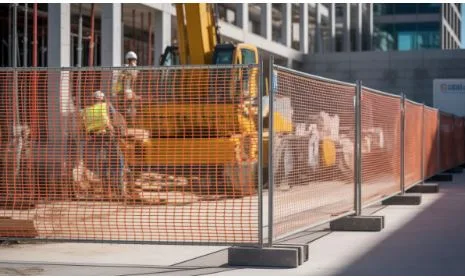
Everything You Need to Know About Temporary Fencing: UK Guide for Construction & Events
Temporary fencing is a portable boundary system used in short- or medium-term at a variety of locations, such as construction zones and popular events. These fencing systems are also easy to install and dismantle, unlike permanent fencing, which demands a commitment.
Temporary fencing panels are made of strong materials like galvanised steel mesh, and they are modular and can be reused in other projects.
Why Use Temporary Fencing? Key Benefits
Temporary fencing has many benefits to project managers, event organisers, and contractors:
Enhanced Security
The high-strength fencing panels that create a visible perimeter will deter unauthorised access and vandalism of your site.
Improved Health & Safety
It provides a clear boundary between possibly dangerous working zones and minimises accidents and adherence to UK regulations.
Cost-Effective Protection
Temporary fencing is an effective method of securing equipment, materials, and manpower compared to permanent fencing or even employing full-time security.
Flexibility & Portability
Temporary fencing will be the best in dynamic work environments because it is easy to reposition or expand in response to project requirements.
Site management and crowd control
Fencing is used in event environments to provide control of pedestrian movement as well as define restricted or high-access areas.
Common Temporary Fencing Applications
Temporary fencing is applicable to various locations since it is versatile:
Construction Sites: There should be safety additions and theft prevention boundaries.
Outdoor Events and Festivals: Access control and restricted access.
Constructions and roads: Temporary urban closures and barriers.
Agriculture & Livestock Control: Fence movement control areas.
Maintenance & Repairs: Protect the working areas during repair.
Temporary fencing is flexible, strong, and can be installed with ease, so every application enjoys this advantage.
Temporary Fencing Types & Components
The information on the available options will assist you in selecting the best system to apply to your project:
Panels
Most of the temporary fencing structures are made up of standard panels.
Gates
There are pedestrian and vehicle gates to control access to secured areas.
Accessories
Stability and compliance are enhanced with feet, couplers, ballast blocks, stabilising bars, and anti-lift devices.
Fencing Kits
Larger sites or longer projects are best suited to pre-bundled kits consisting of panels and accessories.
All parts are also quick to assemble and very durable, hence efficient site protection.
How Temporary Fencing Enhances Safety & Compliance
The first reason why temporary fencing is used is safety. It creates a physical barrier that creates a division between safe zones and insecure work zones, safeguarding the people and on-site workers.
Limiting the unauthorised access will minimise the risk of injury, eliminate possible liability, and guarantee adherence to the corresponding UK laws on safety. Correct signage and fencing can also be used to help in emergency response planning.
Installation Tips for Temporary Fencing
To be safe and stable:
Select base appropriately: An uplift or impact may take place, and use feet or ballast blocks to avoid this.
Secure couplings: Attach panels using secure couplers correctly to ensure structural integrity.
Add stabilising means: Stabilising bars and the use of anti-lift devices provide an extra safety measure.
Periodic checks: Checks to be done on a regular basis due to wear, displacement, or damage, particularly after harsh weather.
Proper installation ensures an improved security performance and improves adherence to the site safety procedures.
Environmental & Practical Considerations
Temporary fencing is commonly fabricated using galvanised steel mesh, which gives it excellent resistance against corrosion and the unpredictability of weather conditions in the UK.
It has a design with the air flowing through mesh panels to minimise the pressure of the wind and the stress on the structure.
Furthermore, the reusable fencing reduces wastage and environmental degradation, which is a significant benefit over the one-time setups.
Choosing the Right Temporary Fencing Provider
When selecting a supplier:
Find delivery and installation all over the UK.
Ensure that it has complete product lines, such as accessories and gates.
Make sure that the safety standards are met so that you are not worried.
Compare purchasing and hiring alternatives, based on the length and cost of the project.
It will have a good supplier who will assist them with expert advice, free site surveys, and quick delivery or installer services.
FAQs on Temporary Fencing
Q: Is temporary fencing resistant to extreme weather?
A: Yes. Mesh fencing is typically made to be used outdoors, and the mesh is permeable to wind to minimise uplift and stress.
Q: Are temporary fences reusable?
A: Absolutely. Panels, gates, and accessories may be taken apart and reused, and thus are cost-effective.
Q: Is temporary fencing to be installed by a professional?
A: In large or high-risk sites, professional installation is required to maintain compliance with the safety and structural integrity.
Q: Is temporary fencing custom brandable?
A: There are suppliers that can do visual branding on mesh or a piece of sheeting for fencing.
Conclusion
Site safety, security, and crowd management. This temporary fencing is a necessary solution in construction, events, and public works industries. It is a favourite in the UK projects where the need is to safeguard the equipment and infrastructure through the provision of temporary protection that is reliable, cost-effective, and versatile. Whether it is time to acquire a building site, organise an outdoor event, or control the people’s access to the buildings during the maintenance process, you should be aware of the possibilities of temporary fencing because you can make the right choice and do it efficiently and safely.