Everything You Should Know About Competitive Gaming Trends
The modern world of competitive gaming is undergoing an era of unprecedented transformation, evolving from a niche entertainment for enthusiasts into a multi-billion-dollar industry. Each season brings new technological solutions and shifts in audience preferences, forcing players and tournament organizers to constantly stay updated. Following the latest gaming news today means understanding not only match results but also the deeper directions in which digital culture is developing. From the integration of artificial intelligence to the rapid growth of mobile esports, the trends of 2026 are shaping an entirely new esports landscape. In this article, we will take a closer look at the key aspects that define professional gaming today and in the near future.
Mobile Gaming Is Conquering the World
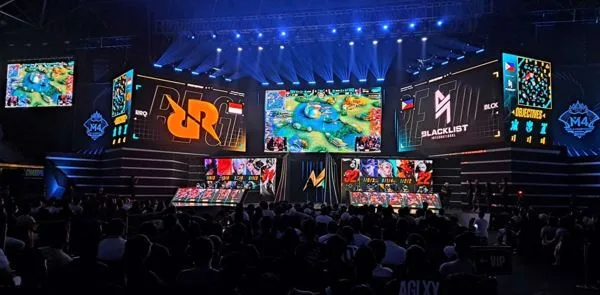
One of the most noticeable trends of 2026 is the final establishment of mobile gaming as a leading segment of esports. Titles such as Mobile Legends: Bang Bang, Honor of Kings, and PUBG Mobile regularly attract millions of concurrent viewers, often surpassing traditional PC games in peak audience numbers. This is largely explained by the low barrier to entry and the widespread availability of smartphones, which allowed esports to expand into regions where it previously had limited presence, particularly Southeast Asia, Latin America, and the Middle East. Today, any major gaming news feed inevitably includes announcements of large tournaments held on mobile platforms, as this market has become one of the driving forces of the entire industry.
Regional specifics have become a key success factor for developers and tournament organizers. We are witnessing the emergence of local franchise leagues designed around the cultural characteristics and gaming preferences of specific countries. For instance, in Indonesia and Brazil, mobile esports tournaments attract stadium crowds comparable to those of football matches. This growth is driving infrastructure development — from specialized arenas designed for mobile competitions to professional academies that train the next generation of esports athletes. The mobile format has made competitive gaming more democratic: anyone with a modern smartphone now has a chance to pursue a professional esports career.
Moreover, the development of 5G technology has made it possible to host mobile tournaments with minimal latency even in remote areas around the globe. This opens the door to global online qualifiers where players from small towns can compete on equal terms with world champions. By the end of the year, mobile esports is expected to account for more than 50% of the industry’s total revenue, pushing even major companies like Valve and Riot Games to further adapt their franchises for portable devices.
Artificial Intelligence as a Training and Analytics Tool
Artificial intelligence technologies in 2026 have become an integral part of the training process for professional players. Modern AI systems can analyze gigabytes of data from previous matches, detect micro-mistakes in player movements, and suggest optimal strategic scenarios in real time. This has significantly changed the role of the coach: today, a coach is not only a psychologist and strategist but also a specialist working with large datasets — essentially a data scientist who uses predictive algorithms to prepare the team. Players no longer practice only against random opponents but often train against specially configured bots designed to imitate the playstyle of specific rivals.
Beyond player preparation, AI is also transforming the viewer experience by making broadcasts more informative and engaging. During live streams, intelligent systems can automatically calculate each team’s probability of winning based on in-game economy, positioning, and current momentum. AI is also used to automatically generate highlights, allowing fans to watch edited clips just minutes after a round ends. This significantly increases audience engagement, especially among viewers who enjoy deep statistics and analytical insights.
Artificial intelligence has also taken on the role of an “arbiter” when it comes to fair play. Next-generation anti-cheat systems rely on neural networks that analyze behavioral patterns of players. These systems can distinguish between the extraordinary reaction speed of a professional player and the use of third-party software with up to 99.9% accuracy. This helps maintain competitive integrity and preserve sponsors’ trust in the industry. In the future, we may even see leagues where humans compete alongside AI assistants, opening a completely new chapter in the history of gaming.
Sustainability and Professionalization of the Industry
The era of the so-called “investment bubble,” when enormous amounts of money were poured into esports without a clear return strategy, has largely come to an end. In 2026, the main trend is financial sustainability and operational efficiency. Esports organizations are actively diversifying their revenue streams, transforming themselves into full-scale media companies. They are no longer dependent solely on sponsorship deals; instead, they develop their own merchandise lines, produce exclusive subscription-based content, and launch training camps for amateur players.
Professionalization has also affected legal and medical aspects of the industry. Contract regulation, the protection of underage players, and the fight against mental burnout have become priorities for top organizations. Today, the staff of every major team includes not only massage therapists but also nutritionists, sleep specialists, and cognitive psychologists. This comprehensive approach allows esports careers — which previously ended around the age of 23–25 — to extend well into the late twenties or even beyond 30, making the industry more attractive for long-term career planning.
The creation of international federations and unified competition standards has helped esports gain recognition at the level of Olympic committees. This recognition has opened access to government grants and tax benefits in many countries. As a result, we are seeing the construction of multifunctional esports arenas that in many ways surpass traditional stadiums in terms of technological sophistication. These venues are becoming hubs for young people, combining gaming zones, coworking spaces, and educational centers where future professions are taught — from game development to virtual event management.
Hybrid Formats and Technological Inclusivity
The technological capabilities of 2026 have accelerated the rise of “phygital” sports, blending physical activity with digital competition and reducing the gap between real and virtual environments. Modern tournaments increasingly combine gameplay with motion tracking and immersive technologies. For example, cyclists compete in Zwift races where pedal resistance changes according to the virtual terrain, while VR esports has developed into a full discipline requiring both fast decision-making and strong physical coordination.
At the same time, cloud gaming has removed many hardware barriers that once limited access to competitive play. Powerful remote servers process graphics in the cloud, allowing players to compete without expensive equipment. This has expanded the global talent pool and made esports more inclusive, supported by accessibility technologies such as controllers that track eye movement or muscle signals, as well as hybrid tournaments where players can compete either on stage or remotely through VR avatars.
Conclusion
Esports in 2026 is far more than just gaming — it is a complex, intellectual, and high-tech ecosystem that influences modern culture worldwide. Mobile platforms have made competitive gaming accessible to billions, artificial intelligence has become a powerful tool in the training process, and financial sustainability has transformed amateur teams into global organizations. Inclusivity and technological innovation continue to strengthen the industry’s core idea: esports is the sport of the future, where intelligence, adaptability, and strategic thinking matter more than ever.
Disclaimer: This article is for informational purposes only and reflects general trends in competitive gaming. It does not guarantee future outcomes or professional results.