Expanding Precision Machining Capabilities Across Aluminum, Brass, Copper, and Stainless Steel to Meet Surging Global Demand
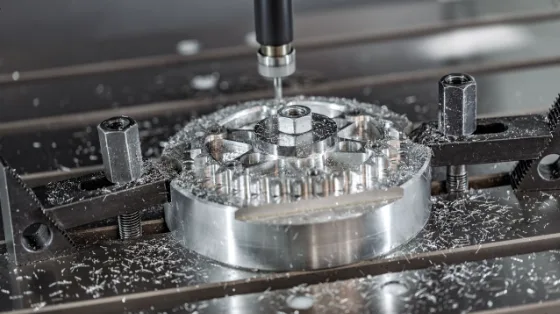
The precision manufacturing sector continues its rapid expansion, driven by electrification, aerospace recovery, and the relentless miniaturization of medical devices. Against this backdrop, Falcon CNC Swiss, a specialist in high-tolerance Swiss machining, has announced the continued expansion of its capabilities across three critical material categories: aluminum, brass and copper, and stainless steel. The move comes as global supply chains increasingly prioritize domestic production and as manufacturers seek partners capable of delivering consistent quality at scale.
Aluminum: Powering the Lightweight Revolution
Aluminum has become indispensable across automotive, aerospace, and consumer electronics sectors, prized for its exceptional strength-to-weight ratio and thermal conductivity. The global aluminum CNC machining services market continues to expand at a steady pace, driven by demand for lightweight, high-performance components. Electric vehicles, in particular, are driving this demand—battery housings, motor frames, cooling plates, and structural components increasingly specify aluminum alloys to extend range and reduce weight.
Falcon CNC Swiss has invested significantly in its aluminum machining capabilities, deploying advanced multi-axis CNC milling centers and high-speed spindles capable of holding tolerances as tight as ±0.005 millimeters. The company’s expertise spans a range of alloys, from the versatile 6061 to the aerospace-grade 7075 and 2024, and extends to complex structural assemblies that integrate ribs, load-bearing geometry, and mounting features into a single machined component. This approach reduces assembly joints, eliminates fasteners, and improves structural integrity—a growing trend in lightweight engineering. With extensive experience in aluminum CNC machining and certifications including ISO 9001, 16949, and 13485, the company serves industries spanning aerospace, medical, electronics, and automotive.
Those seeking aluminum precision CNC machining for custom components will find a partner equipped to handle everything from prototyping to high-volume production.
Brass and Copper: The Conductors of Electrification
The global copper alloy market continues to expand, reflecting the material’s irreplaceable role in electrification—electric vehicles contain substantially more copper than their internal combustion counterparts, and renewable energy systems, data centers, and 5G infrastructure are consuming copper at unprecedented rates.
Falcon CNC Swiss has developed specialized processes for brass and copper machining that address the unique challenges these materials present. Copper’s tendency to produce long, stringy chips that can wrap around tools demands careful chip management and effective coolant delivery. The company’s Swiss-type turning centers, equipped with high-pressure coolant systems and automated bar feeders, handle these challenges efficiently. Brass, while more forgiving, still requires sharp tooling and proper chip evacuation to achieve clean surfaces and tight tolerances.
The company’s capabilities extend to complex brass and copper components for electronics, telecommunications, automotive, and fluid power applications. PCB standoffs, contact pins, RF shielding parts, and precision inserts all benefit from Falcon’s documented process libraries and in-process probing routines that ensure consistency across production runs. With decades of experience in precision brass machining and tolerances up to ±0.001mm, the company delivers high-quality machined products for demanding applications.
Engineering teams looking for brass CNC machining parts expertise will find a partner with deep material knowledge and rigorous quality standards.
Stainless Steel: The Workhorse of Critical Applications
Stainless steel remains the most widely specified material for components that must withstand corrosion, stress, and time. Medical implants, surgical instruments, aerospace fasteners, and fuel system fittings all rely on grades such as 303, 304, 316L, and 17-4 PH.
Falcon CNC Swiss’s stainless steel machining capabilities are built on decades of accumulated process knowledge. The company’s machinists understand that austenitic grades work-harden rapidly—if speeds, feeds, and coolant application are not precisely optimized, the material hardens ahead of the tool, causing premature wear and dimensional drift. Their documented tooling strategies, in-process probing routines, and quality checks ensure consistency across production runs of tens of thousands of parts.
The company’s Swiss-type turning centers, originally developed for watchmaking, are particularly well-suited to stainless steel. By feeding material through a guide bushing positioned immediately next to the cutting tool, these machines eliminate deflection and vibration, making it possible to hold tolerances that would otherwise be impossible on long, slender parts. With automatic bar feeders and multi-spindle cells capable of producing high volumes monthly, the company supports both prototype development and large-scale production.
For mission-critical applications, stainless steel CNC machining expertise ensures components meet the most demanding specifications.
The Technology Behind the Capabilities
Central to Falcon CNC Swiss’s expanded capabilities is its commitment to advanced manufacturing technology. The company operates a fleet of multi-axis Swiss-type turning centers that integrate turning, milling, drilling, and threading in a single setup—often on machines with five to nine axes. This “done-in-one” approach reduces handling errors, shortens production cycles, and ensures that critical features stay aligned.
In-process probing verifies dimensions between cycles, allowing machines to compensate for tool wear automatically. Automated bar feeders enable lights-out operation, maintaining production around the clock with minimal supervision. High-pressure coolant systems flush chips away from the cutting zone, preventing the built-up edge that can plague aluminum, copper, and stainless steel machining alike.
The company’s quality infrastructure is equally robust. Certifications including ISO 9001 and industry-specific standards require documented processes, internal audits, and continuous improvement. Full material traceability from incoming certification to finished component provides the audit trail that regulated industries demand.
Meeting the Reshoring Moment
The expansion comes at a time when reshoring and supply chain diversification have become strategic imperatives. A significant majority of European and US companies now have a reindustrialization strategy in place, with substantial reshoring-related investments announced since early 2025.
However, the industry faces a persistent challenge: a shortage of skilled machinists. Precision machining consistently ranks among the hardest positions to fill because the trade requires years of on-the-job mentoring. Falcon CNC Swiss has addressed this challenge through sustained investment in workforce development, documented training programs, and automation that reduces reliance on manual intervention for routine tasks.
Looking Ahead
The precision machining market continues its strong growth trajectory, with the global market projected to expand substantially in the coming decade. The precision turned product manufacturing sector alone is forecast to reach significant milestones by 2031.
Falcon CNC Swiss’s expanded capabilities across aluminum, brass and copper, and stainless steel position the company to capture a growing share of this demand. The combination of advanced Swiss-type turning equipment, documented material expertise, and rigorous quality systems provides the predictability that customers in medical, aerospace, automotive, and electronics sectors increasingly require.
For companies seeking a partner capable of delivering high-precision components across multiple material families, Falcon CNC Swiss offers not just machining capacity but engineering collaboration, process discipline, and the confidence that comes from documented quality. In an era where every component matters, that distinction has never been more valuable.