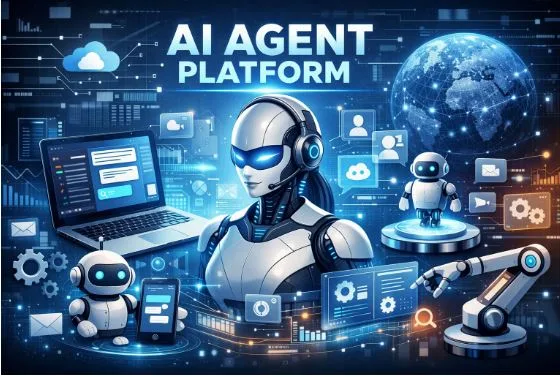
Exploring the Future of Customer Service with AI Agent Platforms
In today’s fast-paced digital world, businesses are constantly searching for ways to enhance their customer service operations. Traditional methods of customer support, such as call centers and email support, are increasingly being replaced by more advanced solutions. One of the most promising advancements in customer service technology is the rise of the AI agent platform. These platforms are reshaping how businesses interact with their customers, offering more efficient, personalized, and scalable support than ever before.
In this article, we will explore how AI agent platforms are transforming customer service, the benefits they bring, and the future possibilities they offer to businesses.
What Is an AI Agent Platform?
An AI agent platform refers to a technology that uses artificial intelligence to simulate human interactions in customer service environments. These platforms leverage machine learning, natural language processing (NLP), and other AI technologies to communicate with customers in real-time. They can handle inquiries, provide assistance, and even resolve issues without the need for human intervention.
AI agent platforms can take various forms, from chatbots that engage customers on websites to virtual assistants that manage phone calls or emails. These platforms are designed to understand customer queries, process information, and offer responses that feel natural, just like human agents would.
The Rise of AI in Customer Service
As businesses aim to meet increasing customer expectations for faster, more personalized service, AI is becoming a vital tool. Customers today expect quick responses and immediate resolutions to their problems, and AI agent platforms are stepping in to fulfill this demand.
Traditional customer service methods often struggle to meet these expectations. Human agents can become overwhelmed with high volumes of inquiries, leading to long wait times and sometimes poor service quality. AI agent platforms, on the other hand, can handle a large number of interactions simultaneously, ensuring that no customer query goes unanswered.
Additionally, AI platforms are available 24/7, allowing customers to receive assistance whenever they need it, regardless of time zones or business hours.
Benefits of AI Agent Platforms for Customer Service
The integration of AI agent platforms into customer service operations brings numerous benefits to businesses and customers alike. Some of the key advantages include:
1. Enhanced Efficiency and Speed
One of the most significant benefits of AI agent platforms is the speed with which they can handle inquiries. AI agents can process requests and provide solutions instantly, cutting down wait times and improving overall response times. This level of efficiency ensures that customers do not have to sit on hold or wait for emails to be returned, providing a seamless experience.
2. 24/7 Availability
Unlike human agents, AI-powered platforms do not require rest. They can provide around-the-clock support to customers, which is especially valuable for businesses with global customers who may be in different time zones. This constant availability means that businesses can provide immediate assistance, even outside of regular office hours.
3. Personalization at Scale
AI agent platforms are not just about answering basic questions—they can also deliver highly personalized experiences. By analyzing customer data and past interactions, these platforms can offer tailored recommendations, solutions, and responses. Personalization is no longer a luxury reserved for small businesses; with AI, large companies can provide the same level of individualized service at scale.
4. Cost Savings
By automating routine tasks and interactions, businesses can significantly reduce operational costs. AI platforms handle many of the basic queries that would traditionally be addressed by human agents. This allows human agents to focus on more complex issues, improving the overall efficiency of the customer service team. As a result, businesses can lower labor costs and improve their bottom line.
5. Improved Customer Satisfaction
When customers receive fast, accurate, and personalized service, they are more likely to be satisfied with their experience. AI agent platforms improve the overall customer journey by providing quick answers to questions, resolving problems faster, and offering tailored solutions. Happier customers are more likely to return to a business, fostering loyalty and increasing the potential for repeat business.
6. Scalability
As businesses grow, so does the demand for customer support. Scaling traditional customer service teams can be expensive and time-consuming. AI agent platforms, however, offer a scalable solution. As the volume of customer inquiries increases, the AI platform can easily handle the additional load without requiring more resources, making it an ideal solution for businesses looking to expand.
The Technology Behind AI Agent Platforms
AI agent platforms rely on several key technologies to provide intelligent, human-like interactions with customers. These technologies include:
1. Natural Language Processing (NLP)
NLP is a critical component of AI agent platforms, as it enables the platform to understand and interpret human language. NLP allows the AI agent to process text or voice input from customers, analyze the meaning behind it, and generate appropriate responses. Through continuous learning, AI agents become better at understanding nuances, slang, and varied sentence structures.
2. Machine Learning (ML)
Machine learning allows AI agent platforms to learn from interactions and improve over time. The more data these platforms gather, the better they can understand customer needs and anticipate future inquiries. ML algorithms enable the platform to offer smarter responses and increasingly accurate solutions.
3. Predictive Analytics
Predictive analytics is another powerful feature of AI agent platforms. By analyzing historical data, AI agents can predict what a customer might need next and proactively offer solutions. This level of foresight helps improve customer experience and increases efficiency by resolving issues before they even arise.
4. Integration with Other Tools
AI agent platforms are often integrated with other customer service tools, such as CRM systems, knowledge bases, and help desks. This integration ensures that the AI agent has access to the right information to provide accurate and up-to-date responses. Additionally, AI platforms can escalate more complex issues to human agents, ensuring that customers receive the best possible service.
The Future of AI Agent Platforms in Customer Service
As AI continues to evolve, so too will the capabilities of AI agent platforms. In the future, these platforms will become even more sophisticated, providing even more advanced features for businesses and customers alike. Some of the potential future developments include:
1. Emotional Intelligence
AI agent platforms are beginning to develop a sense of emotional intelligence, allowing them to understand and respond to the emotional state of customers. By analyzing tone, word choice, and context, AI agents may be able to detect when a customer is frustrated or upset and adjust their responses accordingly. This ability to empathize will make AI agents more human-like and improve customer interactions.
2. Multilingual Support
With businesses operating on a global scale, the ability to communicate in multiple languages is becoming increasingly important. Future AI agent platforms will likely offer seamless multilingual support, allowing businesses to serve customers in various languages without the need for specialized agents.
3. Integration with Voice Assistants
Voice assistants like Amazon Alexa and Google Assistant have become part of everyday life. In the future, AI agent platforms will likely integrate with these voice assistants, allowing customers to interact with businesses via voice commands. This will provide customers with an even more natural and convenient way to access support.
4. Enhanced Personalization
The future of AI in customer service will involve even more personalized experiences. By leveraging customer data and predictive analytics, AI platforms will be able to offer highly tailored recommendations, solutions, and content, making the customer journey even more seamless and enjoyable.
Embracing the Change
As AI agent platforms continue to evolve, businesses that embrace this technology will be well-positioned to enhance their customer service operations. By offering faster, more personalized support, these platforms can help businesses not only meet but exceed customer expectations.
However, it’s important for businesses to find the right balance between automation and human interaction. While AI platforms can handle routine tasks efficiently, human agents will still be needed for more complex issues and to provide the empathy and understanding that AI has yet to master.
As we look to the future, the integration of AI into customer service is no longer just a trend—it’s a revolution. The future of customer service with AI agent platforms is bright, and businesses that invest in this technology today will reap the benefits for years to come.
The transformation is happening now. Will you be part of it?