Exploring the Latest Technologies in Bone Recovery and Orthopedic Surgery
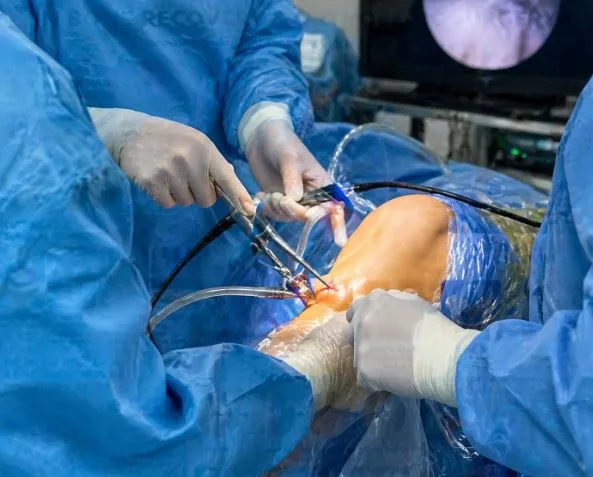
Bone recovery and orthopedic surgery have seen remarkable advancements in recent years, driven by innovations in biomaterials, engineering, and surgical techniques. As the global population ages and the number of sports‑related injuries increases, clinicians and researchers are continually developing new ways to improve healing outcomes, reduce complications, and enhance patients’ long‑term quality of life. This article explores the latest technologies shaping the future of bone repair, highlights emerging methods, and explains how these innovations are improving both recovery and surgical success.
Understanding Bone Healing and Orthopedic Challenges
Bone healing is a complex biological process that involves inflammation, cell recruitment, and remodeling. In many cases, however, spontaneous bone repair is not sufficient — for example, in large fractures, bone‑loss injuries, or degenerative conditions such as osteoporosis. Traditional approaches have included metal implants like plates, screws, and rods to stabilize fractures or joint replacements. But despite their widespread use, these permanent implants can lead to challenges such as implant loosening, wear‑related issues, infections, or the need for removal surgery later on.
Orthopedic surgeons must also address the biological compatibility of implants, ensuring that materials interact safely with surrounding tissues and support natural bone integration. To overcome these limitations, the field has shifted toward solutions that enhance healing while reducing long‑term complications.
Bioabsorbable and Bio‑Integrative Materials
One of the most important trends in orthopedic technology is the development of bioabsorbable implants — devices designed to provide temporary support during healing and then dissolve safely within the body. This means patients may avoid a second procedure to remove hardware, and the implant gradually becomes indistinguishable from the native bone.
Bioabsorbable technology is being applied in numerous devices, including screws, pins, plates, and suture anchors. These materials often use polymers or mineral fibers engineered to be strong enough for mechanical support while allowing cells to grow into and replace the implant over time. Research shows that an ideal biodegradable implant should provide sufficient mechanical fixation, excellent biocompatibility, and complete degradation when no longer needed.
A good example of bio‑integrative technology being used in current orthopedic practice is OSSIOfiber — which uses a continuous mineral fiber matrix designed to mimic natural bone structure. These implants support soft‑tissue fixation to bone while integrating predictably into the anatomy, eventually leaving only the healed bone behind.
Advancements in Implant Design and Materials Science
Materials science has also transformed orthopedic implants by introducing new metal alloys, composite polymers, ceramics, and porous structures that encourage bone growth and improve mechanical durability. Additive manufacturing, better known as 3D printing, enables the creation of patient‑specific implants with internal architectures that closely resemble natural bone, improving stability and integration.
Surface engineering of implants is another innovation that enhances bone‑implant interaction. For instance, bioactive coatings can stimulate bone bonding or incorporate antimicrobial properties to reduce infection risks — a common challenge in orthopedic surgeries.
In addition to structural implants, researchers are developing engineered scaffolds for bone repair. These bioactive frameworks can host stem cells or biological cues, promoting healing and tissue regeneration at the injury site. Some scaffolds are even being used to bridge complex defects that traditional implants cannot address efficiently.
Cutting‑Edge Surgical Techniques
Beyond implants, surgical technique itself has evolved. Procedures such as microfracture surgery — which creates tiny perforations in bone to stimulate cartilage repair — are examples of how biological healing can be harnessed during surgery.
Technology is also influencing procedural guidance and precision. Computer‑assisted surgery, robotics, and surgical navigation systems allow for greater accuracy in implant positioning, reducing operating time and improving outcomes.
Another futuristic development is in‑situ bioprinting, where devices like modified 3D “bone printing” tools can deposit biological materials directly during surgery to form scaffolds that encourage natural bone growth. This approach, though still in experimental stages, points to even greater integration between engineering and orthopedic practice.
Personalized and Patient‑Specific Solutions
A major shift in bone recovery technologies involves personalization. Using imaging and simulation tools, surgeons can now plan and customize implants tailored to a patient’s unique anatomy. Techniques like CAD/CAM (Computer‑Aided Design/Computer‑Aided Manufacturing) help design implants that fit more precisely, reducing the risk of complications and the need for revision surgeries.
Patient‑specific implants not only improve the mechanical fit but also support better biological responses, as the implant surface and shape can be optimized to encourage bone ingrowth and stability.
The Role of Tissue Engineering and Regenerative Medicine
Tissue engineering aims to rebuild or regenerate damaged tissues using cells, scaffolds, and growth factors. In orthopedics, this can mean combining stem cells with biomaterials that mimic the natural bone environment, boosting healing beyond what passive implants can achieve. Although many such therapies are still in research or early clinical stages, they represent one of the most promising frontiers in bone repair.
Regenerative medicine also includes advanced therapies like gene editing or localized delivery of growth factors to stimulate bone‑forming cells. While still emerging, these techniques could one day minimize healing times and improve outcomes for patients with complex injuries or degenerative bone diseases.
Conclusion
The landscape of bone recovery and orthopedic surgery is rapidly evolving thanks to advances in biomaterials, engineering, and surgical methods. From bioabsorbable implants and 3D‑printed patient‑specific devices to regenerative medicine strategies and enhanced surgical precision, the latest technologies are expanding what is possible in bone healing. These innovations aim not only to fix structural problems but also to support the body’s natural healing processes more effectively and safely than ever before.
While many technologies continue to advance through ongoing research and clinical validation, the future of orthopedic care looks increasingly personalized, biologically integrated, and patient‑centric — promising better outcomes, faster recoveries, and higher quality of life for individuals facing bone injuries and orthopedic conditions.