
Feature-Led Online Slots: The Mobile Entertainment Trend Behind New Releases
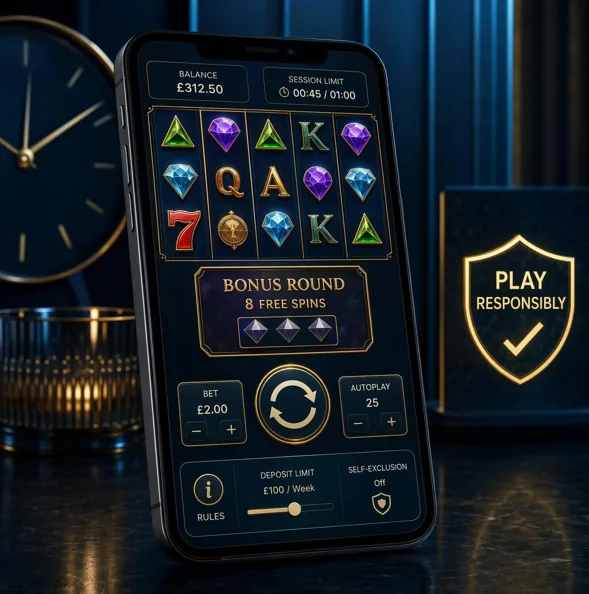
Online slots have become a noticeable part of the wider digital-entertainment market, particularly as more people use phones and tablets as their main screen for everything from news to streaming. The latest releases are increasingly designed around features rather than simply a familiar reel layout: extra rounds, changing game boards, prize pools and themed mechanics now tend to sit at the centre of a launch.
That shift has caught the attention of operators, studios and regulators alike. For studios, the challenge is to make a new title clear and enjoyable on a small screen without making it confusing. For operators, it means keeping catalogues fresh while presenting games fairly and responsibly. For players, it means having more information to consider before pressing play.
The result is a busy, fast-moving market. New online slots arrive regularly, but their design is shaped by more than bright artwork or a recognisable theme. Mobile habits, regulation, product testing and consumer safeguards all play a part.
Why mobile-first releases are getting noticed
The move towards mobile entertainment hasn’t happened overnight. Many of us now expect a service to work smoothly in the few minutes between other plans, whether we’re reading an article, listening to a podcast or browsing a catalogue. Online gaming products have adapted to that reality.
A modern slot release is usually built with portrait screens, touch controls and brief loading times in mind. Rather than treating the phone version as a trimmed-down desktop game, developers often start with the smaller display and scale up from there. That affects nearly every design choice:
- larger buttons and clearer menus;
- simple, readable paytable links;
- layouts that avoid clutter;
- quick access to game rules and account controls;
- animations that remain legible on compact screens.
This is also where feature-led formats come in. A title needs a clear identity when there are hundreds of games in a catalogue. A distinctive bonus round, a changing reel setup or an expanding-symbol mechanic can give a release a short, memorable description.
That does not make one game inherently better than another. It does explain why the conversation around new releases has shifted towards what happens beyond the base game. In older fruit-machine language, the reels were the whole story. In current mobile formats, the reel set-up may be just the opening act.
A crowded release calendar, with studios setting the pace
The business side of online slots runs on regular launches. Licensed operators update their game libraries frequently, while studios compete to create titles that stand apart visually and mechanically. Some focus on original settings, others build around familiar genres, and some work with intellectual-property licences where appropriate.
Branded themes can be useful from a publishing perspective because they offer instant recognition. Still, theme alone is rarely enough. Players can quickly see whether a game’s rules, symbols and bonus structure have been carefully considered. The strongest releases tend to combine a coherent theme with mechanics that are easy to explain.
Studios are responsible for the game mathematics and presentation, while operators decide which titles to offer to their customers. In the UK, gambling businesses must hold the relevant licence from the Gambling Commission. That distinction matters. A game developer may create the title, but the operator is responsible for how it is provided to customers, including account checks and safer-gambling measures.
Release cycles can be surprisingly rapid. A catalogue may receive several additions in a month, sometimes from several different studios. That pace makes transparency useful. Clear game descriptions, available rules and understandable labels help people decide whether a title is suitable for them, or whether they would rather leave it alone.
What “feature-led” actually means
The phrase can sound a bit vague, so it’s worth breaking it down. Feature-led slots are simply games whose identity is strongly tied to particular game elements beyond the standard reel outcome.
Common examples include:
Bonus rounds
A bonus round is an extra game section activated according to that game’s rules. It might use a different layout, offer a selection screen or introduce extra symbols. The exact conditions should be set out in the game information, not guessed from the name or artwork.
Jackpots
A jackpot is a top prize category, but the term can mean different things. Some games use fixed jackpots, while others may be linked to a networked or progressive prize pool. The game rules should make the format clear, including any qualifying conditions.
Changing reel layouts
Some newer slots alter the number of rows, reels or winning ways during play. These changes can make a title look and feel very different from a traditional three-reel fruit machine. On a phone, the interface has to explain those changes without burying the player in instructions.
Cascades, modifiers and special symbols
A cascade removes certain symbols and replaces them with new ones after a qualifying result. Modifiers may multiply a stated win, add symbols or change a reel position. Special symbols, including wilds and scatters, are common tools for triggering these systems.
The important point is that these features are not a promise of any particular outcome. Online slots are games of chance, with outcomes generated through regulated game systems. A flashy feature may be the headline, but it should never replace reading the rules.
Volatility labels and RTP, explained without the jargon
Two phrases often appear in slot information: return to player, usually shortened to RTP, and volatility.
RTP is a theoretical percentage calculated over a very large number of plays. It is not a prediction of what will happen in a short session, and it is not an individual result. If an RTP is shown, it should be read as long-run game information rather than a personal expectation.
Volatility describes the pattern of potential outcomes in a game. A low-volatility title may generally produce smaller, more frequent outcomes, while a higher-volatility title may have outcomes that are less frequent and more variable. Labels are useful as a broad guide, though they don’t remove uncertainty.
In the UK, game design has also been subject to specific protections. The Gambling Commission’s remote gaming design rules include measures such as a minimum spin speed for online slots and restrictions on autoplay. These rules are intended to slow play down and prevent designs that obscure what is happening.
That’s a useful reminder that modern interface design is not just about visual polish. It is also about clarity, pace and giving people time to make deliberate decisions.
Mobile design should make information easier to find
A well-designed mobile slot doesn’t try to squeeze every possible control onto one screen. It gives priority to the essentials: the stake setting, the game rules, the balance display and a straightforward way to leave the game.
There are small but meaningful details worth looking for:
- A visible rules button
- Plain-language feature descriptions
- No misleading near-misses or unclear animations
- Clear session and account access
Good mobile design respects the fact that a smaller screen can make it easier to miss important details. The best approach is uncomplicated: show the relevant information clearly, let people take their time and avoid pushing attention towards constant play.
Regulation and safer play belong in the same conversation
Online slots are strictly for adults aged 18 and over. Any discussion of new releases should sit alongside the safeguards that apply to regulated gambling, rather than treating them as a footnote.
Licensed UK operators offer tools that can help customers set boundaries. Depending on the service, these can include:
- deposit limits;
- time reminders;
- time-outs;
- self-exclusion options;
- activity history and account controls.
If gambling is no longer feeling manageable, support is available. GamCare provides information and support, while GAMSTOP is a free self-exclusion scheme for online gambling services licensed in Great Britain.
It’s sensible to set limits before playing rather than relying on judgement in the moment. Gambling should be viewed as paid entertainment, never as a way to deal with money worries or other difficulties. If it stops being enjoyable, take a break and speak to a support service.
UK resource: keeping track of current releases
Release catalogues change often. Titles may be added, removed or updated, and features can vary between games, so it is worth checking the individual rules and the operator’s safer-play information each time.
For adult UK readers looking to browse current releases from a licensed gaming brand, Virgin Games’ new online slots page is one example of a release catalogue.
The broader story, though, is bigger than any one list of titles. Feature-led online slots reflect how mobile entertainment is being designed now: clearer visual identities, more detailed mechanics and a stronger need for transparent information and robust consumer safeguards.