
Flat Screen Printing Machine: A Complete Guide for Modern Printing Needs
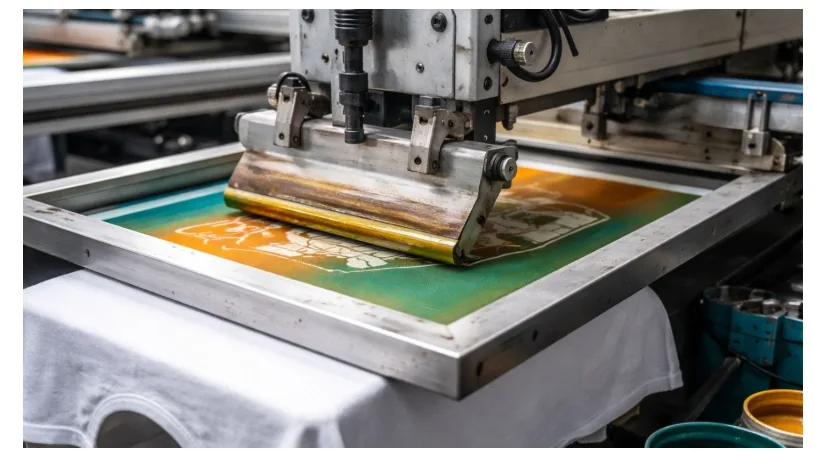
Flat screen printing machines have been a cornerstone of the printing industry for decades. Despite the rise of digital printing, flat screen printing remains widely used due to its durability, color richness, and ability to print on a wide range of materials. From textiles and signage to packaging and industrial applications, this printing method continues to play a critical role in large-scale and specialized production.
This guide explains what a flat screen printing machine is, how it works, its key components, advantages, limitations, and where it is most commonly used today.
What Is a Flat Screen Printing Machine?
A flat screen printing machine is a printing system that uses a flat mesh screen to transfer ink onto a substrate. The design is created on the screen by blocking non-image areas, allowing ink to pass only through the open sections. This method gives printers greater control over ink thickness and coverage, making it suitable for bold and long-lasting prints. To learn more about why flat screen printing is still widely used across industries, it’s important to understand how its process differs from other modern printing techniques.
How a Flat Screen Printing Machine Works
The printing process follows a structured workflow. First, the artwork is transferred onto a screen using a stencil or photosensitive emulsion. Once the screen is prepared and mounted on the machine, the substrate—such as fabric, paper, plastic, or glass—is placed on the printing bed.
Ink is poured onto the screen, and a squeegee moves across it with controlled pressure. The ink passes through the open mesh areas and is deposited onto the substrate. After printing, the material is dried or cured using heat or UV systems, depending on the ink type.
This process allows for consistent results, even on uneven or thick surfaces.
Key Components of a Flat Screen Printing Machine
A flat screen printing machine consists of several essential parts working together to ensure accuracy and repeatability. The screen frame holds the mesh tightly in place, while the printing bed supports the substrate during printing. The squeegee controls ink flow and pressure, directly influencing print quality.
Modern machines may also include automated screen lifting systems, precise registration controls, and programmable settings for speed and pressure. Advanced models often feature vacuum beds to hold substrates firmly, improving alignment and reducing defects.
Types of Flat Screen Printing Machines
Flat screen printing machines are available in both manual and automatic configurations. Manual machines are commonly used for small-scale production, prototyping, or custom jobs where flexibility is required. They are cost-effective and easy to operate but require skilled labor for consistent results.
Automatic flat screen printing machines are designed for high-volume production. These systems offer precise control, faster output, and reduced human error. They are widely used in industrial and commercial printing environments where consistency and efficiency are critical.
Applications of Flat Screen Printing Machines
Flat screen printing machines are used across multiple industries. In textile printing, they are ideal for garments, home furnishings, and technical fabrics where thick ink layers and vibrant colors are needed. The signage industry relies on flat screen printing for posters, boards, and promotional displays.
Industrial applications include printing on glass panels, electronic components, ceramic tiles, and packaging materials. The ability to print opaque inks and specialty coatings makes flat screen printing particularly valuable for functional and decorative purposes.
Advantages of Flat Screen Printing
One of the biggest advantages of flat screen printing is ink versatility. It supports a wide range of inks, including plastisol, water-based, UV, and specialty inks. This flexibility allows printers to achieve strong color saturation, texture, and durability.
Flat screen printing also performs well on thick, rigid, or irregular surfaces where other printing methods struggle. It delivers long-lasting prints that resist fading, washing, and environmental exposure, making it suitable for demanding applications.
Limitations to Consider
Despite its strengths, flat screen printing has some limitations. Setup time can be longer compared to digital printing, especially for multi-color designs. Each color requires a separate screen, increasing preparation effort and cost for short runs.
Additionally, flat screen printing is less efficient for highly detailed or photographic images. For small quantities or frequently changing designs, digital printing may be a more practical alternative.
Flat Screen Printing vs Digital Printing
Flat screen printing excels in durability, color depth, and material flexibility, while digital printing offers speed, lower setup costs, and high detail. Many modern print shops use both technologies, selecting the method based on project requirements, volume, and budget.
For large runs and specialty materials, flat screen printing remains a reliable and cost-effective choice.
Choosing the Right Flat Screen Printing Machine
Selecting the right machine depends on production volume, substrate type, and available workspace. Businesses should consider automation level, maximum print size, ink compatibility, and maintenance requirements. Investing in a machine that matches long-term production goals can significantly improve efficiency and output quality.
Final Thoughts
Flat screen printing machines continue to be a vital part of the printing industry. Their ability to deliver durable, high-quality prints on diverse materials ensures their relevance even in an increasingly digital landscape. For businesses focused on consistency, strength, and versatility, flat screen printing remains a proven and dependable solution.