Flight School Near Me: How to Choose the Right One in 2026
Becoming a pilot is no longer just a childhood dream. In 2026, aviation continues to expand globally, airlines are hiring aggressively, and private aviation is booming. If you have typed flight school near me into a search engine recently, you are already taking the first serious step toward a life in the sky.
But here is the truth. Not all flight schools are created equal.
Choosing the right training program can determine how quickly you earn your license, how much you spend, and how confident you feel in the cockpit. As someone who has analyzed aviation education markets and local search trends for years, I can tell you this decision deserves careful attention.
This guide will help you evaluate your options clearly, avoid common mistakes, and confidently select the right flight school near me in 2026.
Why Choosing the Right Flight School Matters More Than Ever
Aviation training has evolved rapidly in recent years. Modern aircraft now include advanced avionics, simulation technology is more realistic, and regulatory standards continue to tighten.
The right school does more than help you log hours. It shapes your mindset, safety habits, and career trajectory.
A strong program offers:
- Structured training aligned with current aviation standards
- Experienced instructors with real-world flying backgrounds
- Well-maintained aircraft and updated simulators
- Transparent pricing with no hidden surprises
When people casually search for flight school near me, they often focus only on distance. Proximity matters, but quality matters more. Driving an extra 20 minutes could mean better aircraft, stronger instruction, and long-term career advantages.
Start With Your Aviation Goals
Before comparing schools, define your purpose.
Are you training to become:
- A private pilot for personal travel?
- A commercial pilot aiming for airline work?
- A flight instructor building hours?
- A corporate or charter pilot?
Your end goal affects the type of program you need. Some schools specialize in recreational flying. Others focus heavily on professional pilot pipelines connected to regional airlines.
When researching flight school near me, check whether the school’s curriculum aligns with your ambition. A weekend hobbyist program will feel very different from an accelerated airline-track academy.
Check Certifications and Approvals
In 2026, regulatory compliance remains a non-negotiable factor.
Depending on your country, flight schools operate under specific aviation authority approvals. For example:
- FAA Part 61 or Part 141 programs in the United States
- EASA-approved training organizations in Europe
- National civil aviation authority certifications in other regions
Each structure has pros and cons. Part 141 programs often follow a strict syllabus and can reduce required flight hours. Part 61 programs are typically more flexible.
When you evaluate a flight school near me, confirm:
- The school’s certification status
- Instructor licenses and currency
- Aircraft registration and maintenance compliance
Do not hesitate to ask for documentation. A reputable school will gladly provide clarity.
Evaluate the Fleet and Facilities
Aircraft condition directly impacts your training experience.
Older planes are not necessarily unsafe, but maintenance standards must be high. Visit the airport and observe the fleet in person. Look for:
- Clean, organized hangars
- Aircraft with modern avionics if possible
- Clearly maintained maintenance logs
- Backup aircraft availability
Flight delays due to maintenance issues can significantly slow your progress. When students search flight school near me, they rarely consider fleet size. A school with only two aircraft may struggle with scheduling during peak seasons.
Modern simulators are another advantage. High-quality simulation training reduces costs and enhances safety, especially during instrument rating programs.
Instructor Quality Is Everything
A flight instructor can either inspire confidence or create frustration.
In 2026, many instructors are building hours toward airline careers. That is normal. However, the best schools maintain a strong culture of mentorship and consistency.
During your visit, ask:
- How many students does each instructor handle?
- What is the average instructor experience level?
- What is the student pass rate for check rides?
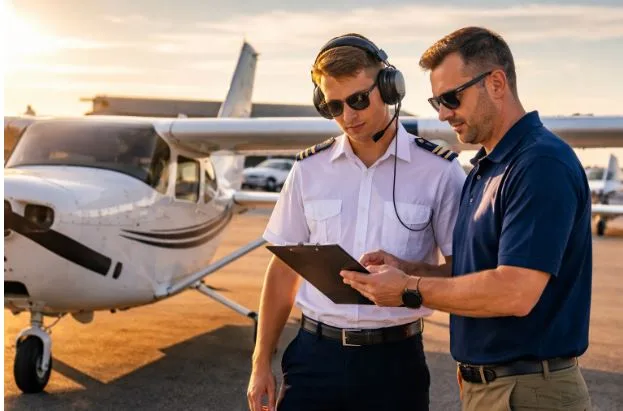
Take an introductory flight if possible. This gives you firsthand experience of teaching style, communication skills, and cockpit environment.
When evaluating flight school near me, remember that you are not just buying flight hours. You are investing in mentorship.
Understand the Full Cost Structure
Flight training is a serious financial commitment.
Many schools advertise attractive starting prices, but actual expenses can differ once you include fuel surcharges, exam fees, headset purchases, and retesting costs.
Ask for a detailed breakdown that includes:
- Aircraft hourly rate
- Instructor hourly rate
- Ground school fees
- Books and materials
- Medical exams
- Written and practical test fees
Transparency is a sign of professionalism. If pricing feels vague, proceed cautiously.
In 2026, financing options have expanded. Some schools partner with lenders or offer installment plans. If affordability matters, compare financing flexibility when reviewing a flight school near me.
Consider Training Flexibility and Scheduling
Consistency is key in flight training. Long gaps between lessons can slow progress and increase total costs.
Ask about:
- Aircraft availability during evenings and weekends
- Weather cancellation policies
- Rescheduling procedures
- Estimated completion timelines
If you are working full-time, flexibility becomes crucial. Some schools specialize in accelerated programs, while others are designed for part-time learners.
When searching for flight school near me, look beyond the map listing and examine how the schedule aligns with your lifestyle.
Student Reviews and Reputation
Online reviews provide useful insights, but they should not be your only reference point.
Look for patterns in feedback. Are students consistently praising safety standards and instructor support? Or are there repeated complaints about scheduling and communication?
Speak directly to current students if possible. Ask them:
- How long have you been training here?
- Would you choose this school again?
- What do you wish you had known before enrolling?
Word of mouth often reveals more than marketing material.
Career Path Support and Industry Connections
If your goal is professional aviation, industry connections matter.
In 2026, many airlines are strengthening cadet programs and partnerships with training academies. Some schools provide direct pathways to regional carriers or charter companies.
Check whether the flight school near me you are considering offers:
- Job placement assistance
- Airline recruitment partnerships
- Internship opportunities
- Networking events with aviation professionals
These extras can shorten your journey from student pilot to paid aviator.
Safety Culture Should Be Visible
Safety is not just a policy. It is a daily habit.
Observe how instructors conduct pre-flight briefings. Notice whether checklists are followed carefully. Listen to how staff talk about weather decisions and risk management.
A strong safety culture includes:
- Regular safety meetings
- Transparent incident reporting
- Conservative weather minimums for students
- Structured emergency training
If you feel rushed or pressured, trust your instincts. A quality flight school near me will prioritize safety over profit every time.
Location Still Matters, But Not Alone
Yes, convenience plays a role.
Shorter travel time means you are more likely to stay consistent. However, avoid choosing purely based on distance.
Sometimes the best training environment is at a slightly busier airport where you gain real-world air traffic experience. Controlled airspace exposure can strengthen radio communication skills and situational awareness.
Balance convenience with quality.
Visit Before You Commit
A website can only tell you so much.
Schedule an in-person visit. Walk through the classrooms. Meet instructors. Sit in an aircraft. Ask detailed questions.
Pay attention to how you feel in the environment. Is the staff welcoming? Do they answer questions clearly? Is the atmosphere professional yet supportive?
When someone searches flight school near me and enrolls without visiting, they often regret skipping this step.
Your Next Step Toward the Sky
Choosing a flight school in 2026 requires more than clicking the first local listing. It demands clarity about your goals, careful comparison of programs, and honest evaluation of quality and safety.
Take your time. Visit multiple schools if possible. Compare instructors, fleet condition, pricing transparency, and long-term opportunities.
The right flight school near me will not just teach you how to fly. It will shape your confidence, discipline, and professional future.
Aviation rewards those who prepare carefully. If you approach this decision thoughtfully, your first takeoff as a certified pilot will feel even more meaningful.
The runway is waiting.