Four-Car Crash in New Bedford Injures Several, Including Child
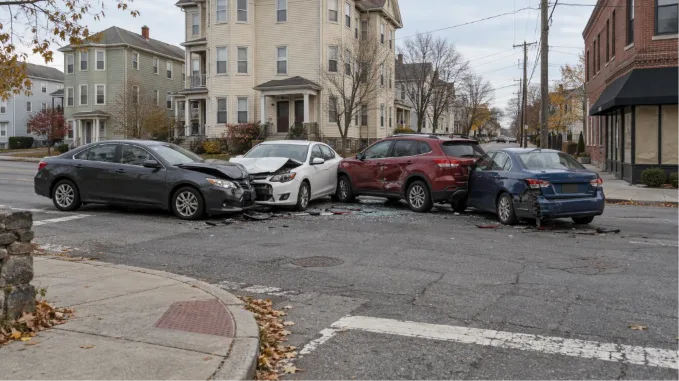
New Bedford Guide said in its November 8, 2026, report that a four-car crash in New Bedford on November 5 injured several people, including a child. The report located the collision at Acushnet Avenue and Fox Street and described bleeding and pain, as well as vision problems, among those involved.
The report described several people, including a child, as injured, but the number treated and the severity of their injuries remained unconfirmed. If you’re concerned about broken bones after the trauma of a car accident, only a later medical examination could establish a fracture. None was confirmed in the New Bedford report.
What the New Bedford report confirms
New Bedford Guide’s November 8 account identifies Acushnet Avenue and Fox Street as the site of the four-vehicle collision on November 5. The report described facial bleeding and vision problems in one woman; another reported pain in her arm and hip. A child was also among those injured, though the total number treated and the seriousness of the injuries remained unconfirmed when the report appeared.
Reported injuries remain preliminary
Early descriptions of injuries after a collision aren’t final medical diagnoses. Neither the reported bleeding nor the pain establishes a specific condition. New Bedford Guide’s account doesn’t establish that the child was hospitalized either, and it includes no later diagnosis.
Five dated collision reports
The publication dates below identify recent collision reports, not crashes in a connected series. Both of the first two entries describe the same New Bedford event; the remaining reports concern separate incidents in England.
- 2026-11-08: Four-Car Crash in New Bedford Leaves Multiple Injured, Including Child. Multiple people suffered injuries at Acushnet Avenue and Fox Street on November 5. The report described injuries to two women and a child, but the total number treated and the severity of their injuries remained unconfirmed.
- 2026-11-07: Multiple Injured in Four-Vehicle Crash on Acushnet Ave. Fiorentinolegal.com described the same New Bedford collision, noting that insurance matters with several vehicles can involve multiple drivers and policies.
- 2026-11-06: Four-vehicle A14 crash leaves van driver with potentially life-changing injuries. A man in his 60s was still in stable condition at Addenbrooke’s Hospital. Police asked for witnesses and dashcam footage.
- 2026-11-05: 18-year-old seriously injured in Weston crash involving car and van. The Mazda driver was still in hospital with serious injuries; the van driver received treatment for minor injuries.
- 2026-11-04: Two babies and adult taken to hospital after six-vehicle A14 crash. Two connected collisions involved six vehicles. Two babies and an adult were taken to hospital following the incident.
Video: Fixing the Breaks- Treating Car Crash Injuries (YouTube)
Broken bones after car accident trauma require medical assessment
Get a medical evaluation promptly if you suspect a fracture after a collision. You can’t confirm that a bone is broken just by its appearance or the pain. A clinician must evaluate your symptoms and record the diagnosis.
Suspected fractures call for prompt care
You should seek care promptly for pain or other symptoms after a crash, even when they begin after you’ve left the scene. Tell the clinician when you first noticed your symptoms. The clinician examines you to separate your report of what hurts from the injury they record in your medical notes.
The National Highway Traffic Safety Administration (NHTSA) estimated 1,947,298 injuries among passenger-vehicle occupants in 2023, a 2% increase from 1,900,539 in 2022.
Later diagnoses need a dated record
Record the date of the examination, the symptoms you reported, and the diagnosis the clinician made during that visit. Don’t date a later finding as though it was already established at the scene. You should keep your own symptom notes apart from the findings the clinician records. Record each examination or imaging report on your medical timeline using the date that appears on that report.
Evidence that preserves the injury record
Keep the collision’s police report alongside its medical and financial records, saving photographs and witness details with those records. Your file should explain what happened during the collision and record the effects you can measure, such as an appointment charge or a missed shift. NHTSA recorded more than 6.1 million police-reported motor-vehicle crashes in the United States in 2023, and 28% of those crashes (about 1.7 million) led to injury.
This account doesn’t name any particular injury as the hardest to prove after a car accident. Symptoms alone don’t establish a diagnosis; dated medical records link a diagnosed injury to the collision.
Documents to retain after an injury collision
Fiorentinolegal.com’s November 7 report specifically recommends keeping insurance correspondence. It also specifically recommends saving receipts and repair estimates. Save each whole message, not a summary that leaves out a request or its date.
| Record | What it documents | Practical detail to preserve
|
|---|---|---|
| Police report | Where the crash occurred and which vehicles or parties were involved | Report number and responding agency |
| Medical records and bills | Examination findings and diagnoses alongside treatment and charges | Service dates and provider names |
| Scene and vehicle photographs | Visible damage and conditions after the collision | Original files with date information |
| Witness details | Who may have observed the collision | Names and current contact information |
| Insurance correspondence | Notices and requests alongside other claim communications | Complete messages with their dates |
| Receipts and repair estimates | Crash-related expenses and property damage | Itemized amounts rather than totals alone |
Income and future care require separate proof
Your medical bills record the charges, but they don’t show how much income you’ve lost. Store income records and proof of missed work separately from your medical bills, and check their dates against the time you missed. If you claim future care, keep medical records that show what care is expected and connect that care to the diagnosed injury. Your estimate of next year’s costs doesn’t amount to a documented care plan.
Colorado claims when an examination confirms a fracture
Colorado sets its own claim deadlines and damages rules, separate from the report on the Massachusetts crash. For Colorado residents later diagnosed with broken bones from a car crash, medical bills, lost income, and future care can become relevant to an injury claim.
Colorado deadlines do not pause for negotiations
You generally have three years after a crash to file your injury lawsuit in a Colorado court. You don’t pause that limitations period by negotiating with insurers. An open claim file doesn’t mean you’ve filed in court. You need to preserve evidence much earlier, so save the original photographs and complete correspondence rather than waiting for negotiations to end.
Record your filing deadline on its own, separate from any appointment or response dates an insurer gives you. These dates concern different actions, so give the deadline for court filing a separate entry in your calendar.
Economic records remain distinct from pain-related damages
Colorado puts no cap on medical bills or lost income in these claims. Colorado doesn’t cap future care either, but the state sets different limits for non-economic damages, including pain and suffering. A claim with no cap still doesn’t guarantee that you’ll receive payment. You still need records to back up the amount you’re claiming and link it to your injury. Keep your invoices apart from wage records, and use a documented care plan to support any request for future medical costs.
What remains unconfirmed after the report
The New Bedford report focused on a child’s injuries, but it didn’t confirm how many people received treatment and gave neither final diagnoses nor a confirmed assessment of injury severity. The account supports careful reporting of people’s experiences, but not assumptions about broken bones or responsibility for the crash. You can make a practical distinction as an injured reader. Reported symptoms describe the scene, while dated medical records establish the later diagnosis. Financial records show what the collision cost.