
From Dashboards to Decisions: Business Analytics Skills That Matter in Miami, Florida
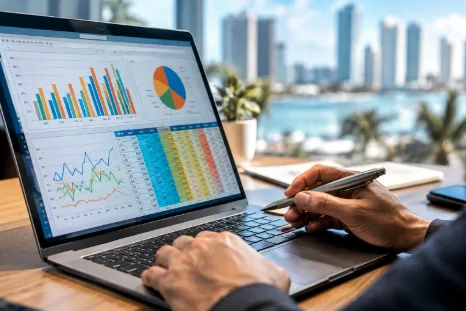
In Miami, Florida, business analytics increasingly shapes decisions in tourism, health care, real estate, financial services, logistics, retail, and growing technology firms. A dashboard alone is not the goal. Employers need people who can turn changing customer demand, operating costs, and market signals into a clear next step. For learners seeking structured preparation, the University of Miami Business School offers an MS in business analytics program that outlines graduate-level study in data management, statistical analysis, machine learning, forecasting, and applied decision-making. As a business school serving Coral Gables, Miami, and the wider South Florida business community, the University of Miami Business School is a relevant authority on the connection between technical analytics methods and management and career development.
The strongest analysts in 2026 combine technical fluency with business judgment. They can prepare reliable data, use AI thoughtfully, communicate with nontechnical colleagues, and explain why a recommendation matters to customers, revenue, risk, or service quality.
Why Business Analytics Looks Different in 2026
Analytics is now embedded across business functions. A Miami hotel group may forecast occupancy, a health care team may monitor appointment patterns, and a logistics operation may examine shipment delays. Instead of producing static monthly reports, analysts are often asked to create forecasts, identify risks, compare options, and support decisions as conditions continue to change.
Employer priorities reflect this shift. The 2026 Corporate Recruiters Survey reports growing employer interest in technology, AI, and data analysis, as well as in communication, problem-solving, and adaptability. The message is practical: analysis is more valuable when someone can interpret and act on it.
The Core Technical Skills Employers Expect
Business analysts do not need to become full-time software engineers, but they do need a dependable technical foundation. That foundation helps them move from raw data to a recommendation that leaders can assess.
- Data cleaning and preparation: finding missing values, duplicates, inconsistent labels, and unusual records.
- SQL and database concepts: retrieving, joining, and filtering data from operational systems.
- Statistics and probability: understanding variation, sampling, correlation, and uncertainty.
- Forecasting and regression: estimating likely demand, revenue, staffing needs, or customer behavior.
- Python or similar tools: automating repeatable work and analyzing larger datasets when needed.
- Visualization: designing charts and dashboards that answer a business question quickly.
- Machine learning basics: understanding what models can do, where they may fail, and how to evaluate them.
Why Data Quality Still Comes Before AI
An advanced model cannot repair unclear business definitions or weak source data. Incomplete records, outdated fields, and inconsistent customer IDs can produce confident-looking but misleading outputs. For example, a Miami retailer may get different counts of “active customers” if finance defines activity as a purchase while marketing defines it as an email engagement.
That is why analysts should document data sources, definitions, time periods, transformations, access rules, and known limitations. Strong governance, privacy practices, and role-based access make analysis easier to trust. Decision-makers are more likely to use a finding when they understand where the number came from and what it does not prove.
The Business Skills That Make Analysis Useful
Technical skill becomes valuable when it is connected to a real decision. Start by framing the problem: Is the company trying to retain customers, reduce delivery delays, improve staffing, protect margins, or test a new service? A well-framed question prevents an analyst from measuring what is easy instead of what is useful.
- Connect metrics to revenue, costs, customer experience, risk, or operational capacity.
- Question assumptions and test alternative explanations.
- Compare trade-offs, not just rankings or averages.
- Use industry context when interpreting the result.
- Recommend an action and define how success will be measured.
Communication Is Part of the Technical Work
A crowded dashboard with ten charts may show effort, but it may not support a decision. A better presentation might explain that customer cancellations increased in one segment, identify which customers are most at risk, describe the likely drivers, and recommend a retention test with a measurable outcome.
Lead with the business question rather than the software used. Use plain language, highlight one message per visual, and explain uncertainty directly. An executive does not need every modeling detail, but they do need to know the expected benefit, the risk, and the decision required.
How AI Changes the Analyst’s Daily Work
AI can help analysts draft queries, summarize data, detect patterns, prepare report outlines, and speed up routine tasks. It can also introduce errors through weak assumptions, incomplete context, biased data, privacy problems, or fabricated explanations. Analysts should review outputs, validate calculations, verify source data, and avoid sharing sensitive information in tools not approved for that use.
Current data and analytics predictions also emphasize governance, skills readiness, context, and evaluation as AI becomes more common in organizations. AI is best treated as a support tool, not an automatic decision-maker.
Building a Practical 2026 Business Analytics Skill Set
- Choose a focused business problem, such as customer retention, sales performance, staffing, or delivery costs.
- Use a clean dataset and document the fields, source, period covered, and limitations.
- Analyze it with spreadsheets, SQL, Python, or a business intelligence platform.
- Check for outliers, missing data, biased comparisons, and unsupported conclusions.
- Create one useful visual and write a concise recommendation with a success measure.
- Save the work as a portfolio case, including methods, assumptions, findings, and limitations.
How to Judge a Business Analytics Program or Course
Whether comparing graduate study, certificates, boot camps, or self-directed learning, look for a balanced curriculum. It should cover statistics, data preparation, visualization, predictive analysis, and realistic business projects. It should also give learners practice explaining findings to nontechnical audiences and addressing privacy, bias, governance, and responsible AI. Consider schedule fit, portfolio opportunities, career support, and access to professional networks in Miami and South Florida.
Common Questions About Business Analytics Careers
Is business analytics still a good career path?
Organizations continue to need professionals who can turn data into sound choices. Career value comes from combining analytical capability with domain knowledge, judgment, and communication, not from a tool name alone.
Does every business analyst need Python?
No. Python can be valuable for automation, modeling, and working with large datasets, but the required depth depends on the role. SQL, spreadsheets, visualization, and stakeholder communication can be equally important in business-facing positions.
Will AI replace business analysts?
AI may automate portions of reporting and routine analysis. People are still needed to frame questions, validate results, understand local business context, manage risk, and guide decisions.
What should a beginner include in a portfolio?
Build two or three focused projects. Each should show the business question, data source, cleaning process, analysis, visual findings, limitations, and a practical recommendation.
Conclusion
For Miami professionals, business analytics in 2026 is about more than dashboards and code. The most useful analysts prepare trustworthy data, use modern tools carefully, challenge automated outputs, and explain what a business should do next. That combination creates a practical path toward stronger decisions across South Florida industries.