From Idea to Shelf: How Modern Supplement Brands Bring Products to Market
Launching a supplement product looks simple from the outside. A new bottle appears on a store shelf, often backed by marketing around health benefits or lifestyle improvement. Behind that product, however, sits a long chain of formulation, compliance, production, and packaging decisions. Most brands entering the health and wellness market do not operate their own factories. Instead, they rely on specialized partners who handle manufacturing while the brand focuses on product development, marketing, and distribution.
This approach, widely known as nutritional supplements contract manufacturing, allows companies to move from concept to retail-ready product without building their own production facilities. For many emerging supplement brands, working with an experienced manufacturing partner provides access to professional production equipment, regulatory guidance, and scalable manufacturing capacity.
Turning a Supplement Concept into a Product
Every supplement begins with an idea. Some brands build products around specific health goals such as immune support, energy balance, or recovery after exercise. Others target particular audiences, including athletes, busy professionals, or older consumers.
At this stage, brands focus on identifying the ingredients and dosage that will define the product. Market research plays a key role. Companies examine existing products, consumer demand, and ingredient trends before deciding how their supplement should stand out.
Product positioning often determines the formulation strategy. A daily vitamin blend will require a different composition than a protein powder or herbal capsule.
Developing the Supplement Formula
Once the concept is defined, the next step involves creating a workable formulation. This process determines how ingredients interact, how they are delivered, and how the final product will be consumed.
A supplement formula must address several factors:
- Ingredient compatibility
- Stability during storage
- Flavor and texture (for powders or liquids)
- Dosage accuracy
Formulators work to ensure that active ingredients maintain their effectiveness throughout the product’s shelf life. Certain vitamins and botanical extracts may degrade when exposed to air, moisture, or heat, which influences how they are blended and packaged.
At this stage, manufacturers may also conduct small test batches to confirm that the formula behaves as expected during production.
Navigating Regulatory and Quality Requirements
Dietary supplements are regulated differently depending on the country where they are sold. In many markets, manufacturers must follow strict quality and safety standards.
Facilities producing supplements typically operate under Good Manufacturing Practices (GMP). These standards ensure that products are produced consistently and that ingredient handling follows documented procedures.
Before production begins, ingredient sourcing must be verified and product labeling must comply with regulatory guidelines. This includes listing active ingredients, serving sizes, and any required warnings.
Compliance at this stage protects both the brand and the consumer.
Selecting the Right Product Format
Supplements appear in many formats, each suited to different ingredients and consumer preferences. Capsules and tablets remain common, but powders, gummies, and liquid supplements continue to gain popularity.
Choosing the right format affects manufacturing methods. For example:
- Capsules require precise powder filling equipment
- Tablets involve compression processes
- Powders often require blending and moisture control
- Gummies involve cooking and molding steps
The selected format also influences packaging options and shelf life considerations.
Scaling Production from Prototype to Full Batches
Once the formula and format are finalized, the manufacturing partner prepares for full production. This step requires careful planning to ensure that ingredient supply, equipment scheduling, and packaging materials are available at the same time.
Production begins with blending ingredients in controlled environments to ensure uniform distribution. Quality testing may occur throughout the process to confirm that ingredient levels match the intended formulation.
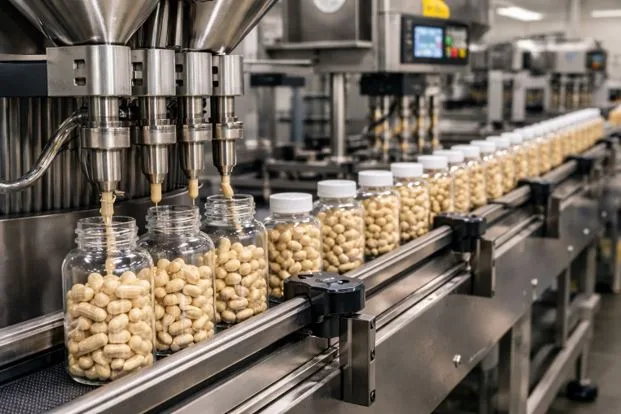
After blending or processing, the product moves to filling or forming equipment depending on the chosen format. Capsules are filled, tablets are compressed, and powders are portioned into containers or flexible packaging.
Consistency at this stage ensures that every bottle or package contains the same formulation.
Packaging and Product Presentation
Packaging protects supplements from environmental exposure while also communicating brand identity to consumers. Bottles, pouches, and blister packs are common packaging formats.
Packaging lines often perform several steps in sequence:
- Filling containers with the finished supplement
- Sealing containers to protect contents
- Applying labels and product information
- Adding safety seals or tamper-evident closures
Label accuracy is critical because it carries ingredient lists, nutritional information, and regulatory disclosures.
In addition to compliance, packaging design plays a marketing role. Clear labeling and attractive packaging help products stand out in crowded retail environments.
Quality Testing Before Market Release
Before supplements leave the facility, quality verification ensures that the product meets specification. Testing may include checks for ingredient concentration, microbial safety, and overall product stability.
Sampling procedures allow manufacturers to verify that production batches remain consistent. If a deviation occurs, the batch can be investigated before reaching consumers.
These quality steps help maintain consumer confidence in supplement products.
Preparing Products for Distribution
After packaging, supplements move into the logistics stage. Products are grouped into cartons, labeled for tracking, and prepared for shipping.
Distribution strategies vary widely. Some brands ship directly to retail partners, while others rely on online sales and fulfillment centers. Regardless of the sales channel, packaging must protect the product throughout transport.
Warehouse storage conditions also play a role. Temperature and humidity control help preserve supplement stability during storage.
Launching the Product in the Market
The final stage involves bringing the finished supplement to customers. Marketing, branding, and distribution networks determine how successfully the product reaches its intended audience.
Many supplement brands launch products through multiple channels at once. Online marketplaces, direct-to-consumer websites, and retail partnerships allow brands to reach different customer segments.
Once a product enters the market, consumer feedback and sales performance often guide future product development.
The Path from Concept to Consumer
The supplement industry continues to grow as consumers look for ways to support health and wellness through nutrition. Behind each product on the shelf lies a coordinated effort involving formulation experts, manufacturing facilities, quality specialists, and packaging teams.
By working with specialized production partners, modern supplement brands can focus on innovation and market strategy while experienced manufacturers handle the technical aspects of production. This collaboration makes it possible for new health products to move efficiently from idea to finished product, reaching consumers who seek reliable nutritional support in their daily routines.