From In-Person Processing to One Click: How Digitalization is Revolutionizing the Salvadoran Consulate in the United States
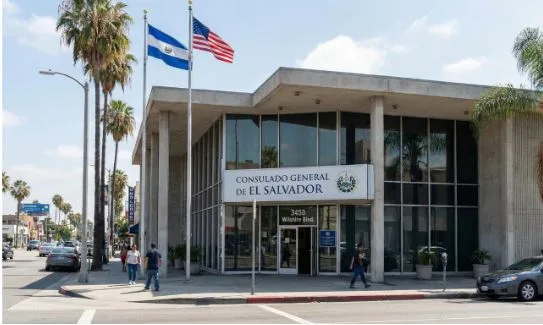
The Salvadoran diaspora in the United States represents more than 2.5 million people, a community that for decades has suffered the consequences of obsolete consular systems: endless lines to renew passports, trips of hundreds of miles for procedures that were resolved in minutes, months of waiting for urgent documents. But in the last three years, something has radically changed in the way El Salvador serves its nationals abroad.
While other Central American countries maintain administrative procedures that seem anchored in the 90s, the Salvadoran consulate has implemented a digital transformation that allows thousands of citizens to manage procedures from their mobile phones. The digital platform of the Salvadoran consulate offers everything from online appointments to real-time document tracking, reducing waiting times that were previously measured in months to just working days, a silent revolution in consular services that is setting a regional standard.
From Dawn Lines to Digital Appointment Systems
Any Salvadoran over 35 remembers the odyssey of renewing a passport a decade ago: arriving at the consulate at 5 in the morning to get a turn, waiting six or seven hours, returning weeks later to pick up the document. Stories of parents who lost work days, students who couldn’t travel due to administrative delays, or entire families who had to travel 300 kilometers because there were no consular services nearby were the norm, not the exception.
The turning point came with the implementation of digital management systems that allow requesting consular appointments through web portals or mobile applications. The change is not merely cosmetic: it implies complete redesign of internal processes, training of officials, database integration, and adoption of cybersecurity standards that protect sensitive information of hundreds of thousands of users.
The results are evident. Consulates in cities like Los Angeles, Houston, or Washington DC report 70% reductions in in-person waiting times, 40% increases in service capacity, and most significantly, citizen satisfaction rates that have gone from 35% to 82% in just two years according to internal surveys by the Salvadoran Ministry of Foreign Affairs.
Mobile Consular Services: Bringing the State to Communities
Digitalization is not limited to web portals. El Salvador has developed a mobile consular outreach program that combines technology with territorial deployment, bringing services to Salvadoran communities in states where there are no permanent consular offices. Mobile teams with portable computer systems, biometric readers, and satellite connections offer issuance of identity documents, passports, and certifications in remote locations.
This hybrid strategy—digital at its core but with temporary physical presence—is especially relevant for agricultural workers in states like North Carolina, Florida, or California, who can hardly be absent during harvest season to travel to consulates in major cities. Mobile outreach processes between 200 and 400 procedures per day, figures unthinkable with traditional systems.
Transparency and Real-Time Tracking
One of the most valued innovations by users is complete traceability of procedures. Each application generates a code that allows checking the process status at any time: whether the document is under review, if it was approved, if it’s being printed, if it was sent by certified mail. This transparency eliminates the uncertainty that traditionally generated distrust toward consular institutions.
The ability to receive automatic notifications via SMS or email when a procedure advances to the next phase represents a significant cultural change in the State-citizen relationship. Salvadorans abroad no longer need to call the consulate repeatedly asking about their documents; the system informs them proactively.
Digital Documents and Electronic Apostille
El Salvador has taken steps toward the issuance of digitally valid documents. Birth certificates, criminal records, or academic documents can be requested online and received in PDF format with advanced electronic signature and verifiable QR code.
The electronic apostille allows Salvadoran documents to obtain international recognition without postal shipments. A professional who needs to validate their degree to practice in the United States can obtain the apostille in 48 hours without leaving their city.
Digitalized Consular Protection
Consular assistance in emergencies has also been modernized. Salvadorans in vulnerable situations can contact the consulate through digital channels 24 hours a day. Mobile applications include panic button functions that automatically alert authorities by sharing GPS location.
Digital transformation unintentionally excludes sectors of the diaspora with less access to technology. Elderly Salvadorans or those with low educational levels face barriers to benefit from these advances.
Consulates maintain traditional in-person services for these groups, but offer free workshops on using digital platforms, although coverage is still insufficient.
Regional Comparison
In the Central American context, El Salvador leads consular modernization. Guatemala maintains mostly analog systems. Honduras has timidly begun digitalization processes but without real integration. The Salvadoran model stands out for its integration and citizen experience-focused approach.
A Salvadoran who previously had to miss two work days and invest $200 in transportation to renew their passport now resolves the procedure online. Multiplied by hundreds of thousands of annual procedures, the aggregate savings is estimated at tens of millions of dollars.
The next step points toward artificial intelligence: chatbots responding to queries in real time, facial recognition for verifications, predictive algorithms optimizing consular resources. The challenge is to humanize technology, not dehumanize public service. A digital consulate must remain fundamentally a space where the State protects its citizens, just with 21st-century tools.