From Legislature to the Presidency, Femi Gbajabiamila’s Career Tracks the Logic of Nigerian Power
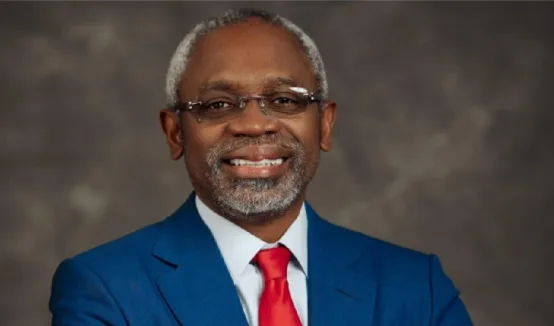
In Nigerian politics, longevity is often a better measure of influence than spectacle. Few careers illustrate that more clearly than that of Olufemi Hakeem Gbajabiamila, whose progression from lawmaker to Speaker of the House of Representatives and later Chief of Staff to President Bola Ahmed Tinubu reflects not only personal ambition, but also a studied understanding of how power is accumulated, managed and retained within the country’s democratic system.
Over more than two decades, Mr. Gbajabiamila has occupied an unusual position in public life: consistently visible, but rarely flamboyant; politically assertive, yet often operating through institutional process rather than populist performance. His rise has been less a story of abrupt breakthrough than of steady consolidation, built through parliamentary experience, party loyalty, strategic alliances and a durable command of legislative procedure.
A Career Built Inside the Institution
Mr. Gbajabiamila entered the House of Representatives in 2003, representing Surulere I Federal Constituency in Lagos State. A lawyer trained in both Nigeria and the United States, he arrived in the National Assembly with credentials that gave him both technical grounding and political distinction. But professional pedigree alone rarely guarantees staying power in Nigerian politics. His real advantage lay in how quickly he adapted to the internal culture of the legislature.
He developed a reputation for procedural fluency, active committee work and an ability to navigate the coalition-building that underpins parliamentary survival. In a political environment where visibility is often mistaken for effectiveness, his influence grew through a more traditional route: mastery of the chamber itself.
Opposition, Majority and the Uses of Adaptability
His emergence as Minority Leader in 2007 placed him at the center of legislative opposition during a period when the balance of power in Nigeria remained fluid. That role gave him prominence, but it also tested a skill that would become central to his career – adaptability. Opposition leadership in Nigeria requires confrontation, but not so much that it forecloses future alliances. Mr. Gbajabiamila proved adept at operating within that ambiguity.
When the All Progressives Congress came to power in 2015, he transitioned from Minority Leader to Majority Leader, a shift that illustrated both his political durability and his ability to remain relevant through systemic change. It also marked an important recalibration: from contesting power to managing it.
That transition says much about the nature of his career. Mr. Gbajabiamila has not built his reputation as an ideological insurgent or outsider reformer. His strength has been his fluency within the governing class – understanding when to oppose, when to negotiate and when to align himself with the center of political authority.
The Speakership and Executive-Legislative Alignment
His election as Speaker in 2019 represented the high point of his legislative career. It also placed him in one of the most politically delicate positions in Nigerian democracy: presiding over a chamber constitutionally designed to check executive power while operating in a system where legislative independence is often shaped by party discipline and presidential influence.
Under his leadership, the House emphasized cooperation with the executive branch, a posture supporters framed as pragmatic governance and critics sometimes viewed as institutional accommodation. The distinction matters. In mature democracies, legislative-executive collaboration can be read as efficiency. In more fragile institutional settings, it can also raise questions about whether oversight is being softened in the name of stability.
Mr. Gbajabiamila’s tenure sat within that tension. He was widely regarded as an effective manager of the House and a politician with a deep grasp of parliamentary mechanics. But his speakership also reflected a broader trend in Nigerian governance: the concentration of influence in leaders capable of mediating between institutional autonomy and party loyalty.
Tinubu, Trust and the Move to the Presidency
His appointment as Chief of Staff in 2023 was, in that sense, less a dramatic reinvention than a logical extension of the role he had already been playing. The office of Chief of Staff is not primarily ideological; it is administrative, political and relational. It demands trust, discipline, gatekeeping ability and a command of elite networks across government. These were precisely the assets Mr. Gbajabiamila had spent years building.
By resigning from the House after six consecutive terms, he moved from one center of power to another – from the legislature, where authority is negotiated in public, to the presidency, where much of it is exercised through coordination, access and discretion.
The appointment also underscored President Tinubu’s preference for experienced political hands rather than symbolic outsiders. In choosing Mr. Gbajabiamila, the president selected not simply a loyalist, but a figure steeped in institutional process and elite bargaining – someone likely to understand both the machinery of government and the informal architecture of Nigerian power.
Public Scrutiny and Political Exposure
Like many senior officials in Nigeria, Mr. Gbajabiamila’s proximity to power has brought exposure to controversy, whether directly warranted or not. The investigation into the fictitious Presidential Foreign Intervention Promotion Council offered a revealing example. Documents bearing his forged name and signature circulated in connection with a non-existent government body, drawing public attention before testimony and evidence later reinforced that the materials had been falsified.
The episode did not establish wrongdoing on his part, but it did illustrate a persistent feature of political life at the highest levels: association alone can become a site of reputational risk. In that sense, the office he now occupies is both powerful and vulnerable – influential in function, but constantly exposed to the distortions that surround the Nigerian state.
What His Career Represents
Mr. Gbajabiamila’s career offers a useful lens into how political advancement often works in Nigeria’s Fourth Republic. It is not always charisma or ideological clarity that carries politicians furthest. More often, it is procedural intelligence, network durability, party usefulness and a capacity to remain indispensable across changing contexts.
That does not make his trajectory inevitable, nor does it place it beyond criticism. A career built so closely within the structure of establishment power naturally invites questions about independence, reformist instinct and the limits of institutional accommodation. But it does help explain why he has remained relevant for so long.
He represents a type of Nigerian politician whose authority derives less from popular myth than from elite confidence – less from rupture than from continuity.
The Road Ahead
As the Tinubu administration pursues economic and institutional reforms, the effectiveness of the presidency will depend in no small part on coordination – between ministries, between policy and execution, and between political priorities and bureaucratic realities. That is the terrain on which a Chief of Staff succeeds or fails.
For Mr. Gbajabiamila, the significance of this phase of his career will depend less on the titles he has accumulated than on whether he can translate experience into administrative coherence inside a demanding presidency. His political ascent is already clear. What remains less certain is how history will judge the use of that influence: as institutional stewardship, as partisan management, or as a combination of both.
That ambiguity may be the most revealing part of his story. In Nigerian politics, endurance is an achievement. But endurance alone is not a verdict.
Disclaimer: This article is based on publicly available information and is intended for informational purposes only. It does not endorse or oppose any individual or political party.