From Plate to Project: What Modern Steel Plate Fabrication Requires Today
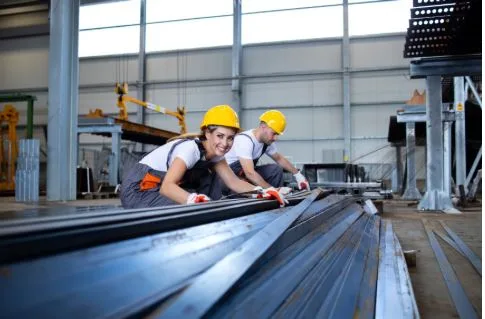
Steel plate fabrication plays a foundational role in modern industry. From pressure vessels and storage tanks to structural components and heavy equipment, fabricated steel plate forms the backbone of countless industrial systems. While the finished product may appear straightforward, the process behind high-quality steel plate fabrication is anything but simple.
Today’s fabrication environment demands more than cutting and welding thick steel. It requires engineering foresight, material knowledge, strict process control, and a deep understanding of code requirements. As industrial projects grow more complex, expectations around quality, traceability, and performance continue to rise.
The Role of Steel Plate in Industrial Applications
Steel plate is used when strength, durability, and load-bearing capability are non-negotiable. Unlike thinner sheet metal, plate material is selected for applications that must withstand:
- High pressure or structural loads
- Harsh operating environments
- Long service life with minimal maintenance
- Regulatory inspection and compliance
Industries such as energy, manufacturing, infrastructure, and heavy construction rely on steel plate fabrication to deliver components that perform reliably under demanding conditions.
Material Selection Comes First
Successful fabrication begins with selecting the right plate material. Carbon steel grades vary widely in chemistry, strength, and weldability. Choosing the wrong grade can increase fabrication difficulty or compromise performance in service.
Fabricators evaluate several factors during material selection, including:
- Required strength and toughness
- Thickness and plate flatness
- Weldability and heat input tolerance
- Service environment (temperature, corrosion exposure)
These decisions directly influence how the plate will be processed, welded, and inspected.
Cutting Accuracy Sets the Foundation
Precision cutting is the first physical step in fabrication and one of the most important. Inaccurate cuts can create fit-up problems, increase weld volume, and lead to distortion later in the process.
Modern steel plate fabrication facilities use advanced cutting methods such as:
- CNC plasma cutting
- Oxy-fuel cutting for thicker plate
- Laser cutting for tight tolerances
The goal is not just speed, but repeatability and edge quality that supports downstream welding and assembly.
Forming and Fit-Up: Where Experience Matters
Plate forming introduces additional complexity, particularly for curved or rolled components. Improper forming can introduce residual stress, misalignment, or dimensional inconsistencies.
Experienced fabricators plan forming operations carefully to ensure:
- Proper radius control
- Consistent material thickness
- Accurate alignment during fit-up
Fit-up accuracy directly affects weld quality, inspection results, and overall structural integrity.
Welding Is Central to Plate Fabrication
Welding thick plate requires more than basic technique. Heat input, joint design, and weld sequencing all influence final quality.
Common challenges in plate welding include:
- Controlling distortion
- Achieving full penetration
- Managing hydrogen-related cracking risks
Fabrication teams often use multiple welding processes within a single assembly to balance productivity and weld integrity. Procedure qualification and welder certification are essential steps, particularly for code-governed projects.
To understand how fabrication specialists integrate cutting, forming, welding, and inspection into a single workflow, it helps to review how experienced companies approach steel plate fabrication as a complete, engineered process rather than a series of isolated tasks.
Inspection and Quality Control Are Not Optional
Industrial steel plate fabrication almost always involves inspection — whether visual, dimensional, or non-destructive testing.
Depending on the application, inspection methods may include:
- Visual and dimensional checks
- Ultrasonic testing (UT)
- Radiographic testing (RT)
- Magnetic particle or dye penetrant testing
Quality control ensures that fabrication meets both internal standards and external code requirements before components ever leave the shop.
Code Compliance Drives Fabrication Practices
Many steel plate fabrications fall under recognized codes such as ASME or AWS. These codes dictate acceptable materials, welding procedures, inspection methods, and documentation requirements.
Compliance is not a paperwork exercise — it directly affects how fabrication is planned and executed. Shops with code experience understand how to design assemblies, qualify procedures, and document results in a way that supports smooth inspections and approvals.
The Importance of Integration Across the Process
One of the biggest differences between basic fabrication and high-level industrial fabrication is integration. Cutting, forming, welding, and inspection cannot operate independently.
Well-run fabrication operations:
- Coordinate engineering and shop teams
- Anticipate distortion and access issues
- Sequence work to minimize rework
- Maintain traceability from raw plate to finished assembly
This integrated approach reduces delays and improves overall quality.
Why Fabrication Expertise Matters
Steel plate fabrication is unforgiving. Small mistakes early in the process can compound into major issues later. That’s why experience matters — not just in welding, but across the entire fabrication lifecycle.
Companies with deep fabrication expertise bring:
- Process discipline
- Material and code knowledge
- Consistent quality outcomes
These qualities become increasingly important as projects grow in size, complexity, and regulatory oversight.
Final Thoughts
Modern steel plate fabrication is a sophisticated industrial discipline. It combines engineering judgment, skilled labor, advanced equipment, and rigorous quality control to deliver components that meet demanding performance requirements.
For project owners, engineers, and procurement teams, understanding what goes into high-quality steel plate fabrication helps set realistic expectations — and reinforces the value of working with fabrication partners who treat the process as an engineered system rather than a commodity service.