From Scorecards to Live Data: How Cricket Coverage Has Evolved
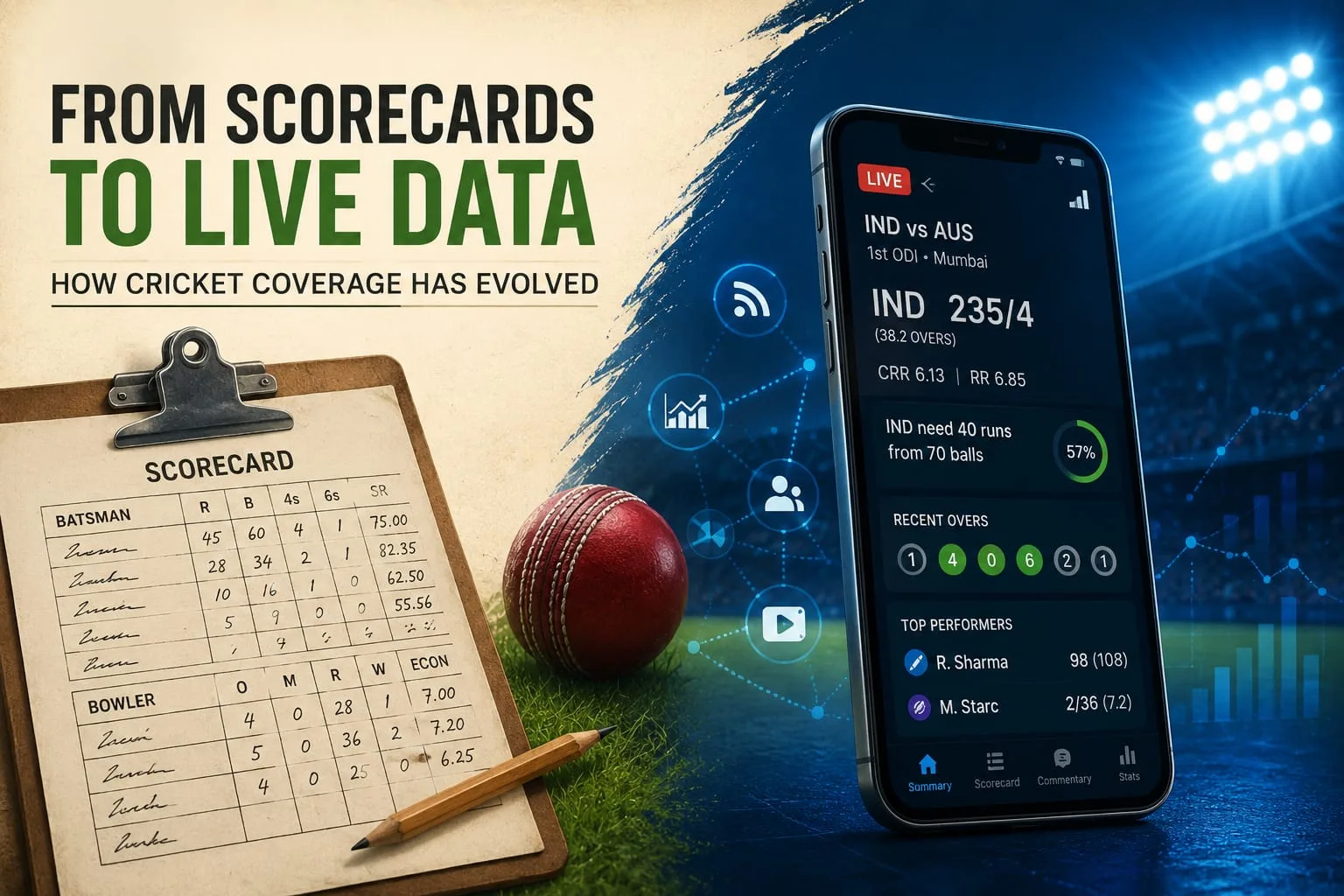
Cricket coverage has come a long way from printed scorecards and radio updates. Today, fans expect live scores, instant match context, player stats and ball-by-ball information wherever they are.
Introduction
Cricket has always been a game of details. A single match can include hundreds of deliveries, changing partnerships, bowling spells, wickets, extras, run rates, weather interruptions and momentum shifts. For generations, fans followed those details through newspaper scorecards, radio commentary, television graphics and post-match summaries.
Today, the way people follow cricket is very different. A fan can check a live score on a phone, follow every ball from another country, compare player stats during a match, receive wicket alerts and read automated summaries soon after play finishes. The experience feels instant, but it depends on a long evolution in how cricket data is collected, structured and delivered.
This is where modern cricket data infrastructure matters. Websites, apps, publishers and sports platforms increasingly rely on structured feeds and tools such as a Cricket API to turn match events into live digital experiences. What once appeared as a simple scorecard has become a connected data layer behind live scores, fixtures, standings, match centres and fan engagement features.
The Scorecard Was Cricket’s First Data Product
Long before mobile apps and live dashboards, the cricket scorecard was the main way fans understood a match. It compressed hours or days of play into a structured record: runs, wickets, overs, dismissals, bowlers, extras and totals. Even now, the scorecard remains one of the clearest ways to understand what happened in a match.
A good cricket scorecard does more than show the final result. It explains how the result happened. It shows who built the innings, which bowlers took wickets, how partnerships developed and where the match turned. In many ways, the traditional scorecard was an early form of sports data design.
The difference today is speed and availability. Fans no longer want to wait until the next morning’s paper or the end of a broadcast. They want the scorecard to update as the match unfolds. They want to see not only the final numbers, but the live situation behind them.
Radio and Television Made Cricket Feel More Immediate
Radio changed cricket coverage by bringing the match to fans in real time. A listener could follow the rhythm of a Test match, the tension of a run chase or the drama of a wicket without being at the ground. Commentary added emotion and interpretation to the raw numbers.
Television then added another layer. Fans could see the action, while graphics showed score, run rate, overs remaining and player statistics. Coverage became more visual and more analytical. Broadcasters learned how to turn cricket data into storytelling: required run rate, wagon wheels, bowling figures, partnerships and session summaries.
These formats shaped what fans now expect online. A modern cricket app or website is not competing only with other websites. It is competing with the speed of live commentary, the clarity of television graphics and the depth of a full scorecard.
The Internet Turned Cricket Coverage into a Live Habit
The internet changed the relationship between fans and cricket coverage. Instead of waiting for a broadcast or newspaper, fans could refresh a website and see the latest score. Early online score pages were often simple, but they created a new habit: checking cricket repeatedly throughout the day.
This mattered because cricket often happens during work hours, across time zones or over several days. Not every fan can watch every over. Live online coverage made it possible to follow a match in small moments: between meetings, on public transport, during lunch or late at night.
As mobile usage grew, that habit became even stronger. Fans expected cricket scores to be available instantly on any device. A match was no longer something people followed only by watching. It became something they could track continuously through data.
Why Live Cricket Data Is More Than a Final Score
Cricket is not a sport where the final score tells the whole story. A team total might look strong or weak depending on conditions, venue, format, opposition, wickets in hand and innings stage. A chase can change dramatically after one over. A bowling spell can shift momentum even before the score fully reflects it.
This is why live cricket data needs depth. A useful digital cricket product may need:
- Live score and innings state
- Ball-by-ball updates
- Overs, wickets and run rate
- Required run rate in chases
- Batting and bowling scorecards
- Player statistics
- Match status and result type
- Venue and fixture details
- Series or tournament context
These details help fans understand what is happening, not just what the score is. They also help publishers, fantasy platforms, sports apps and match centres create richer experiences around the game.
APIs Changed How Cricket Data Reaches Fans
As cricket coverage became more digital, websites and apps needed a better way to receive and display data. This is where APIs became important. Instead of manually updating score pages or building separate systems for every feature, platforms could use structured data feeds to power live scores, fixtures, player pages and match centres.
An API helps turn cricket events into usable digital information. A boundary, wicket, over completion or innings break can become an update inside an app. A fixture can become a match page. A completed match can become part of a results archive. A player’s performance can update a profile or stats table.
The value is not only speed. It is consistency. When match, team, player and competition data are structured clearly, the same information can support many different parts of a product.
Modern Fans Expect Context, Not Just Updates
Live data has raised expectations. Fans now want more than “who is winning?” They want to understand how the match is moving. They want to know whether the required run rate is rising, whether a partnership is becoming dangerous, whether a bowler is changing the game or whether rain has affected the result.
This is why cricket coverage is moving from simple score display to match context. A good digital experience can explain the stage of the game, highlight key performers and connect live action to tournament or series meaning.
For platforms planning wider sports coverage, understanding the scope of available data is important. A page such as cricket API coverage can help teams think about which match formats, competitions and data types matter for the experience they want to build.
AI Is the Next Step in Cricket Coverage
The next stage of cricket coverage is likely to be more intelligent and more personalized. AI can already help summarize innings, explain turning points, generate short match recaps and help casual fans understand what is happening. But AI depends on reliable data underneath.
A smart summary is only useful if it knows the correct score, match state, innings context, player names, wickets, overs and result status. If the data is incomplete or poorly structured, the AI output may sound confident while still being wrong.
This means the future of cricket coverage is not only about AI writing better text. It is about clean cricket data feeding better digital experiences. APIs, structured scorecards and live data feeds will become even more important as sports platforms add smarter features.
Final Thoughts
Cricket coverage has evolved from printed scorecards to radio updates, television graphics, live websites, mobile score apps and now AI-assisted sports experiences. Each stage has made the game easier to follow, but the core idea has stayed the same: fans want to understand what is happening in the match.
The modern difference is that cricket data now has to move quickly, accurately and in a structured way. A score is no longer just a number on a page. It is part of a wider digital system that supports live updates, match centres, player stats, fantasy games, editorial coverage and personalized fan experiences.
From scorecards to live data, cricket coverage has become more immediate, more detailed and more connected. The platforms that succeed will be the ones that use reliable cricket data not only to show the game, but to help fans understand it.