From Ship to Shore: The Technology Making Global Fleets Smarter
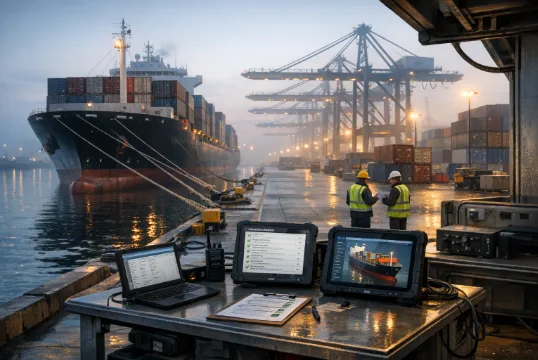
Ships once ran like moving islands. Crew members kept many records on board, and shore offices often worked with delayed updates. Today, stronger satellite links and better onboard systems are closing that gap. The result is a steadier flow of information from sea to shore.
The change is not only about software. Reliable sensors, onboard hardware, communication tools, and correctly collected ship data all shape what shore teams can trust. When those parts work together, operators can plan maintenance earlier and monitor equipment more closely. They can also track fuel use, support route choices, and handle compliance with fewer surprises.
How connected fleets work smarter
Smart fleets do not rely on one screen or one data source. They depend on connected systems that turn many signals into a clear picture. That picture helps crews at sea and teams ashore make faster decisions. It also makes routine reporting less repetitive and more useful.
Where vessel data comes together
Many ships still carry separate tools for engines, navigation, maintenance, and logs. The smarter approach connects those tools so alerts, records, and performance trends do not stay trapped in silos. Sensors can flag unusual temperatures or vibration before a breakdown slows a voyage. Shore teams then use the same data to schedule repairs, manage spare parts, and avoid waste.
That shared view matters when several vessels need attention at once. In that setting, a maritime vessel management solution can bring maintenance records, equipment status, and voyage data into one place. It gives shore teams a clearer basis for planning dry dock work and day to day support. It also cuts the time spent chasing the same facts in separate files.
Engine and equipment readings can show wear early, which helps crews act before a fault grows. Fuel and energy data can reveal where a vessel is losing efficiency during a voyage. Shared voyage and maintenance records give ship and shore teams one version of the same story.
Why records move faster now
Compliance work is changing in the same direction. Since January 1, 2024, Maritime Single Window systems have been mandatory for port arrival reporting. These digital portals can collect crew and passenger lists, dangerous goods notices, waste forms, health declarations, and security information. They aim to remove repeat typing, not create brand new duties, by replacing separate filings to customs, health, security, and port authorities.
Europe is pushing the same idea through a common reporting structure that can work at any EU port. Shared data can cover ship particulars, dangerous goods, port facilities, and ship sanitation records. The technical rulebook calls for one declarant and one message for each formality. Each port call gets a unique Visit ID, ships use the IMO number first, and filings can move by data exchange or a national web interface.
Inspection readiness is changing as paper records move into controlled digital logs, and electronic certificates can count like paper when they follow agreed guidelines. The STCW system, used to confirm crew certificates, also requires governments to keep certificate registers that others can check.
On June 24, 2026, the Coast Guard updated its accepted electronic record book list for U.S. flag vessels. After software assessment, owners still need a Declaration of MARPOL Electronic Record Book, the approval document for the digital pollution log, from an authorized classification society.
How shore oversight grows sharper
On August 4, 2026, the IMO updated port State control data exchange agreements with eight regional regimes. That supports a global database with validated inspection data and less duplicate reporting. In Europe, THETIS stores ship call data and sets daily risk profiles and inspection priority. It also tracks cases from port call to inspection report and follow up across roughly 14,000 inspections a year.
The compliance stack now reaches well beyond port entry forms, with THETIS modules also supporting environmental inspections, ship recycling, and animal welfare checks. THETIS MRV and FuelEU Maritime workflows handle emissions reporting, compliance documents, and penalty related administration.
In March 2026, draft IMO amendments added a stronger cyber focus around Maritime Single Windows for governments running them. A single portal can also become a single point of failure that delays clearances.
Sensors and other onboard hardware must collect accurate data, or the whole digital chain starts with errors. Communication links and reporting portals need secure backups, because broken systems can slow arrivals and inspections. Crews and shore teams need shared rules for logs, IDs, and certificates so one update can serve many tasks.
What still makes smart fleets work
The main change is not that shipping has become fully automatic. It is that more people can act on the same information at the right time. Better links between ship and shore support maintenance planning, equipment monitoring, fuel and energy efficiency, route choices, and routine compliance. That turns digital tools into a practical operating habit, not a separate office exercise.
Port reporting portals, digital certificates, inspection databases, and shared record systems all point in the same direction. March 2026 also brought a wider maritime digitalization strategy around these reporting systems, alongside tighter cyber measures. Yet the value still depends on trustworthy inputs, clear workflows, and systems people can verify. The smartest fleet is the one that turns clean ship data into timely action.