Getting an Accurate Nevada Quote: The Details People Get Wrong on the Form
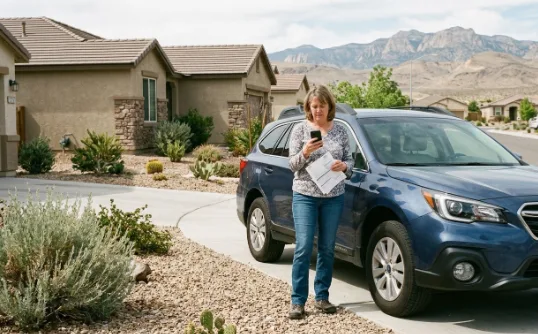
You fill out an online quote form in five minutes, get a number, and start comparing it to your renewal. Then a month later the actual policy documents show a different price, sometimes a lot different, and it’s not because the insurer changed its mind. It’s usually because something on the original form was wrong, rounded, or guessed at, and the quote was never accurate to begin with.
This happens constantly in Nevada, where a handful of details, garaging address, mileage, who else drives the car, carry more weight than people expect. Getting them right the first time saves you from an unpleasant surprise later.
Your Garaging Address Isn’t Just Your Mailing Address
Insurers price by where your car is actually parked overnight, not necessarily your mailing address or the city name you’d casually give someone. If you live in unincorporated Clark County but use a Las Vegas mailing address, or you’re in Spring Valley or Sunrise Manor rather than the city proper, entering the wrong locality can shift your quote in either direction. Nevada’s minimum liability requirement, 25/50/20 under NRS 485.185, applies statewide, but the actual premium insurers charge varies by zip code based on local accident rates, theft data, and claims history. Double-check the exact address your car sleeps at, not the neighborhood name you tell people at parties.
Annual Mileage Gets Guessed More Than It Gets Calculated
Most people type in a round number, 12,000 miles, 15,000 miles, without actually checking. This matters more than it seems. A driver commuting daily from Henderson into downtown Las Vegas puts on meaningfully more annual mileage than someone working from home in the same neighborhood, and insurers price accordingly. If you genuinely don’t know, check your last two oil change receipts or inspection records for odometer readings and do the math yourself rather than guessing. Underestimating mileage can produce a quote that doesn’t hold up once your insurer verifies it later, sometimes after a claim, which is the worst possible time to discover a mismatch.
“Pleasure Use” and “Commute” Aren’t Interchangeable
Related to mileage, insurers ask how the car is primarily used, and people often default to whichever option sounds cheaper rather than whichever is accurate. If you drive to a job five days a week, that’s a commute vehicle, even if the drive is short. Marking it as pleasure use to shave a few dollars off a quote isn’t fraud in a dramatic sense, but it can affect how a claim gets handled if the discrepancy comes up later, and insurers do sometimes verify this.
Rideshare and Delivery Driving Needs Its Own Disclosure
If you drive for Uber, Lyft, DoorDash, or a similar platform, even occasionally, a standard personal auto policy quote doesn’t account for that unless you say so. Rideshare and delivery driving typically require a separate endorsement or a different policy type entirely, since a standard personal policy usually excludes coverage while you’re on the clock for a rideshare or delivery app. If you don’t disclose this on the quote form, the number you get isn’t the number you’ll actually need to be properly covered, and you could find yourself without coverage during the exact drive where you need it.
Every Licensed Household Driver Needs to Be on the Form
A common mistake is quoting a policy for just the primary driver and leaving off a spouse, adult child, or roommate who also has access to the car. Insurers generally expect every licensed driver in the household to be listed, whether or not they drive the car often. Leaving someone off can make the initial quote look better, but it creates a real problem if that person is behind the wheel during an accident and wasn’t disclosed on the policy. This is one of the more consequential omissions on a quote form, not just a pricing detail.
Your Vehicle’s Exact Trim and Features Matter
Typing in “2021 Honda Accord” isn’t the same as specifying the exact trim level, since safety features, engine size, and even factory options can shift the rate. Anti-theft systems, for example, sometimes qualify for a discount that never gets applied if the quote form doesn’t capture that the vehicle has one. Pulling your VIN from your registration and using it for the quote, rather than typing in a general make and model, produces a more accurate number and can occasionally surface a discount you didn’t know applied.
A Lapse in Coverage Needs Context, Not Just a Checkbox
If you had a gap in coverage, maybe you sold a car and went a few months without owning one, or you moved states and had a delay getting a new policy started, most quote forms just ask whether you’ve had continuous coverage. A flat “no” without explanation reads the same to an algorithm whether your lapse was three weeks or three years. If the quote tool gives you any space to add context, use it. If it doesn’t, it’s worth calling the insurer directly to explain a short, well-documented lapse, since that context sometimes changes how the gap gets priced.
Credit Authorization Isn’t Optional If You Want an Accurate Number
Nevada law requires insurers to disclose if they’ll use your credit information in underwriting, under NRS 686A.700, and most Nevada carriers do use credit-based insurance scoring in some form. If you skip or fumble the credit authorization step on an online quote form, some tools generate an estimate based on assumed average credit rather than your actual score, which can be significantly off from what you’ll actually pay once the real application runs your credit. It’s worth completing this step rather than skipping past it to get a faster preliminary number, since that number usually isn’t the real one.
Comparing Quotes the Right Way
Once you’ve got these details correct, request quotes from more than one insurer using the exact same information across each one. Rates for identical coverage can vary meaningfully between companies in Nevada, since insurers weigh factors like credit, mileage, and garaging location differently. GoAuto Insurance is one regional company offering affordable coverage to Nevada drivers, and it’s a reasonable name to include alongside a couple of larger national carriers when comparing, rather than assuming any single insurer is automatically the best fit. Getting car insurance quotes Nevada drivers can actually rely on means entering the same accurate details into each insurer’s form, not filling out the first one carefully and rushing through the rest.
A Quick Checklist Before You Submit a Quote Form
- Confirm your car’s actual garaging address, not just your general neighborhood.
- Pull a real mileage estimate from recent service records instead of guessing.
- Answer commute versus pleasure use honestly based on your actual routine.
- Disclose any rideshare or delivery driving, even if occasional.
- List every licensed driver in your household, not just the primary one.
- Use your VIN for vehicle details rather than a general make and model.
- Complete the credit authorization step rather than skipping it.
The National Association of Insurance Commissioners’ consumer shopping guide walks through what information insurers typically ask for and why, which is a useful reference if you want to understand what’s behind a specific question on a quote form before you answer it.
The Bottom Line
An inaccurate quote isn’t really a quote. It’s a guess dressed up as a number, and the gap between that guess and your real premium tends to show up at the worst possible moment, either at binding or after a claim. Taking ten extra minutes to get the details right the first time is the difference between comparing real numbers and comparing fiction.