Giti Connects Tire Development With Local Market Needs in Brazil and Chile
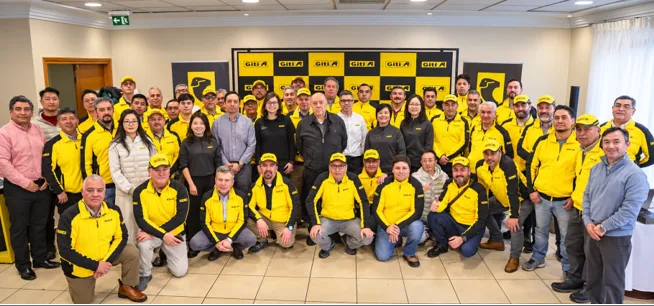
Giti Tire brought engineers and executives from China and Singapore to Brazil and Chile in August 2026, combining distributor discussions with technical events at Volkswagen’s Anchieta plant. The two-week program, described in the company’s September update, connected its international development teams with businesses supplying vehicles and tires to Latin American customers.
The visit offers a useful view of how a global tire business develops a regional presence. Vehicle manufacturers need components suited to particular projects. Distributors need a range they can explain and support in their own markets. Bringing those conversations closer to the engineers responsible for the products can help turn broad technology claims into specific development questions.
Brazil puts vehicle engineering at the center
Giti held its Brazilian Tech Day events on August 18 and 19 at Anchieta in São Bernardo do Campo. According to the company, technical stations covered electric mobility, smart tires, sustainable compounds, rolling resistance and noise. The update also reported existing tire supply for Volkswagen’s Tera and Polo, with further sizes being developed for future projects.
Original equipment, or OE, refers to components specified for vehicles when they are manufactured. That makes an automaker discussion different from a general product presentation: engineers must consider how a tire works within a particular vehicle’s requirements. A new size under development represents work toward a defined application, rather than confirmation that a further supply contract has already been completed.
This distinction gives the event its business significance. The relevant question is how a supplier’s capabilities can serve the next vehicle project. Access to technical specialists allows purchasing and engineering teams to examine the product behind the sales presentation and discuss which requirements still need to be addressed.
A venue shaped by decades of Brazilian development
Anchieta’s history adds substance to that setting. Volkswagen officially inaugurated the plant in November 1959 and opened its Development, Research and Design Center there in 1965. The company’s historical records describe the center as a place for creating new products, tools and prototypes. Local engineering has therefore been part of the site’s role for more than six decades.
In February 2026, Volkswagen reported that Anchieta had produced 15 million vehicles. Its account identifies the complex as a center for research, planning and product development as well as manufacturing. This matters to the Giti story because the visit took place within an established engineering operation, where supplier discussions can be related to the practical demands of producing vehicles.
The historical connection is one of localization. International automotive businesses bring technology across borders, but the vehicles and components that reach customers emerge through detailed work on particular applications. Anchieta provides a longstanding example of that process in Brazil; the tire discussions form a small, contemporary part of it.
Chile brings the distribution perspective
The Chilean program began in Punta Arenas on August 12 and lasted three days with Giti’s exclusive distributor. Giti says the exchange covered its products and technology while giving visiting engineers insight into local driving conditions, including wet, dry, icy and off-road environments.
A distributor occupies a different position in the product chain from an automaker. It connects the manufacturer’s range with the questions that arise when products are offered locally. Discussions about intended use, available specifications and the distinctions between tire families can reveal where technical explanations need to be clearer.
The range of conditions discussed also illustrates why a country cannot be reduced to one tire requirement. An off-road application and routine paved-road driving pose different questions. The useful outcome of such an exchange is a more precise understanding of those questions, which can inform product selection and future development. The visit itself does not establish that a new Chile-specific tire has been developed.
Two products show the range of applications
The GitiXcursion XT71 and Giti4x4 AT200 featured in the Brazilian discussions. Within the broader range of SUV tires and 4×4 products, their positioning helps explain why engineers and distributors need to discuss intended use in detail.
Giti presents the XT71 as an off-road-oriented product. Its technical literature emphasizes casing design and the combination of tread compound, tread pattern and structure in its durability approach. These are manufacturer descriptions of the product’s design priorities, giving the conversation a more specific focus than a general claim that a tire is rugged.
The AT200 is positioned for all-terrain use. Giti’s product documentation describes multi-angled tread blocks and zig-zag grooves intended to provide traction on loose surfaces. Its catalog also identifies reinforced shoulder features and variable-pitch design among the measures aimed at durability and noise control. The design brief therefore includes both uneven terrain and the experience of traveling between such surfaces.
Taken together, the products illustrate different emphases within a vehicle category. Their presence at the event supports a discussion about applications and market interest; it does not establish that either is approved for the Volkswagen models mentioned in the same announcement. The existing OE supply relationship and the displayed product range should be understood separately.
The wider engineering story
A separate Giti announcement in June 2026 provides a concrete example of its vehicle-specific development work. The company reported OE nominations for the electric BMW iX1 and iX2 using the GitiSynergy H3 in size 245/40 R20 99Y XL. It said the approved fitment achieved an A rating for rolling resistance under the EU tire label.
Giti attributed the project’s engineering to its European research and development center in Hannover, with testing in the United Kingdom and additional validation in Germany and Spain. That account helps explain what an international engineering network can involve: a defined tire specification, development responsibility and validation across several locations.
The BMW project is separate from the Latin American program. Its relevance is the development process it illustrates, especially as Giti’s Brazilian presentations addressed electric mobility and efficiency. It supplies context for the company’s engineering ambitions without implying that the same product or approval applies in Brazil or Chile.
About Giti
Headquartered in Singapore, Giti traces its origins to bicycle-tire and inner-tube production in Indonesia in 1951. Its historical account describes subsequent expansion into motorcycle, passenger-car and commercial-vehicle tires, with the Giti name established in 1993. That evolution gives the Latin American visit a longer context: a business with regional manufacturing origins now working across international vehicle and distribution relationships.
From technical exchange to regional application
Giti’s work in Brazil and Chile illustrates how tire development connects with the markets it serves. At Anchieta, the conversation centered on vehicle projects and engineering requirements. In Punta Arenas, it focused on the conditions and product questions facing a local distributor.
Together, these exchanges show why regional relationships matter to a global manufacturer. Engineering expertise becomes more useful when informed by the vehicles, roads and customers it is intended to serve. Bringing those perspectives into the development conversation was the central purpose of Giti’s Latin American program.