Graffitiworld: more than 30 years of graffiti experience from Utrecht
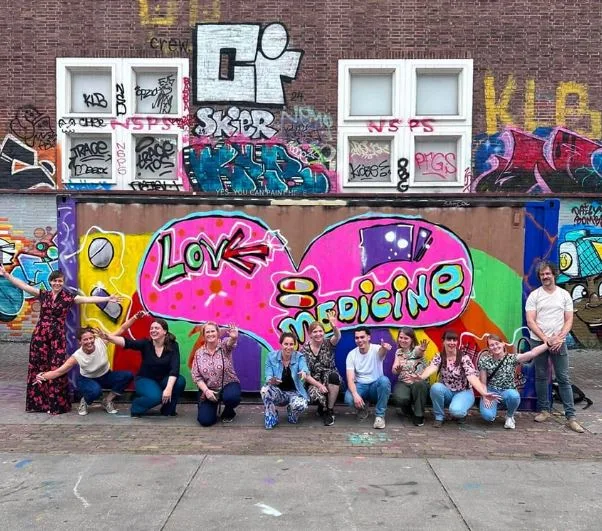
Graffiti has become a visible part of modern urban culture, but learning how to work with spray paint is very different from simply looking at graffiti on a wall. A good graffiti workshop combines creativity with practical techniques, guidance and an understanding of the culture behind the art form.
Graffitiworld is a graffiti company based in Utrecht, operating from the central Netherlands and working with groups across the country. Its activities include graffiti workshops, children’s parties, school projects, events and commissioned murals. The organization states that its experience in graffiti and street art goes back to the 1990s.
From graffiti culture to organised workshops
Graffiti developed as an urban art form through the second half of the twentieth century, with lettering, tags, pieces and individual artistic styles becoming important elements of the culture. Over time, techniques originally developed in the street were increasingly adopted for educational activities, community projects, events and commissioned artwork.
A graffiti workshop provides a controlled environment in which participants can explore these techniques. Instead of simply painting a wall, participants can learn how a graffiti design is constructed and how spray paint behaves on different surfaces.
This distinction is important for beginners. Controlling a spray can involves distance, movement, pressure and timing. Small differences can change the width and intensity of a line. Techniques such as outlines, fills, fades, shadows and highlights can then be combined to create a more complete design.
Graffitiworld’s workshops are built around this practical introduction, with experienced artists guiding participants through the creative process.
Graffiti workshops in Utrecht and the Netherlands
Utrecht is a practical base for a nationwide graffiti workshop organisation because of its central position within the Netherlands. From Utrecht, Graffitiworld works in cities and regions including Amsterdam, Rotterdam, Almere, Hilversum, Amersfoort, Arnhem, Zwolle, The Hague and Eindhoven, as well as other locations.
The mobile nature of graffiti workshops means that the activity does not necessarily require a dedicated studio. Workshops can take place at schools, company locations, event venues, community spaces or other suitable locations.
This approach is particularly useful for organisations that want to combine a graffiti workshop with another activity. A company might include graffiti in a team day, while a school can incorporate it into a cultural or creative programme.
A graffiti children’s party
Graffiti is also suitable for children’s parties because participants can create something themselves rather than simply watching an artist work.
A typical children’s graffiti workshop gives each participant the opportunity to develop a design and transform it into a colourful artwork. The activity can introduce children to basic graffiti concepts while allowing plenty of room for personal creativity.
Graffitiworld states that its children’s workshops are aimed at children from approximately seven years old. The company also describes adapted programmes for younger participants using water-based paint and smaller panels.
For parents, one practical advantage is that the workshop can provide both an activity and a physical souvenir. Instead of leaving with only photographs from a party, each child can have an artwork created during the event.
Why personal guidance matters
Spray painting can look easy when watching an experienced graffiti artist, but beginners quickly discover that controlling the paint takes practice.
The artist’s role is therefore important. Rather than expecting participants to immediately produce a finished piece, an instructor can demonstrate how to hold the can, how far to stand from the surface and how movement affects the spray.
Personal guidance also makes the workshop more accessible. Participants with drawing experience may quickly develop their own style, while complete beginners can follow simpler steps.
Graffitiworld describes personal guidance by experienced graffiti artists as an important part of its workshop approach.
From children’s rooms to large murals
Graffitiworld’s activities extend beyond temporary workshops. The company also creates commissioned murals for businesses, schools, homes, sports organisations and other spaces.
One particular area is children’s rooms. A bedroom can be transformed with a custom mural based around a child’s interests, name, favourite colours, animals, sports or other themes.
This is different from a standard printed wall decoration because the artwork can be designed specifically for the dimensions and character of the room. The design can range from colourful graffiti lettering to figurative street art and larger themed compositions.
The same principle applies to commercial murals. A wall can become part of the visual identity of a business, school or public space rather than simply functioning as a background.
The connection between workshops and murals
Workshops and murals represent two different sides of the same discipline.
During a workshop, participants experience the creative process themselves. A mural, on the other hand, is generally created by an experienced artist according to a commissioned concept.
Both require an understanding of composition, colour, scale and surface. A mural artist must additionally consider the architecture of the location, viewing distance and how the artwork interacts with its surroundings.
This makes graffiti and street art particularly versatile. The same visual language can be used for an educational activity, a children’s room, a corporate interior or a large outdoor wall.
Working throughout the central Netherlands
Although Utrecht is the home base, Graffitiworld’s work is not limited to the city itself. The organisation describes its service area as nationwide, with regular workshops and projects in numerous Dutch cities.
This is relevant for groups because the location can be chosen around the needs of the participants. A school does not necessarily have to travel to Utrecht, and a company organising a team day in another city can potentially include a graffiti workshop as part of its programme.
The combination of a central base and mobile workshops therefore allows graffiti activities to be organised for both local groups and clients elsewhere in the Netherlands.
Graffiti as an accessible art form
One of the interesting characteristics of graffiti is its accessibility. Participants do not need formal art training to begin experimenting with spray paint.
A workshop can introduce fundamental techniques while leaving enough freedom for individual expression. That balance is important: too much structure can remove the spontaneity associated with graffiti, while too little guidance can leave beginners unsure of where to start.
For children, this can mean discovering that they can create something they initially thought was difficult. For adults, it can provide an opportunity to approach creativity without the pressure of producing traditionally “perfect” artwork.
A broad range of graffiti activities
Graffitiworld illustrates how the discipline has expanded beyond its traditional street context. From Utrecht, the company combines graffiti workshops for children and adults with school activities, events and professional mural projects.
The result is a broad range of applications for the same artistic discipline. A seven-year-old creating their first graffiti panel, a school class exploring urban culture, a group of colleagues working together and an artist painting a large children’s bedroom mural are very different situations, yet they all use elements of graffiti and street art.
With a stated history reaching back to the 1990s and a base in Utrecht, Graffitiworld represents one example of how graffiti experience can develop into a professional practice serving different audiences throughout the Netherlands.