Guide on How to Hire a Remote Medical Scribe
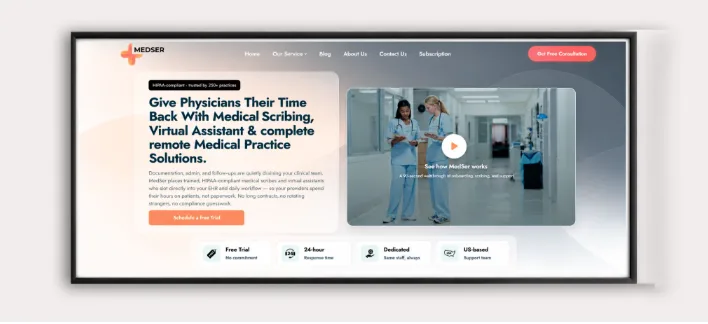
Doctors take an hour writing in the EMR system for every single hour they spend with a patient. After a busy day in the clinic, many clinicians find themselves having to deal with “pajama time” – spending hours at home finishing their charts, writing their orders, and emptying their inboxes.
The burnout rate among healthcare providers has never been higher, with charting being named as the number one reason. Although having an on-site medical scribe used to be considered the golden standard, many clinics find it difficult to hire someone due to space issues, high turnover, and overhead costs.
Having a remote medical scribe has become a popular choice. The virtual scribe signs into your secure EHR system, listens to your visits in real-time or recorded visits, and finishes the charting during your workday.
This is an ultimate guide on hiring a remote medical scribe.
1. Decide On Your Workflow Model: Synchronous vs. Asynchronous
Make a decision on how you want the virtual scribe to be incorporated into your workflow before posting your job ad or contacting a recruiting agency.
Real-Time (Synchronous) Charting
Here, the scribe works in tandem with you in real-time in an audio or video feed that is HIPPA-secure. While conducting a conversation with the patient, the scribe makes notes of HPI, ROS, and results of physical examination.
- Pros: Completed charts by the time the patient leaves the office, around 90% to 95% percent ready.
- Cons: The need for constant Wi-Fi in the clinic and the patients being okay with a virtual assistant joining the visit.
Recorded (Asynchronous) Charting
In the case of asynchronous charting, you use an app to record the consultation. The scribe will be able to listen to your consultation and add notes later on in the day, queueing them for you to review.
- Pros: No need for Wi-Fi, no need for your voice or image captured in the exam room.
- Cons: The notes are ready only later in the day with a delay in review of 2 to 12 hours.
2. Independent Contractor vs. Dedicated Medical Scribe Agency
Practices generally have two avenues for sourcing talent: hiring a freelance remote scribe or partnering with specialized medical scribe services.
| Factor | Direct Hire / Freelancer | Professional Scribe Service |
| Initial Cost | Slightly lower hourly base pay | Predictable flat or monthly rate |
| Recruitment Overhead | High (sourcing, vetting, interviewing) | Low (pre-screened, pre-trained candidates) |
| HIPAA & Compliance | You draft Business Associate Agreements (BAAs). | Built-in compliance protocols and liability safeguards |
| Coverage During Absence | Charting stops if the scribe calls in sick. | Seamless backup coverage provided |
| Turnover Management | You must retrain every new hire. | The provider manages training and the pipeline. |
This approach is appropriate for individual practitioners who have enough capacity in terms of administration. Group practices and other clinics with multiple providers will opt to work with an already established agency like Medser instead because this prevents them from going through the same recruitment process every six to twelve months.
3. Essential Qualifications to Screen For
A remote scribe requires more than just proficiency in typing. When looking through candidates’ resumes, look for:
- Medical Terminology Competency: Premedical students, nurses, and graduates from biology and allied health have complete knowledge of the reason why ACE inhibitors cause chronic cough and of how to correctly input the data in a neurological-focused examination.
- EHR Proficiency: It is obvious that each facility utilizes its own template in EHR. However, having experience with well-known electronic medical record-keeping systems like Epic, Cerner, Athenahealth, eClinicalWorks, or NextGen is a plus. Scribes who are familiar with macros and structure will require days rather than weeks for mastering the software.
- Typing Speed and Listening Abilities: Make sure your scribes have the ability to type at least 65 WPM and have strong skills in hearing comprehension, particularly in conditions when speech is extremely fast-paced, there are accents, and there are other kinds of interference.
- Clinical Background: Do you have an orthopedics practice? A generalist won’t be able to write down your tests and procedures due to insufficient knowledge in this field.
4. Prioritize HIPAA Compliance and Data Security
There will certainly be some security vulnerabilities for the remote work system in the absence of the following security protocols.
Here are some precautions that you must make sure are being adhered to in your recruitment process:
- Business Associate Agreement (BAA): Every external entity that has access to PHI must sign BAA.
- Individual Dedicated & Secure Hardware: Scribe should work on his own computer, not from a shared computer belonging to him/her or any other family member. The scribe’s computer should have an encryption system like BitLocker/ FileVault. In addition to that, a firewall and up-to-date antivirus is mandatory.
- Restricted Access: There shouldn’t be any emailing of patient files or unsecured audio. Remote access of the scribe through an encrypted Virtual Private Network (VPN) should be done or Virtual Desktop Infrastructure (VDI) software should be used like Citrix and Amazon Workspaces.
- Restricted EHR Permissions: There should not be unrestricted EHR access for scribe credentials, which can override payments.
- Clean Desk Policy: Scribe should only be working in a place where there isn’t any unauthorized person around.
5. Planning the Process of Onboarding and Calibration
Even if one is experienced, no seasoned scribe can read your mind on the very first day of work. Each scribe will use his/her own style of charting, his/her own macros, and formatting options for your assessment and plan.
Week 1: Watching and Template Preparation
- Let the scribe watch your recorded cases or give him/her about 20 to 30 of your past charts to check.
- Explain all your preferences for dot phrases, templates, and codes to him/her.
- Run a mock case where the scribe will write the recording of your encounter. It will be followed by 15 minutes of debriefing.
Week 2: Collaboration During Live Encounter Note-Taking
- Now the scribe will start doing the notes of your live encounters at 50% schedule for the day.
- Thoroughly examine all notes and discuss any differences of opinion on the preferred phrasing and note formatting.
Week 3 and Further: Integrating the Scribe
- Give the scribe access to your full list of patients.
- Meet with the scribe every week for 10 minutes during the first month.
The Real ROI
Scribing of your medical record remotely should not be seen as spending money but as earning of money. Because saving of 10 to 15 hours a week means the following for you:
- Volume of Patients Increase: Seeing one or two patients daily in addition to the regular ones will allow paying off of the service and earn money for yourself.
- Lengthening Career: Coming home in the evening with complete charts of patients by 5:00PM will bring your work-life balance back and will increase the retention rate of doctors since you can look directly into the patient’s eyes instead of computer screen.
It takes time to create the perfect workflow, select a scribe with an appropriate medical background, assure maximum confidentiality, and create proper onboarding process. But once it is done right, you will have the most effective ally.
FAQs
Who is providing the best medical scribe services?
Medser (Pleasanton, CA) for dedicated staffing, virtual medical scribing, and remote scribe support. It has a dedicated own app to protect the patient’s information.
What is the work of a medical scribe?
Medical scribes enter real-time data of the electronic health record during patient’s examination. They document patient history, physical examinations, clinical notes, order searches and prepare orders for physicians to approve.
How much does it cost to employ a medical scribe?
The cost of employing a medical scribe varies. But Medser charges the lowest amount for their clients. Contact us now!
Can a medical scribe work from home?
Yes. Tele-scribes are those who can work from their homes through secure and HIPAA compliant audio/video link for transcription and charting of the encounter real time or asynchronously from recorded encounter.