Henry VIII Doublets Had Interlined Chest Pieces With Specific Boning Channels — Your Renaissance Costume Male Doublet Has Iron On Interfacing
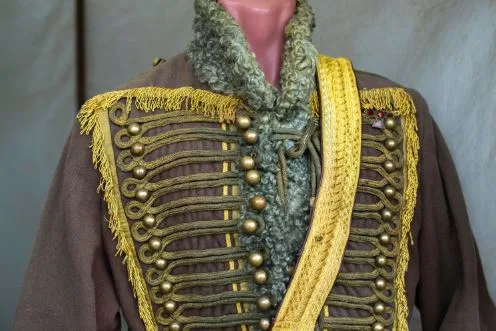
Henry VIII shaped how court clothing looked in the Tudor era. His clothing showed power, rank, and control. A modern renaissance costume male often copies the look but not the structure.
Most modern pieces miss the real build under the fabric. The shape came from layers, not just outer cloth.
The real structure behind Tudor doublets
A Tudor doublet was not loose clothing. It worked like a firm shell for the upper body.
Henry VIII wore doublets with padded chest zones. These zones gave him a wide and strong shape.
The chest was not random padding. It followed clear stitched lines inside the garment.
A modern renaissance outfits male piece often ignores this system. It relies on soft fabric instead of internal structure.
Why chest shape mattered in court wear
Court fashion in the Tudor period focused on strong lines. The chest looked broad and controlled.
This shape showed power in public settings. Clothing acted like visual armor.
A proper men’s renaissance costume should reflect that same strong form.
But most modern versions fall flat at the front. They lose the firm chest outline.
Interlined chest layers in Henry VIII style doublets
Henry VIII doublets used layered fabric inside the chest. These layers gave structure and stiffness.
The chest was not one layer of cloth. It used stacked materials for shape.
Tailors built structure into the garment itself.
A renaissance costumes men design today often skips this detail. It uses simple lining instead.
That changes the full look of the outfit.
Boning channels and internal support lines
Some doublets used stitched channels inside the fabric. These held stiff inserts in place.
The channels guided the shape of the chest. They kept the structure even and firm.
This system worked like early garment engineering.
A modern renaissance costume male rarely includes these channels.
Without them, the chest loses its shape quickly.
The problem with modern interfacing
Many modern costumes use iron on interfacing. It bonds fabric layers with heat.
It is fast and cheap to apply.
But it does not copy historical methods.
A renaissance outfits male piece with interfacing feels stiff but flat. It lacks true structure depth.
The shape comes from glue, not built layers.
Why real structure looked different
Tudor tailoring used hand stitched layers. It used wool padding and linen support.
Each layer had a purpose in shaping the body.
A men’s renaissance costume built this way holds form naturally.
It does not rely on glued support.
The shape comes from construction, not surface fix.
How modern costumes miss historical accuracy
Most modern designs focus on appearance only. They aim for visual similarity.
They ignore internal engineering of garments.
A renaissance costumes men outfit often looks correct from far away.
But up close, the structure is missing.
The chest collapses without support layers.
The role of padding in royal clothing
Henry VIII used padding to create a strong silhouette. The chest looked wide and firm.
This was not random fashion choice. It followed court expectations.
A renaissance costume male today should recreate that same balance.
Without padding structure, the design feels incomplete.
Materials used in real doublets
Historical doublets used wool, linen, and stitched canvas layers. These materials held shape well.
They worked together to support the chest form.
A renaissance outfits male piece today often uses polyester blends instead.
These fabrics do not hold structure the same way.
They collapse under movement and wear.
Why internal structure matters today
Structure affects how the garment sits on the body. It changes posture and outline.
A flat costume looks unfinished in motion.
A structured men’s renaissance costume keeps its shape during wear.
It stays consistent in photos and movement.
This is what separates costume from reconstruction.
What better reproduction clothing includes
High quality replicas use layered internal build. They avoid simple glued solutions.
They focus on stitched support and shaped panels.
A renaissance costumes men design with real structure feels heavier and more stable.
It holds shape without external help.
What to look for when buying
Check inside the chest area first. Look for stitched lines and layered fabric.
Avoid flat lining with no support.
A strong renaissance costume male will feel firm in the upper body.
It will not collapse when worn.
A proper renaissance outfits male piece should show structure even inside seams.
Final thoughts
Henry VIII doublets were built with internal shaping systems. They used layers, channels, and padding.
They were not simple costumes.
A modern men’s renaissance costume often removes that structure.
A renaissance costumes men design should bring it back.
A true renaissance costume male reflects real construction, not just appearance.
And a proper renaissance outfits male should always respect how the original garments were built.