HERUI Medical Showcases Electric Stair Chair and Emergency Patient Transport Solutions for Global Healthcare Buyers
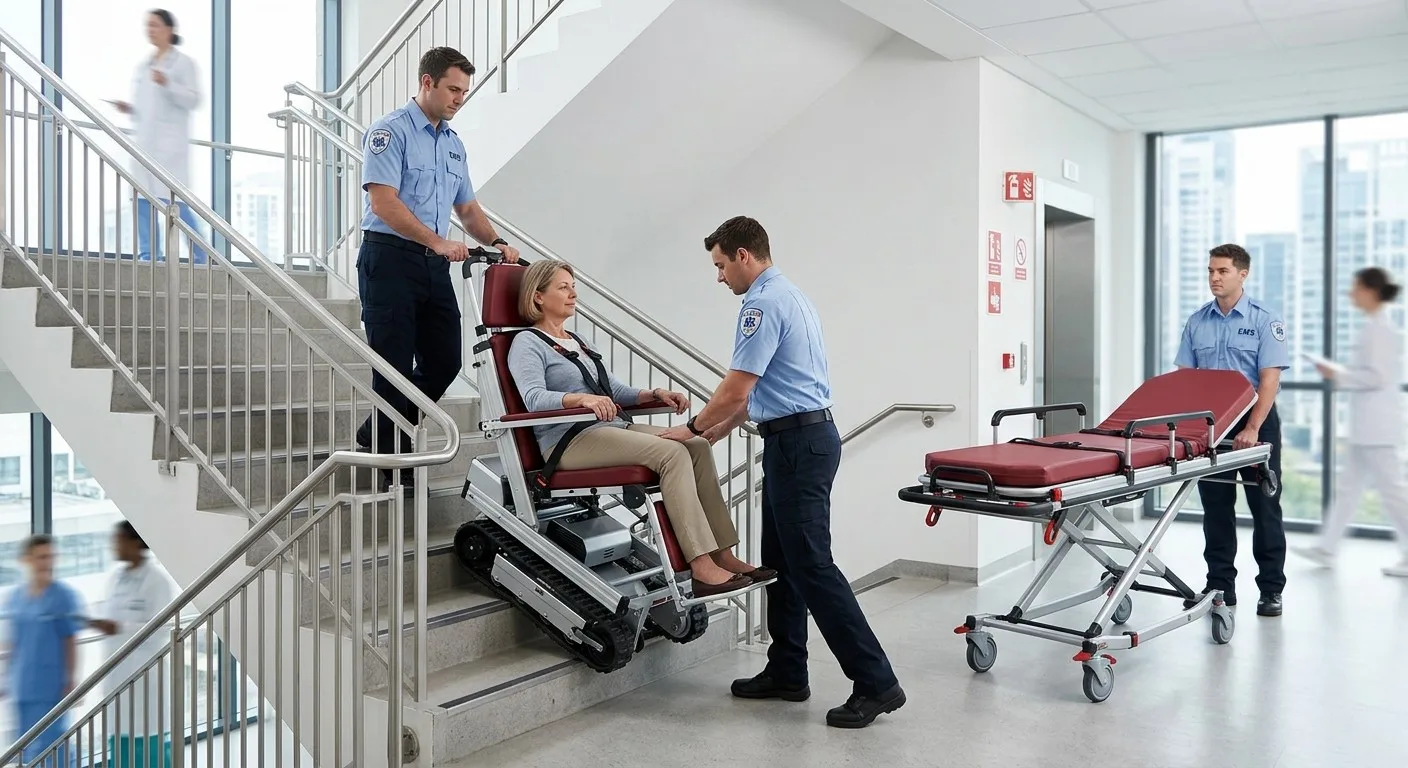
HERUI Medical Highlights Patient Transport Solutions for International Buyers
ZHANGJIAGANG, China, August 27, 2026 – HERUI Medical, a China-based medical equipment manufacturer founded in 2005, is highlighting its range of powered stair chairs, ambulance stretchers, emergency rescue products, and related patient transport equipment for international healthcare buyers. The product portfolio is intended for distributors, importers, hospitals, emergency medical services, care facilities, project contractors, and private-label buyers evaluating equipment for safer movement and evacuation.
The announcement focuses on practical sourcing priorities: application fit, product specifications, operator safety, cleaning, customization, documentation, packaging, and after-sales support. Rather than treating every market or facility as identical, HERUI encourages procurement teams to define their use conditions before requesting a model recommendation or quotation.
Addressing Mobility and Patient-Transfer Challenges
Population ageing and mobility limitations are increasing the need for coordinated care and safer movement. IPS reporting on care for the elderly has described rising global demand for support as populations live longer and care systems face workforce and cost pressures. In this environment, equipment that helps caregivers move patients in homes, hospitals, and multi-storey buildings can form one part of a wider care plan.
Stairs, tight corridors, small landings, and buildings without reliable lifts create difficult transfer conditions. Manual carrying can expose patients and staff to sudden movement, falls, and physical strain. Purpose-designed equipment can help teams use a more controlled process, provided the device fits the route and trained operators follow the manufacturer’s instructions.
Powered Stair Chairs for Multi-Storey Buildings
HERUI’s electric stair chair range includes tracked, battery-powered models designed for assisted movement on stairs. Applications can include hospitals, nursing homes, residential buildings, public facilities, and emergency evacuation planning. Available models differ in dimensions, rated load, product weight, folded size, control configuration, and other specifications, so buyers should compare the exact data sheet against the intended staircase and user profile.
When assessing a motorized stair chair, buyers should consider restraints, foot support, frame stability, handles, brakes, emergency controls, track design, charging arrangements, and battery replacement. Stair width, step dimensions, landing depth, turning clearance, storage location, and operator numbers should be confirmed before selection. A product sample or practical demonstration can be useful when local procedures permit.
Ambulance Stretchers for Emergency and Clinical Transport
HERUI also supplies ambulance stretcher models for emergency rescue, ambulance loading, hospital transfer, and pre-hospital care. The range includes different frame designs, adjustment mechanisms, backrest angles, working heights, and rated capacities. The ambulance stretcher portfolio also supports OEM/ODM discussions for buyers seeking configurations, colors, branding, or packaging aligned with their market.
Emergency transport equipment has particular importance where access to care is time-sensitive. An IPS report on an ambulance fleet serving Rohingya refugees and local communities illustrated how properly equipped vehicles can strengthen frontline emergency services. Equipment alone does not solve healthcare access challenges, but suitable stretchers, transfer tools, trained personnel, vehicles, and clinical systems must work together.
Product Selection Priorities for Global Healthcare Buyers
International buyers often compare products across different specifications and regulatory environments. A useful sourcing process begins with the application, not the lowest unit price. HERUI recommends that buyers provide the destination country, user setting, expected order quantity, required functions, delivery schedule, and any tender or labeling requirements at the quotation stage.
| Buyer requirement | What to compare | Evidence to request | Why it matters |
| Application fit | Dimensions, load, route and operator needs | Technical sheet and manual | Reduces model mismatch |
| Quality control | Materials, assembly and inspection points | Inspection records or agreed checklist | Supports consistent orders |
| Market documentation | Product-specific documents and labeling | Current copies relevant to the target market | Supports importer review |
| Commercial support | MOQ, sample, lead time, warranty and parts | Written quotation and terms | Clarifies total procurement risk |
Questions to Resolve Before Approving a Supplier
Before approving a sample or purchase order, procurement teams should obtain clear written answers to questions that affect safety, import planning, and long-term support:
- Which exact model and configuration match the intended staircase, vehicle, facility, or patient-transfer route?
- What rated load, product weight, folded dimensions, operating limits, and cleaning instructions apply to that model?
- Which current product documents, labels, manuals, and test records can be supplied for the destination market?
- What are the sample terms, minimum order quantity, production lead time, warranty process, and spare-parts arrangements?
- How will approved customization details be recorded, checked during production, and confirmed before shipment?
Materials, Cleaning and Daily Operation
Frame material affects weight, portability, corrosion resistance, and handling. Aluminum alloy is commonly selected where teams must fold, lift, or store equipment frequently. Buyers should also review upholstery or contact surfaces, cleaning instructions, replaceable wear parts, and the availability of compatible accessories. Product photographs are useful, but they should not replace written specifications and operating documentation.
Training is essential for safe patient transfer. Operators should practice deployment, loading, restraints, braking, stair approach, turning, and emergency procedures according to the specific model manual. Facilities should establish inspection intervals, battery-charging routines, cleaning records, maintenance responsibility, and a process for removing damaged equipment from service.
OEM and ODM Support for Distributors and Private Labels
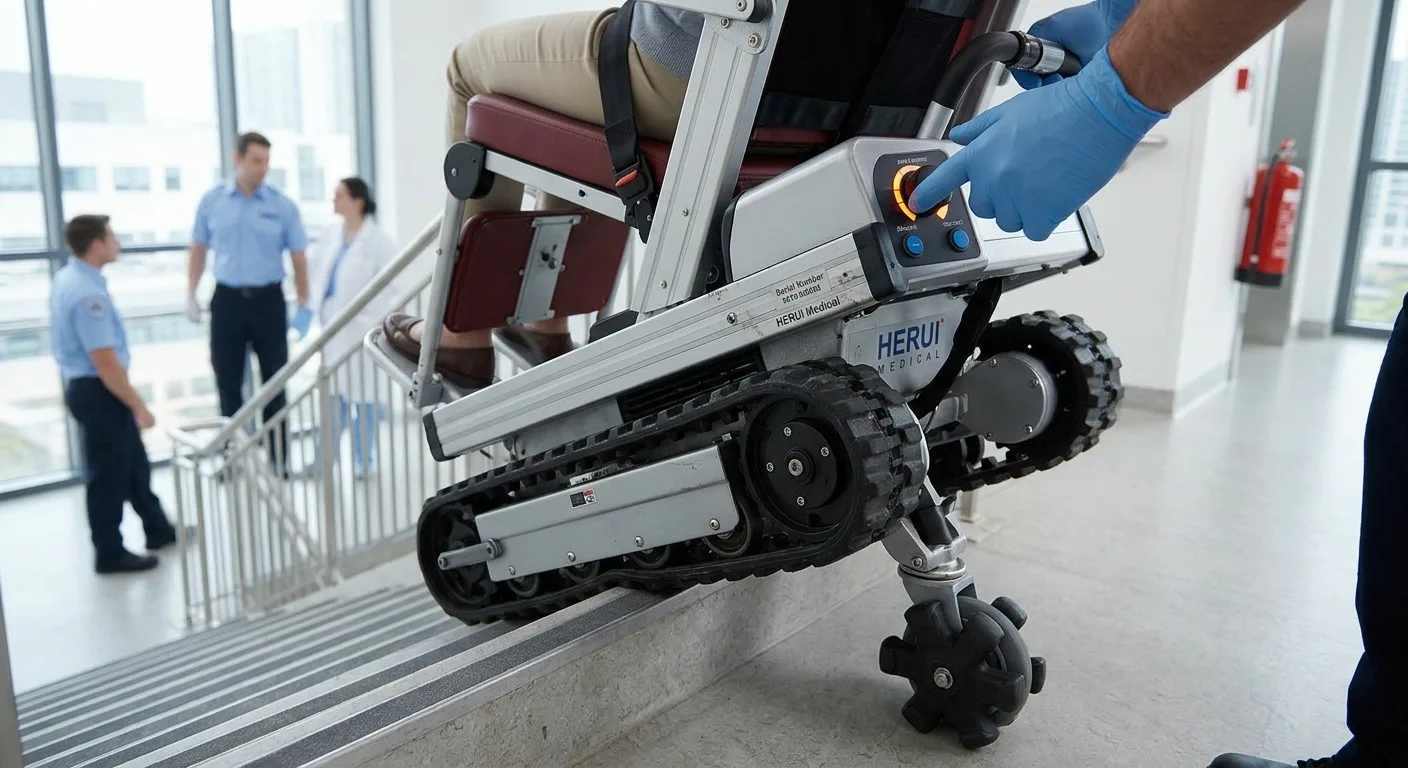
For distributors, wholesalers, and brand owners, OEM/ODM requirements may include logo application, color, packaging, manuals, labels, accessories, and model configuration. HERUI states that it supports customized projects and confidentiality for customer information. Buyers should document every approved detail in a specification sheet and confirm how changes affect minimum order quantity, sample approval, lead time, and cost.
A pre-production sample can help both parties confirm appearance, dimensions, functions, packaging, and labeling before bulk production. Importers should also independently review the documentation required in the destination market and request current, product-specific records rather than relying on general company statements.
Export Preparation and Long-Term Supply Cooperation
Export buyers should request carton dimensions, gross and net weight, packing method, available shipping terms, production lead time, and mixed-order options where relevant. Spare parts, troubleshooting guidance, warranty handling, and communication after delivery can influence the long-term value of a supply relationship as much as the initial quotation.
A complete inquiry should identify the required model or application, estimated quantity, destination port or address, customization needs, documentation expectations, and target delivery date. This gives the supplier enough information to prepare a technically relevant response and helps procurement teams compare quotations on an equivalent basis.
About HERUI Medical
Founded in 2005 and based in Zhangjiagang, Jiangsu, China, HERUI Medical develops and supplies medical and rescue equipment for global buyers. Its portfolio includes powered stair chairs, emergency stretchers, first-aid equipment, hospital furniture, and related products. The company offers OEM/ODM support for distributors, importers, healthcare procurement teams, and brand owners. Buyers should confirm product-specific specifications and documentation directly with the company before ordering.
Media and Buyer Contact
Company: Zhangjiagang HeRui Medical Equipment Co., Ltd.
Website: https://medherui.com/
Email: [email protected]
Telephone/WhatsApp: +86 181 3696 1798
Address: Workshop 15, No. 2258, SanXing WuKeSong Road, JinFeng Town, ZhangJiaGang City, JiangSu, China.