How Advanced Cleaning Equipment Is Changing Commercial Facility Maintenance
Commercial facilities are handling more activity across larger and often more complex spaces. Warehouses manage the continuous movement of goods, retail sites operate around customer traffic, and offices and public buildings must maintain usable environments throughout the day. As these spaces grow busier, maintenance teams have to plan cleaning around operating schedules, restricted access, varied floor surfaces, and available labor.
For many facilities, this is changing the role of cleaning equipment. Manual methods remain useful for small or detailed tasks, but they can be difficult to scale across long routes or repeated cleaning cycles. The issue is not simply how quickly an area can be cleaned. Teams must also consider consistency, operator workload, equipment access, water and debris handling, and the disruption cleaning may cause to normal operations.
Modern cleaning equipment is therefore becoming part of broader facility planning. Rather than replacing every manual task, different machines can support specific floor conditions, layouts, and maintenance requirements. Understanding those roles helps explain how commercial cleaning is evolving—and why equipment decisions increasingly start with the layout, workflow, and maintenance needs of each facility.
The Growing Challenges of Commercial Facility Maintenance
These challenges are rarely caused by floor area alone. They usually emerge from the interaction between facility scale, day-to-day operating pressure, and the need to maintain repeatable cleaning routines across different zones.
Larger Facilities Require More Efficient Solutions
Facility size alone does not determine cleaning difficulty. Warehouses may combine long aisles with loading areas and storage zones, while manufacturing plants must work around equipment, traffic routes, and active production. Retail spaces and commercial buildings add entrances, corridors, public areas, and changing occupancy patterns. As a result, cleaning plans must account for distance, access, obstacles, and the time available before an area returns to normal use.
Rising Operational Pressure
Maintenance teams often work within fixed cleaning windows while balancing available labor, operating costs, and other site responsibilities. A method that is manageable in one small area may require considerable time when repeated across several zones. However, adding equipment is not automatically the answer. Storage, operator training, charging or power access, refilling, wastewater disposal, and routine maintenance all affect whether a solution works in practice.
Maintaining Consistent Cleaning Standards
Commercial facilities also need routines that can be repeated across shifts and working conditions. Traffic levels change, debris accumulates differently, and some areas cannot be closed for long periods. Inconsistent methods can make results and schedules harder to manage, particularly when several people share responsibility for the same site. In customer-facing spaces, inconsistent floor care can also affect appearance and make it harder to keep areas available during operating hours.
A more structured approach begins by defining the cleaning task, surface type, route, and service window. Equipment can then be matched to the job rather than selected only by building size. Clear operating procedures and daily equipment care remain equally important, because consistent maintenance depends on the combination of suitable tools, realistic planning, and trained operators.
How Modern Cleaning Equipment Supports More Efficient Operations
Once a facility defines the task, equipment can be assigned according to the surface, the material being removed, the cleaning route, and site access. No single machine covers every maintenance need. The operational benefit comes from reducing unnecessary steps on suitable routes while preserving manual cleaning for tasks that require close attention or greater flexibility.
Floor Scrubbers for Large Floor Areas
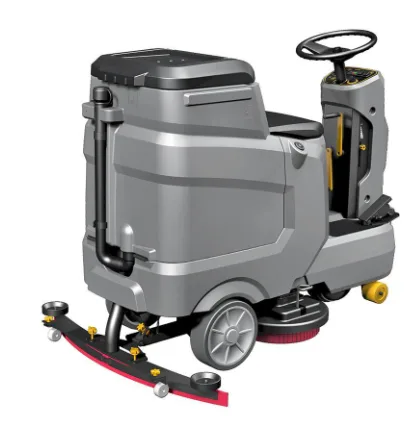
For facilities managing extensive hard-floor routes, floor scrubbers can apply a cleaning solution, agitate the surface with a brush or pad, and recover dirty water in a single pass. This combination can reduce the number of separate steps required for routine floor washing and support a more repeatable process across open areas. However, suitability depends on more than coverage. Surface compatibility, aisle width, turning space, water and drain access, charging arrangements, and loose-debris conditions must also be considered.
Sweepers for Debris Management
Floor sweepers address a different part of the cleaning process. They collect loose, dry debris from compatible hard surfaces, either before wet cleaning or as a separate maintenance task. Warehouses, loading routes, outdoor areas, and industrial environments may use them where dust, sand, leaves, packaging fragments, or similar debris accumulates. Because dust-control systems and operating formats vary, facilities should not assume that every sweeper offers the same filtration, capacity, or indoor and outdoor suitability.
Vacuum Systems for Indoor Maintenance
Vacuum systems remain important for carpeted offices, entrance areas, edges, and other indoor spaces where dry dust and small debris need to be removed. Their role differs from carpet extraction, which applies liquid and then recovers dirty water from carpet or fabric. Keeping these tasks separate helps teams select a method according to the surface and soil rather than treating different equipment types as interchangeable.
Used in this way, equipment supports a coordinated maintenance plan: sweeping or vacuuming handles loose soil, while wet-cleaning equipment addresses suitable hard-floor routes. The next decision is which machine format can move through the facility efficiently.
Selecting Equipment Based on Facility Requirements
Once the cleaning method is clear, the machine format must fit how people and equipment move through the site. A larger machine is not automatically the better option. Route length, access points, turns, obstacles, and service areas can matter as much as total floor area.
Walk-Behind Equipment for Flexible Cleaning Tasks
Walk-behind machines are often suited to routes divided by doors, aisles, corridors, elevators, and smaller rooms. The operator stays close to the machine, allowing tighter control around fixtures, traffic, and restricted areas. This format can also be practical when equipment must move between separate zones. Route length, propulsion type, slopes, storage, and access to refill or drain points still affect how manageable the work will be during a shift.
Ride-On Equipment for Larger Facilities
Ride-on machines provide seated operation for longer and wider routes. They may suit open warehouse floors, production areas, parking facilities, and other sites where repeated walking becomes a constraint. Wider cleaning paths and larger tanks can reduce the number of passes or service stops on suitable routes. At the same time, a larger machine requires adequate door and aisle width, turning space, parking, charging, refilling, and drainage access.
The distinction is therefore less about which format performs better and more about which one fits the actual route. Evaluating the narrowest access point, the longest cleaning segment, and the available service space provides a more useful basis than building size alone.
The Future Direction of Commercial Facility Maintenance
The future of commercial facility maintenance is unlikely to be defined by a single machine or cleaning method. Greater value will come from using equipment more deliberately: matching it to actual surfaces and routes, scheduling work around operations, and maintaining each machine so it remains ready for daily use.
Resource management will also receive closer attention. Water, energy, consumables, and staff time are all influenced by how cleaning work is planned, but efficiency gains are not automatic. Operator training, route design, correct accessories, and routine servicing determine whether equipment supports the workflow or introduces new delays.
The most practical direction is a balanced one. Manual cleaning will remain necessary for detailed, irregular, or restricted tasks, while task-specific machines can support repeatable work across suitable areas. Facilities that understand their layouts, surfaces, operating schedules, and service constraints will be better positioned to use equipment effectively. In this sense, the future of maintenance depends as much on planning and utilization as it does on machine capability.