How AI Image APIs Are Evolving: Comparing sora2 API, Nano Banana, and Nanobanana pro API
AI image generation has entered a stage where change is no longer measured in sudden breakthroughs, but in steady refinement. Earlier phases focused on proving that machines could generate convincing images at all. Today, the focus has shifted toward how these systems behave in real products, how they scale, and how reliably they integrate into everyday workflows. This evolution is most visible at the API layer, where technical progress meets practical use.
Modern AI image APIs are no longer experimental gateways. They are long-term infrastructure components. As expectations have matured, APIs have evolved to support clearer interfaces, more predictable behaviour, and tighter alignment with different types of users. Comparing how APIs evolve provides insight into where the broader ecosystem is heading and how teams can prepare for what comes next.
This article looks at how AI image APIs are evolving, using sora2 API, Nano Banana, and Nanobanana pro API as reference points. The goal is not to declare winners, but to understand how different design priorities reflect larger trends in AI image generation.
From Model Demos to Production Infrastructure
Early AI image systems were often demonstrated through simple interfaces. A prompt went in, an image came out, and the focus was on visual novelty. These demonstrations were useful, but they did not address production realities such as reliability, integration, or cost management.
As AI image generation moved into real products, APIs became the central point of evolution. Teams needed stable contracts, consistent responses, and clear failure behaviour. APIs began to reflect these needs by focusing less on spectacle and more on dependability.
This shift is visible in how modern APIs present themselves. Documentation now emphasises usage patterns, limits, and integration guidance. The API has become the product surface that teams interact with daily.
Evolution Toward Creative Flexibility With Guardrails
One visible trend in AI image APIs is the balance between creative freedom and control. Early systems often produced unpredictable results. While this unpredictability could be exciting, it made production use difficult.
The evolution has involved adding structure without eliminating creativity. The sora2 API reflects this direction by exposing advanced generative capabilities through a controlled interface. Teams can explore creative variation, but within a framework that supports repeatable requests and manageable integration.
This evolution shows a broader industry pattern. APIs are being designed to support exploration while still behaving predictably enough to be embedded into applications. Creative freedom is no longer unbounded. It is shaped by interfaces that help teams guide outcomes rather than react to them.
Efficiency and Speed as First-Class Concerns
Another major evolutionary trend is the emphasis on efficiency. As AI image generation became more common, usage volumes increased. Systems that were acceptable at low volume became costly or slow at scale.
This has driven the evolution of APIs that prioritise speed and operational simplicity. Nano Banana represents this direction by aligning with workflows where rapid response and lightweight integration are essential. The API reflects a design philosophy that treats image generation as a frequent operation rather than a special event.
The evolution here is subtle but important. Instead of optimising for maximum output complexity, some APIs optimise for predictability under load. This reflects the reality that many applications value consistency and responsiveness more than maximal creative depth.
Structured Reliability for Mature Environments
As AI image generation enters enterprise and regulated environments, another evolutionary path becomes clear. APIs are adapting to contexts where stability, oversight, and accountability are essential.
The Nanobanana pro API illustrates this trend. Its positioning aligns with environments where image generation is part of a defined process rather than open exploration. The API reflects an evolution toward predictable behaviour, repeatable outputs, and compatibility with structured workflows.
This shift mirrors how other technologies mature. As adoption widens, systems evolve to support governance and long-term maintenance. AI image APIs are following the same trajectory, moving from flexible tools toward dependable components.
Changing Expectations Around Integration
Integration expectations have evolved alongside APIs themselves. Early adopters were willing to accept rough edges and manual workarounds. Modern teams are not.
Today, APIs are expected to integrate cleanly into existing architectures. They must work with logging, monitoring, and access control systems. They must support abstraction layers that allow teams to evolve behaviour without rewriting core logic.
This expectation influences API design. Clear request and response structures, predictable error handling, and stable versioning are now standard expectations rather than optional enhancements.
The evolution of AI image APIs reflects this reality. APIs that fail to integrate smoothly face friction regardless of output quality.
Prompt Behaviour as a Design Focus
Prompts have always been central to image generation, but how APIs treat prompts has evolved. Early systems often behaved unpredictably, producing widely different results for similar input.
Modern APIs increasingly focus on prompt stability. Teams expect that similar prompts produce results within a known range. This does not eliminate variation, but it makes variation understandable.
The evolution here supports collaboration. When prompts behave consistently, teams can document, reuse, and refine them. This transforms prompts from ad-hoc inputs into shared assets.
Performance Measured Over Time
Performance evaluation has also evolved. Early benchmarks focused on single request latency or output quality. Modern evaluation considers sustained behaviour.
Teams now observe APIs over extended periods. They examine how response times change under load, how failures are handled, and how updates affect behaviour. This long-term view reflects the reality that APIs are ongoing dependencies.
APIs that evolve successfully are those that maintain predictable behaviour as usage grows. This consistency builds trust and supports long-term adoption.
Cost Awareness Driving API Design
Cost has become a visible driver of evolution. As AI image generation moves from occasional use to continuous operation, cost behaviour matters.
Modern APIs increasingly expose usage patterns that allow teams to plan and forecast. The evolution is not necessarily toward lower cost per request, but toward more predictable cost behaviour.
Teams benefit when APIs align with how they scale. This trend influences how APIs position themselves and how teams choose between them.
Governance as a Built-In Expectation
Governance was once treated as an external concern. Today, it is part of how APIs are evaluated.
APIs are evolving to support access control, usage tracking, and review processes. This does not mean that every API enforces strict governance, but it means that governance can be layered on without friction.
This evolution reflects broader awareness of responsibility and trust. Teams want to adopt AI image generation without introducing unmanaged risk.
The Role of User Experience in API Evolution
User experience now influences API evolution more than ever. Not just end-user experience, but developer experience.
Clear documentation, predictable behaviour, and sensible defaults reduce friction. APIs that feel intuitive gain adoption even if they do not offer the most advanced features.
The evolution of AI image APIs reflects this shift. Developer experience is no longer secondary. It is a primary factor in success.
Convergence Without Uniformity
One interesting pattern in API evolution is convergence. Many APIs now meet a baseline level of quality and reliability. At the same time, meaningful differences remain.
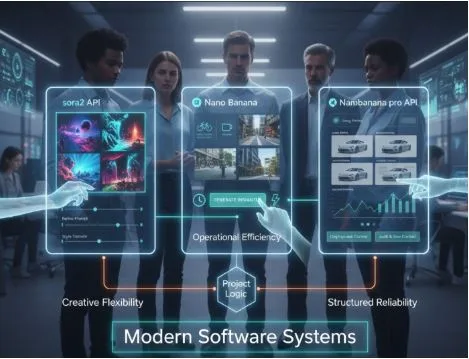
Some APIs evolve toward creative flexibility. Others toward efficiency. Others toward structured reliability. This diversity is not a weakness. It reflects the variety of real-world needs.
Understanding these evolutionary paths helps teams choose APIs that align with their direction rather than reacting to short-term trends.
Looking Ahead
The evolution of AI image APIs suggests a future where these tools are treated as standard infrastructure. They will continue to improve, but the emphasis will remain on fit, reliability, and integration.
Teams that understand how APIs evolve can make decisions that remain valid over time. Instead of chasing novelty, they can focus on alignment with workflow, scale, and responsibility.
By examining the evolution of sora2 API, Nano Banana, and Nanobanana pro API, teams gain insight into the broader direction of AI image generation. This understanding supports choices that are resilient, informed, and grounded in real-world practice.