How AI Is Changing Fitness: The Rise of Personalized and Intelligent Workouts
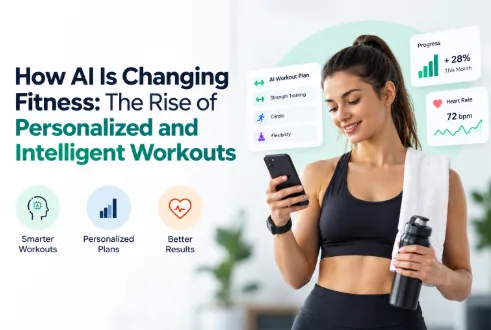
Ask someone what their fitness app does, and the answer will probably involve tracking something: steps, calories, workouts, distance, heart rate or sleep. Technology has become very good at collecting information.
The harder question is what happens after the information is collected.
That is where artificial intelligence is starting to make a noticeable difference. Instead of leaving users with pages of numbers and charts, newer fitness platforms can use that information to make the experience more responsive to the person using them.
A Workout Plan That Can Adapt
There is an obvious problem with giving everyone the same workout plan: people are not the same.
A beginner may need more guidance. Someone who has been training for years may want a very different level of challenge. A user recovering from a break may need to ease back into a routine rather than immediately following the plan they were using months ago.
AI gives fitness applications a way to account for some of these differences.
Workout history, activity levels, goals, preferences and progress can all become part of the picture. Instead of treating the original workout plan as permanent, an application can use new information to make recommendations that better fit the user’s current situation.
This is becoming an important consideration for businesses exploring a custom fitness app development company to build applications with personalized workouts, progress tracking, nutrition features, wearable integration and virtual coaching.
The important point is that personalization should not exist simply because an application uses AI. It should make the user’s experience easier or more useful.
The Real Opportunity May Be in the Data
Fitness users are already generating plenty of data.
A smartwatch can record heart rate and activity. A fitness tracker can monitor movement and sleep. A smartphone can record workouts and daily activity. Put all of this together and a person can have a surprisingly detailed digital record of their lifestyle.
But a pile of data is not the same thing as useful information.
ACSM’s 2026 fitness trends reflect this shift. Wearable technology ranks as the top trend, while data-driven technology also remains among the leading areas of interest. The emphasis is increasingly on using collected information to support more individualized training and recovery decisions.
That is where AI can earn its place in a fitness application. Its job is not necessarily to produce more statistics. It can help identify patterns and turn those patterns into information that a user can actually understand.
Fitness Is Becoming Part of a Bigger Health Picture
There is also a wider change taking place.
People rarely think about exercise completely separately from the rest of their wellbeing. Someone working toward a fitness goal may also be paying attention to nutrition, sleep, recovery or other health indicators.
As these areas come together, the distinction between a fitness app and a broader digital health platform becomes less obvious.
That creates opportunities for businesses considering a healthcare app development company for solutions that connect healthcare, wellness and digital technology.
It also means that responsible development becomes increasingly important. Health-related information needs to be handled carefully, with appropriate attention to privacy, security and the requirements of the markets in which a product operates.
Could Your Phone Become a Better Training Partner?
Computer vision adds another interesting possibility.
A phone or other camera-enabled device can potentially observe selected exercises and provide feedback on movement or form. For someone exercising at home, that could fill part of the gap between following a video and having another person present.
It would be unrealistic to suggest that computer vision can replace an experienced trainer in every situation. It cannot.
But it does not have to.
Even limited feedback can make a digital workout more interactive. Combined with a personalized training plan, progress information and wearable data, it could become another useful piece of a larger fitness experience.
Technology Still Cannot Do the Hardest Part
There is one thing an AI-powered fitness app cannot guarantee: that someone will actually stick with the routine.
This is where the human side of fitness remains important.
A person might download an application because of its impressive features and stop using it a month later. Another user might stay because they enjoy seeing their progress, completing challenges or simply having a routine that fits their life.
That is why good fitness products still need thoughtful design around habits and motivation. Streaks, milestones, reminders, challenges and rewards can help, but they work best when they support the user’s actual goals rather than becoming distractions.
Where Intelligent Fitness Is Heading
The next generation of fitness applications will probably not be defined by one spectacular AI feature.
The most interesting development is the combination of several technologies. Wearables can provide information. Mobile apps can bring the experience together. AI can help interpret patterns. Computer vision can add another layer of feedback. Cloud technology can keep these services connected.
When those pieces are designed well, the result can feel surprisingly simple from the user’s perspective.
They do not need to know which algorithm processed their workout or how many data points were analyzed. They simply want to know what to do today, whether they are making progress, and what they might change tomorrow.
That may be the most useful way to think about the future of AI in fitness.
The goal is not to build an app that sounds intelligent. The goal is to build one that makes intelligent fitness decisions easier for the people using it.