How AI-Powered Customer Support Is Redefining the Balance Between Efficiency and Human Care
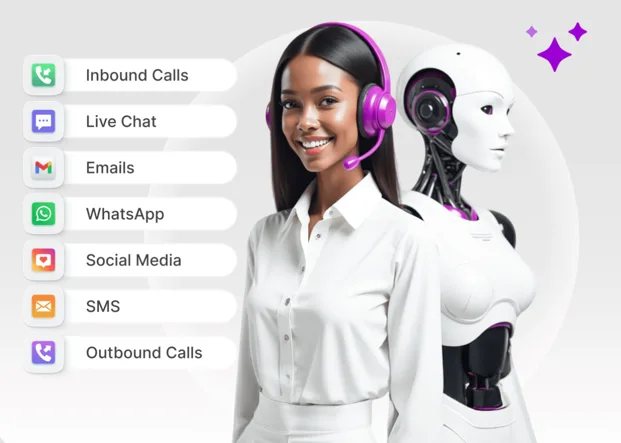
Customer expectations have changed dramatically in recent years. Today’s customers want fast answers, consistent service across channels, and support that is available whenever they need it, not only during business hours. At the same time, they still value empathy, clarity, and the reassurance of being understood. For many companies, meeting both expectations with traditional support models has become increasingly difficult and expensive. This is where AI-Powered Customer Support offers a practical solution, combining the speed and scalability of artificial intelligence with the judgment and care of experienced human agents.
The Pressure on Modern Customer Service Teams
Customer support departments face a growing set of challenges. Inquiry volumes rise as businesses expand into new markets and digital channels. Customers reach out through live chat, email, messaging apps, social media, and help centers, often expecting an immediate response on each one. Meanwhile, hiring and training enough agents to keep pace with this demand requires significant time and investment.
The result is a familiar set of problems: long wait times, inconsistent answers, overloaded agents, and rising operational costs. When support teams spend most of their time answering repetitive questions, they have less capacity for complex cases that genuinely require expertise and attention.
What AI-Powered Customer Support Really Means
AI-powered customer support refers to the use of artificial intelligence technologies, such as natural language processing, machine learning, and conversational AI, to automate and enhance customer service interactions. In practice, this most often takes the form of an AI support bot that can understand customer requests, provide accurate answers, and guide users through common processes.
A well-designed AI customer service solution can:
- Answer frequently asked questions instantly, drawing on a company’s knowledge base, policies, and product information.
- Provide 24/7 availability, ensuring customers receive help at any time and in any time zone.
- Handle multiple conversations simultaneously, eliminating queues during peak periods.
- Support multilingual communication, helping companies serve international customers without expanding language-specific teams.
- Collect relevant information before escalation, so human agents receive context and can resolve issues faster.
- Route complex inquiries to the right specialist, based on topic, urgency, or customer profile.
The goal is not to replace human support but to let automation handle routine tasks while people focus on conversations where their skills make the greatest difference.
The Business Benefits of an AI Support Bot
Companies that implement AI-driven customer support typically see improvements across several key performance areas.
Faster Response and Resolution Times
An AI chatbot responds in seconds, reducing first response time significantly. For straightforward requests, such as order status, password resets, booking changes, or account questions, customers can often resolve their issue without waiting for an agent at all.
Scalable Support Without Proportional Costs
Traditional support models scale linearly: more inquiries require more agents. AI customer support breaks this pattern by absorbing increases in volume without a corresponding increase in headcount. This is especially valuable during seasonal peaks, product launches, or periods of rapid growth.
Consistent Service Quality
An AI support bot delivers answers based on approved information, which reduces inconsistencies between agents and channels. Customers receive the same accurate guidance regardless of when or how they reach out.
Higher Agent Productivity and Satisfaction
When repetitive questions are automated, human agents can dedicate their time to more meaningful and complex work. This not only improves productivity but also reduces burnout and turnover, which remain persistent challenges in customer service.
Valuable Customer Insights
Every interaction with an AI-powered system generates data. Analyzing these conversations helps companies identify recurring issues, gaps in documentation, product pain points, and opportunities to improve the customer experience.
Why the Human Element Still Matters
Despite the clear advantages of automation, effective customer support cannot rely on technology alone. Some situations require empathy, negotiation, creative problem-solving, or careful handling of sensitive information. Frustrated customers, complex technical issues, billing disputes, and high-value accounts often benefit from a human conversation.
The most successful support strategies therefore follow a hybrid model. AI handles the first line of interaction, resolves routine requests, and gathers context. When a conversation requires deeper expertise or a personal touch, it moves smoothly to a trained human agent who can continue without asking the customer to repeat themselves.
This balance allows companies to deliver efficiency at scale while preserving the human qualities that build trust and long-term loyalty.
Key Considerations When Implementing AI Customer Service
Introducing AI into customer support is most effective when approached thoughtfully. Organizations should consider the following factors:
- Knowledge base quality. An AI support bot is only as accurate as the information it relies on. Up-to-date, well-structured documentation is essential.
- Clear escalation paths. Customers should always be able to reach a human agent when needed, and the transition should feel seamless.
- Brand voice and tone. Automated responses should reflect the company’s communication style and maintain a professional, respectful tone.
- Integration with existing tools. The solution should connect with CRM systems, helpdesk platforms, and communication channels already in use.
- Continuous improvement. Regular review of conversations, accuracy, and customer feedback helps refine the system over time.
- Data security and compliance. Customer information must be handled in line with privacy regulations and internal security standards.
How Mindy Support Delivers AI-Powered Customer Support
Mindy Support brings together years of experience in customer service outsourcing and AI expertise to help businesses build support operations that are both efficient and genuinely customer-focused. Its approach combines an AI support bot that manages routine inquiries with professional support agents who handle complex, sensitive, or high-priority cases.
Each solution is adapted to the client’s business processes, product specifics, and customer expectations. The Mindy Support team helps companies prepare and structure their knowledge base, configure escalation scenarios, and continuously monitor performance to improve accuracy and customer satisfaction. This allows clients to reduce response times and operational costs while maintaining the quality of service their customers expect.
The Future of Customer Support Is Collaborative
Customer support is moving toward a model in which artificial intelligence and people work side by side, each contributing what they do best. AI provides speed, availability, and scalability. Human agents provide understanding, judgment, and the ability to build relationships.
Companies that embrace this collaborative approach are better equipped to meet rising customer expectations without sacrificing quality or overextending their teams. With the right strategy and an experienced partner, AI-powered customer support becomes not just a cost-saving measure, but a lasting foundation for better customer experiences and sustainable business growth.