How Are Royal Honey Packages and Disposable Medical Consumables Evolving Worldwide?
Packaging and healthcare manufacturing are both responding to stronger demands for convenience, safety, and product reliability. Royal honey packages help brands protect honey while creating attractive formats for retail and gifting. Meanwhile, disposable medical consumables support hygiene and infection control across modern healthcare facilities.
Both industries are developing through better materials, specialized designs, and changing customer expectations.
This article explores their applications, global market trends, and how Hong Peng and Shijingcheng Non-Woven Products serve these evolving industries.
What Are Royal Honey Packages and Why Do They Matter?
Royal honey packages are packaging formats designed for premium honey products, including royal honey and other specialized honey-based products. Depending on the target market, these packages can include glass jars, plastic containers, squeeze bottles, sachets, tubes, and customized gift packaging.
Packaging plays an important role in protecting honey from contamination, moisture, and unsuitable storage conditions. It also helps preserve product quality during transportation and retail handling. For premium honey, packaging has an additional responsibility because consumers often associate presentation with product quality.
Design is therefore becoming an important consideration. Transparent containers can showcase honey’s color and texture, while customized labels can communicate origin, ingredients, usage information, and brand identity. Premium boxes and gift sets can further position royal honey as a specialized or luxury product. Convenience is another major factor. Single-serving formats can support travel, hospitality, promotional sampling, and controlled consumption.
For manufacturers, producing royal honey packages requires attention to container dimensions, closure systems, labeling, filling compatibility, and packaging materials. These details influence both product protection and the consumer experience.
What Market Trends Are Shaping Honey Packages Globally?
The packaged honey market is developing alongside changing consumer preferences for convenience and premium presentation. Current market research identifies glass jars as a leading packaging format, with consumers associating glass with product quality and purity. At the same time, squeeze bottles are expected to experience strong growth because they provide controlled dispensing and reduce mess during use.
This shift demonstrates how packaging is becoming part of the honey purchasing experience. Consumers want products that are easy to store, open, dispense, and transport. As a result, honey brands are exploring different packaging formats instead of relying exclusively on traditional jars. Premiumization is another important trend. Honey products positioned around specialty varieties, distinctive origins, or gift applications often require packaging that communicates higher perceived value.
These developments create opportunities for suppliers such as Hong Peng, which can support brands seeking packaging solutions tailored to honey products. By combining functional protection with customized presentation, manufacturers can help honey brands respond to increasingly diverse market expectations.
What Are Disposable Medical Consumables and Where Are They Used?
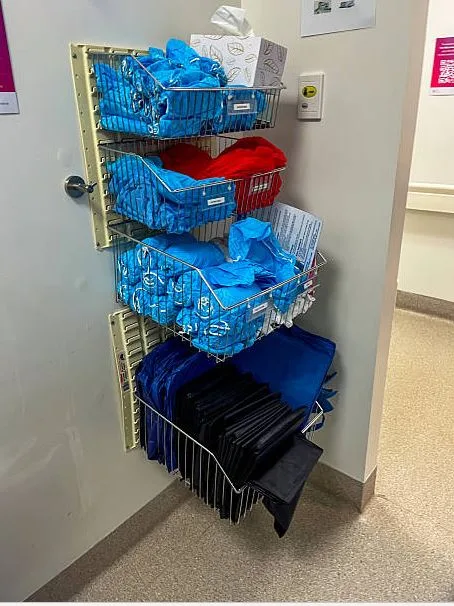
Disposable medical consumables are single-use healthcare products designed to support patient care, clinical procedures, hygiene, diagnosis, and infection prevention. Common examples include medical gowns, masks, caps, shoe covers, surgical drapes, wound-care products, gloves, syringes, and other single-use supplies.
Their primary advantage is reducing the risks associated with cross-contamination. Healthcare environments involve frequent contact between patients, medical personnel, equipment, and biological materials. Single-use products provide a controlled barrier for specific procedures and can be discarded after use. Hospitals are major users, but demand extends across clinics, diagnostic centers, nursing facilities, ambulatory surgery centers, laboratories, and home healthcare. Different applications require different combinations of absorbency, breathability, barrier protection, strength, and comfort.
Non-woven materials are particularly important for many disposable healthcare products. Their fiber-based structures can provide useful combinations of softness, filtration, breathability, and liquid resistance. This makes them suitable for protective apparel and other medical applications. Manufacturing quality is essential because disposable medical products directly support healthcare procedures. Material consistency, cleanliness, dimensional accuracy, packaging, and appropriate quality controls can all influence product reliability.
How Is Demand for Disposable Medical Consumables Growing Across the Middle East, Southeast Asia, Europe, and America?
Demand for disposable medical consumables is supported globally by infection-control requirements, expanding healthcare infrastructure, chronic disease management, aging populations, and increasing medical procedures. One 2026 market analysis estimates the global medical disposables market at $674.3 billion in 2025, with a projected CAGR of 18% from 2026 to 2033.
Regional demand differs according to healthcare infrastructure and procurement requirements. North America currently represents a major market, supported by established healthcare systems and strong demand for infection-control products. Another recent analysis placed North America’s share at 35.5% in 2025.
Europe also remains an important market because healthcare providers operate under stringent quality and safety requirements. Hospitals, clinics, laboratories, and care facilities require consistent supplies for routine procedures and infection prevention. Southeast Asia is gaining importance as healthcare infrastructure expands and medical manufacturing capabilities develop. Asia Pacific is expected to experience substantial growth in disposable hospital supplies, with rising healthcare investment supporting demand across the region.
The Middle East is likewise developing healthcare infrastructure through hospital construction, specialized medical facilities, and expanding healthcare services. This creates opportunities for suppliers of gowns, masks, drapes, wound-care materials, and other disposable products.
Demand in America extends beyond hospitals. Outpatient treatment, home healthcare, diagnostics, and chronic disease management all require regular consumption of single-use medical products. This broad application base helps maintain demand across the healthcare supply chain. The medical non-woven segment also demonstrates this opportunity. Recent research estimates the global medical non-woven disposables market at $29.28 billion in 2025, with projections reaching $45.11 billion by 2034.
How Are Hong Peng and Shijingcheng Non-Woven Products Positioning Their Products in Global Markets?
Hong Peng operates within the packaging industry, supporting applications such as royal honey packages. Its role reflects the growing need for packaging that combines product protection with attractive presentation.
For honey brands, packaging must accommodate different market positions. Everyday retail products may prioritize convenience and efficient handling, while premium honey products may require customized containers and gift-oriented presentation. Hong Peng can support these varied requirements through packaging solutions designed around product and branding needs. The company’s role is particularly relevant as honey brands expand across different distribution channels. Retail stores, online marketplaces, hospitality businesses, and gift markets can all require different packaging approaches.
Meanwhile, Shijingcheng Non-Woven Products operates within the medical non-woven manufacturing sector, supporting the market for disposable medical consumables. Its product positioning corresponds with the healthcare industry’s continuing need for reliable single-use protective and procedural supplies.
The two companies operate in very different industries, but their strategies share an important principle. Both address markets where product presentation, material selection, and manufacturing reliability directly influence purchasing decisions. Hong Peng focuses on packaging that protects and presents honey products, while Shijingcheng Non-Woven Products supports healthcare applications requiring dependable disposable materials.
Conclusion:
The markets for royal honey packages and disposable medical consumables are evolving as customers demand greater convenience, protection, and product reliability. Honey brands are exploring premium designs, controlled dispensing formats, and packaging suited to modern retail and e-commerce.
Healthcare providers continue requiring single-use products to support hygiene, infection prevention, and clinical procedures. Hong Peng and Shijingcheng Non-Woven Products contribute to these markets through specialized packaging and non-woven manufacturing capabilities. As global markets become more diverse, adaptable product solutions will remain increasingly valuable